👋 I'm Ivan. I write about venture capital + how top 1% startups grow.
In case you missed it:
P.S. Paid subscribers get free months of Notion, Granola, etc. See the perks.
Today's edition is brought to you by PitchMagic

See your pre-seed or seed deck the way a VC does. A comment on every slide, the words to change highlighted, and the 3 fixes to help get your foot in the door.
1. 💰 Where the money went
Series A · US + Europe
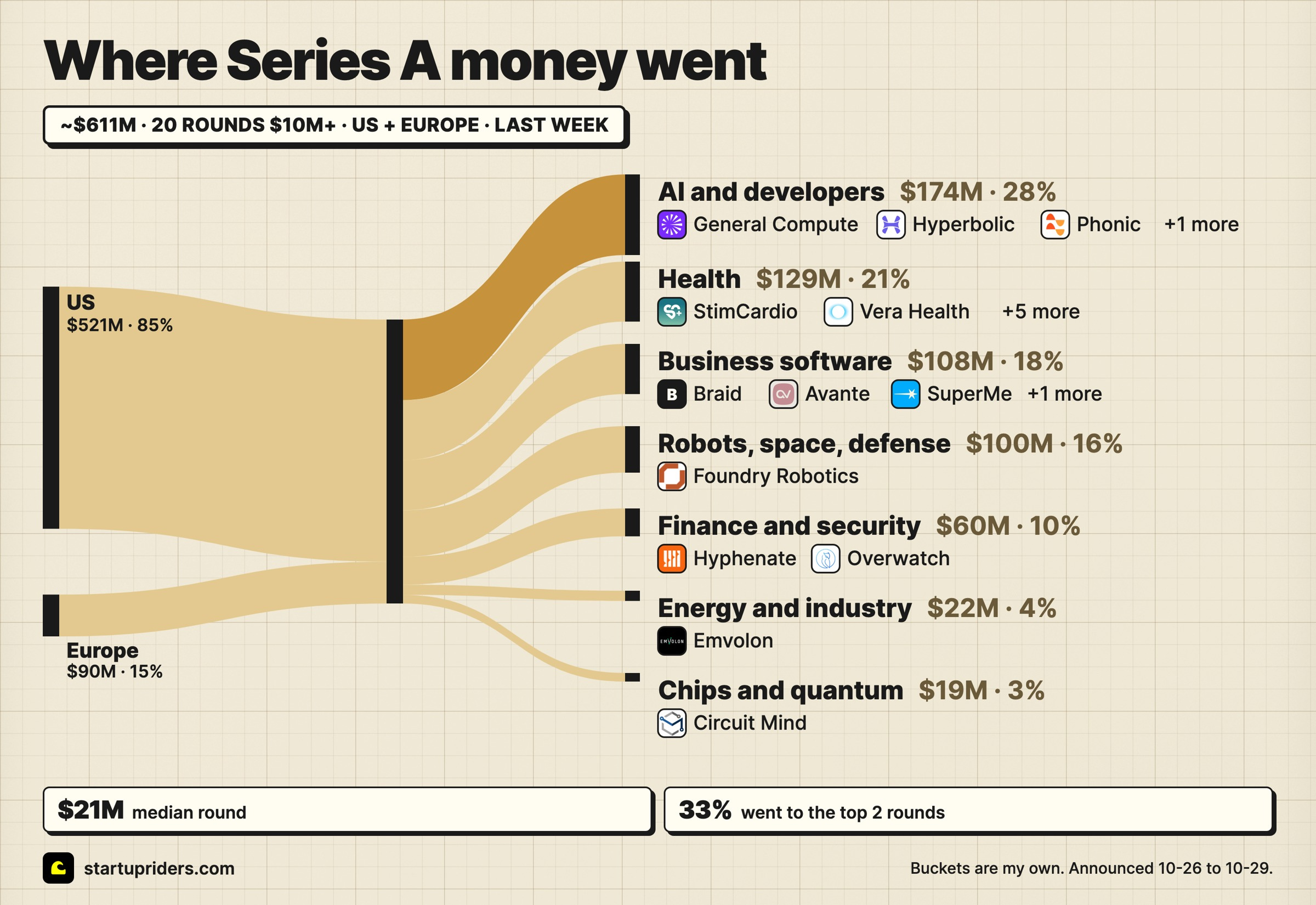
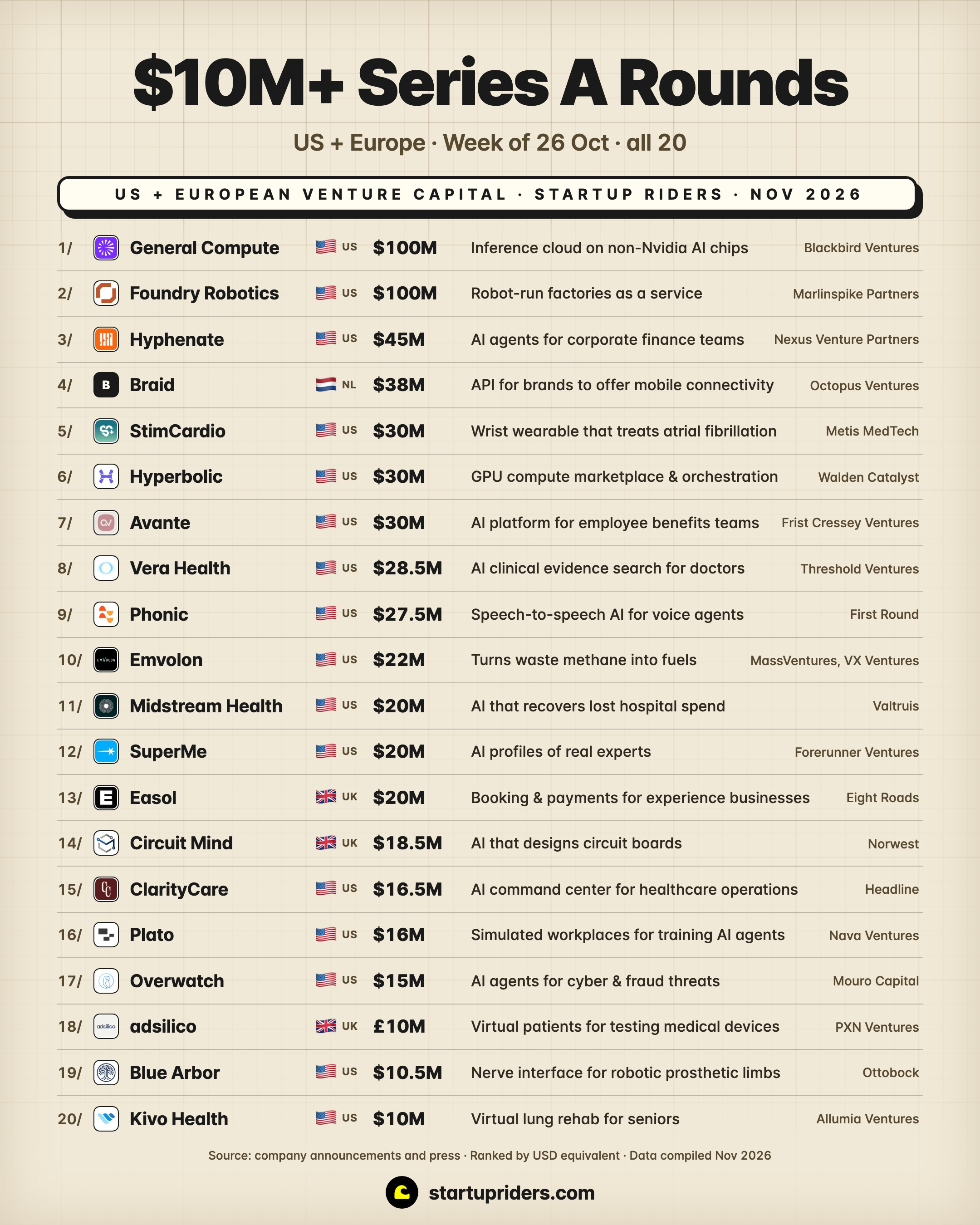
I built this Series A Terminal to map where product-market fit shows up, with every US and EU Series A of $10M+, would love your feedback! Here's last week's:
🚀 Building something? I invest €100K-3M at pre-seed and seed through JME. Reply to this email with your deck.
2. 📈 How they grew
Hello there!
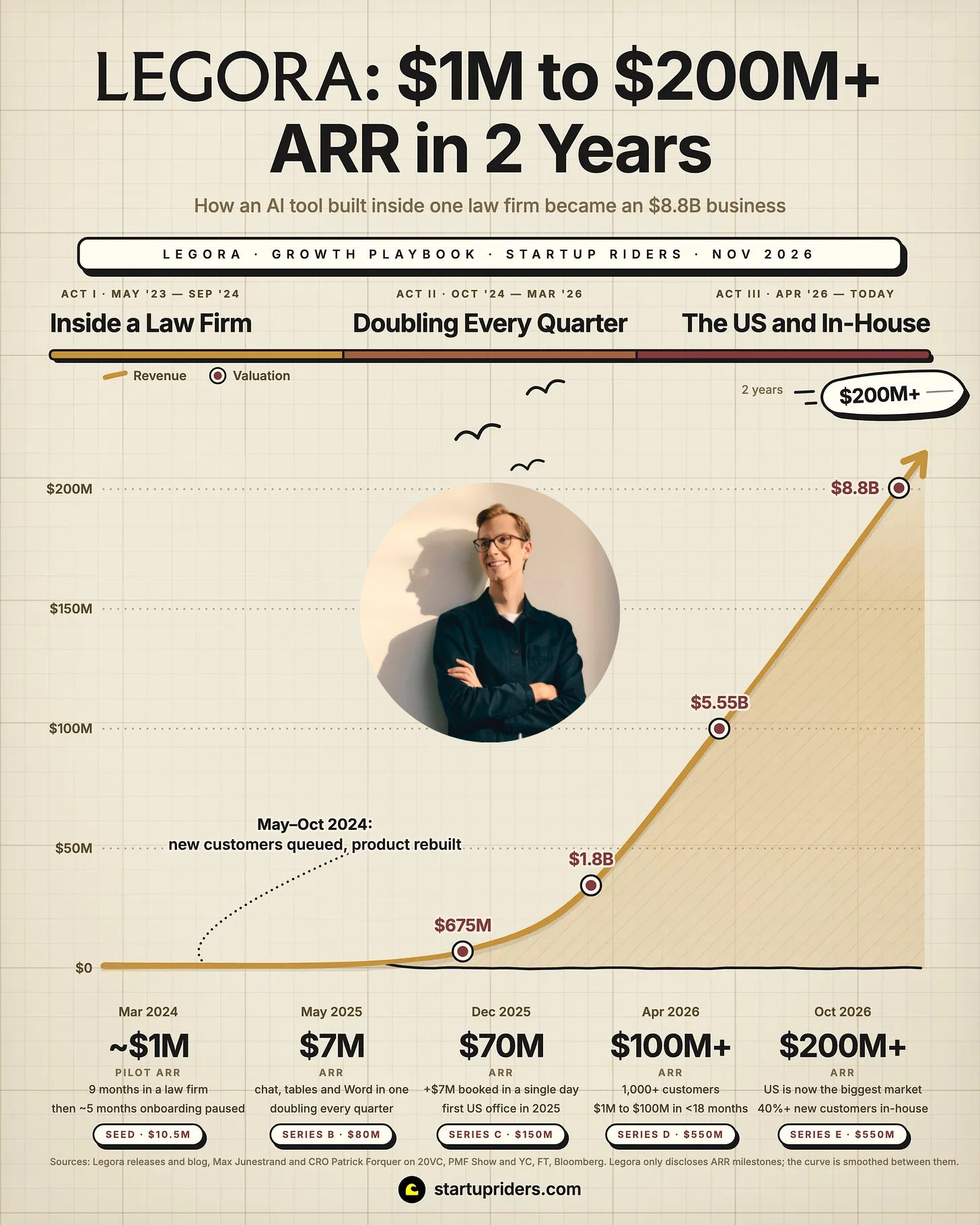
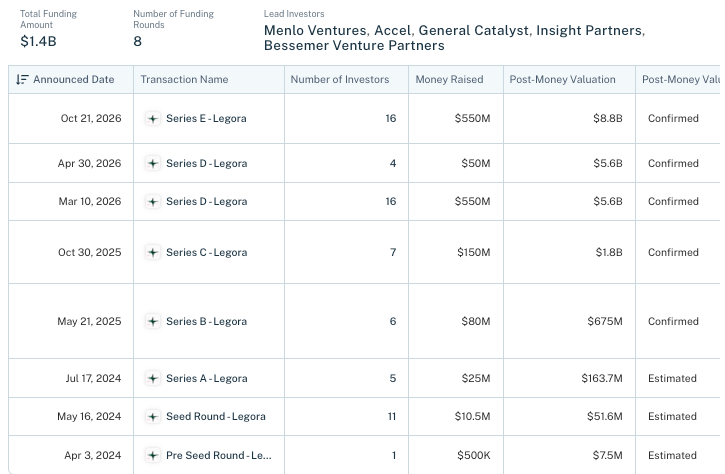
If you follow the legal AI space you’ve probably witnessed the battle between Harvey (which we deep-dived on a few months ago) and today’s subject ⚖️ Legora. These guys are a Stockholm-born legal AI company that just raised $550M at an $8.8B valuation with more than $200M in ARR:
In a nutshell as usual:
Product = law firms and company legal teams use it to review hundreds of contracts at once (answers laid out like a spreadsheet), research case law (past court rulings) with a source for every sentence + draft inside Word.
Money: pay per seat (lawyer) per year, usually after a pilot.
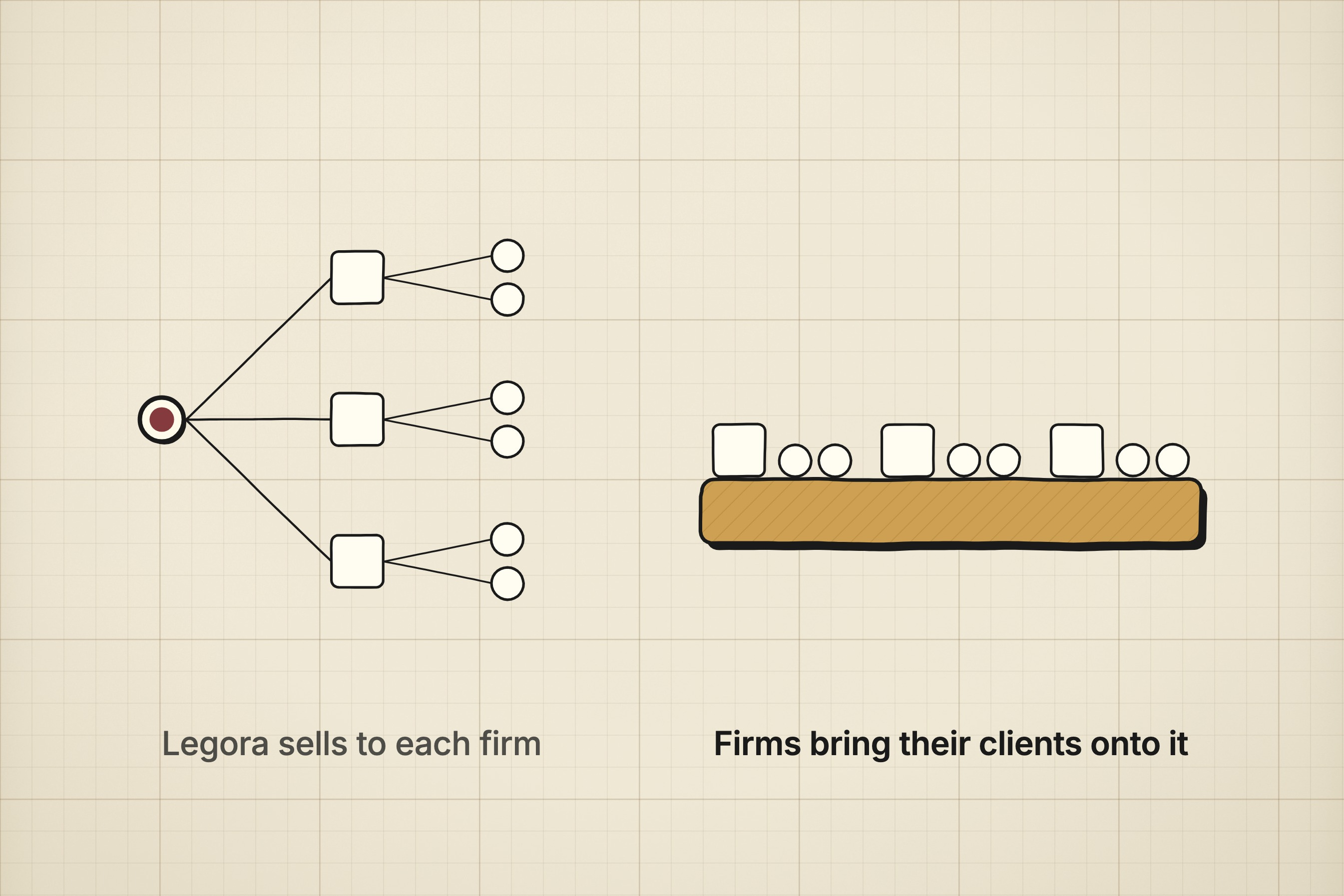
Strategy: a platform (others build products on it, like Shopify). Law firms package their own know-how as apps on Legora and then can sell them to their clients under the firm's name (Debevoise's STAAR 2.0 is in beta with Capital One and GSK, Cooley built one for YC startups). Clients then follow their lawyers onto it. Every firm brings its clients, and every client makes the firm harder to switch off (still early, as I understand it).
8 growth mechanics I found in this drop:
Short pilots as the sale
A queue until the product worked
Missing pieces built in days
Lawyers instead of salespeople
2 US firms won from home
One team, then the whole firm
A new hire class every 2 weeks
Fame bought after pilots worked
📐 Quick note on editorial + methodology: this analysis focuses on the 80/20 mechanics that explain their growth (it's not a comprehensive profile, not an endorsement or investment advice). I use AI like a fund leverages an analyst for groundwork, the direction + judgement are mine. Company-reported figures are marked as such, treat directional estimates as directional. Dots only connect looking back (hi, survivorship bias), but there's still gold in how they did it.
Zero To One
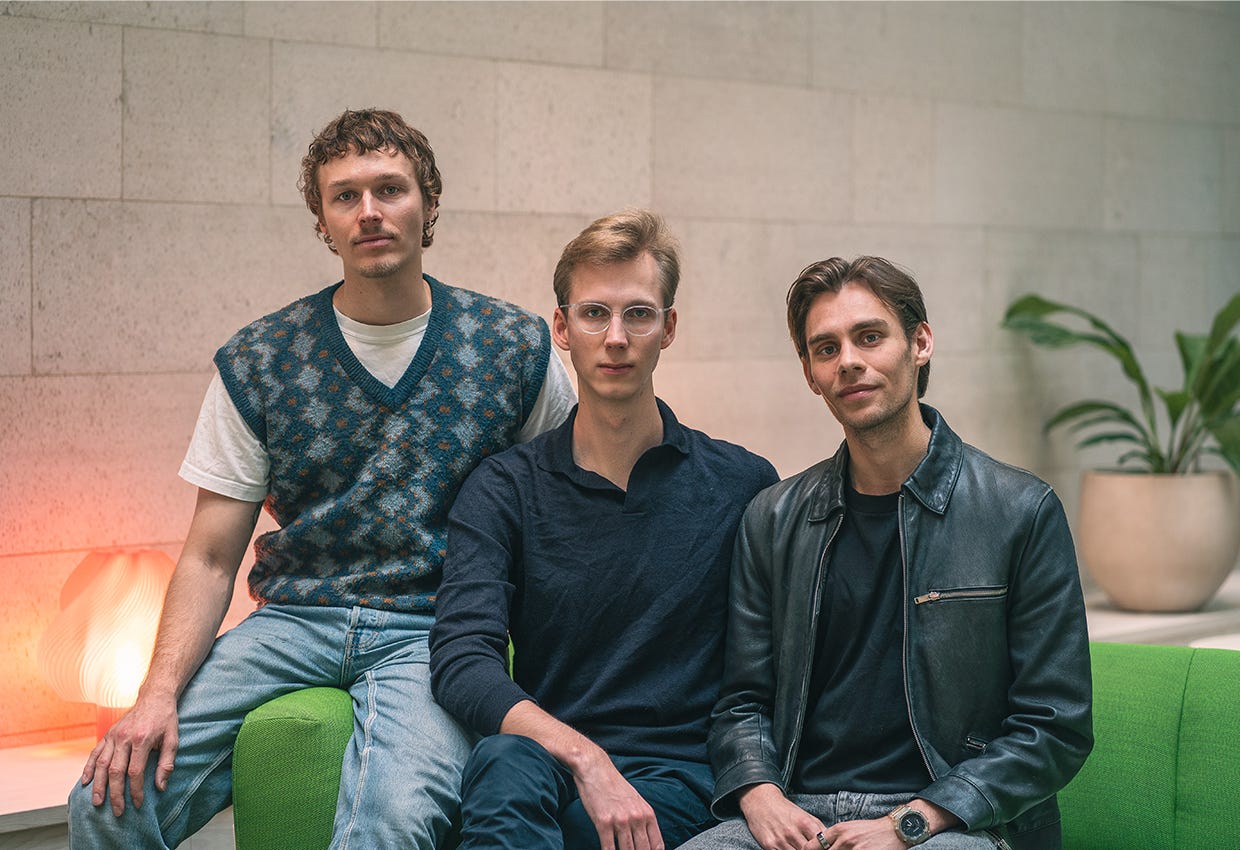
Who: 3 co-founders from Stockholm (none of them lawyers btw):
Max Junestrand (CEO): born in 1999, he studied at the Stockholm School of Economics and joined as an "alibi", 2 friends needed a founder from his school to get into its accelerator.
Sigge Labor (first CTO, now President): is a developer whose YC bio says he "Founded the first-ever Mexican hops company". Also a fan of his linkedin bio = “I’m the family’s tech support”.
August Erséus (first product lead, has since left): went from psychology to programming.
Where they started: a 2021 student side project that ran BERT (an early Google language AI) on Swedish legal sources, restarted as Leya in 2023 with 3 Eng and around €50K of angel money. They launched publicly in Oct 2024 and rebranded to Legora in Feb 2025.
Market wedge: after interviewing about 100 lawyers Max boiled the job down to "reviewing, drafting, and researching", which language models do well. Europe was open too since ChatGPT Enterprise wasn't on European servers yet.
The MVP: Mannheimer Swartling, which is Sweden's largest law firm lent them a conference room that became their "product laboratory for 9 months", and Max demoed to a new person in the firm's canteen every day apparently. Getting that room took 1 meeting, Max had an intro to the managing partner but couldn't get into his calendar until he said "if you don't have time to meet, I'm going to go see your competitor" (bold!). A slot opened up and his pitch in those 30 minutes was "I don't know law, but you don't know AI" (BCG, Jun 2026).
First users: Mannheimer signed in summer 2023 as a design partner and its managing partner introduced Max to firms in Finland and Denmark. Apparently also 1 live conference demo turned into 150 demos before YC (Winter 2024).
Growth Mechanics
Lever 1: Sold through short pilots on the firm's real work
"Their view was if you build IP around this thing, if you build integrations around this piece of software or you build workflow around it, whatever documentation you build to use our software, that's yours." (Chetan Puttagunta, Benchmark partner on Legora's board, GTMnow)
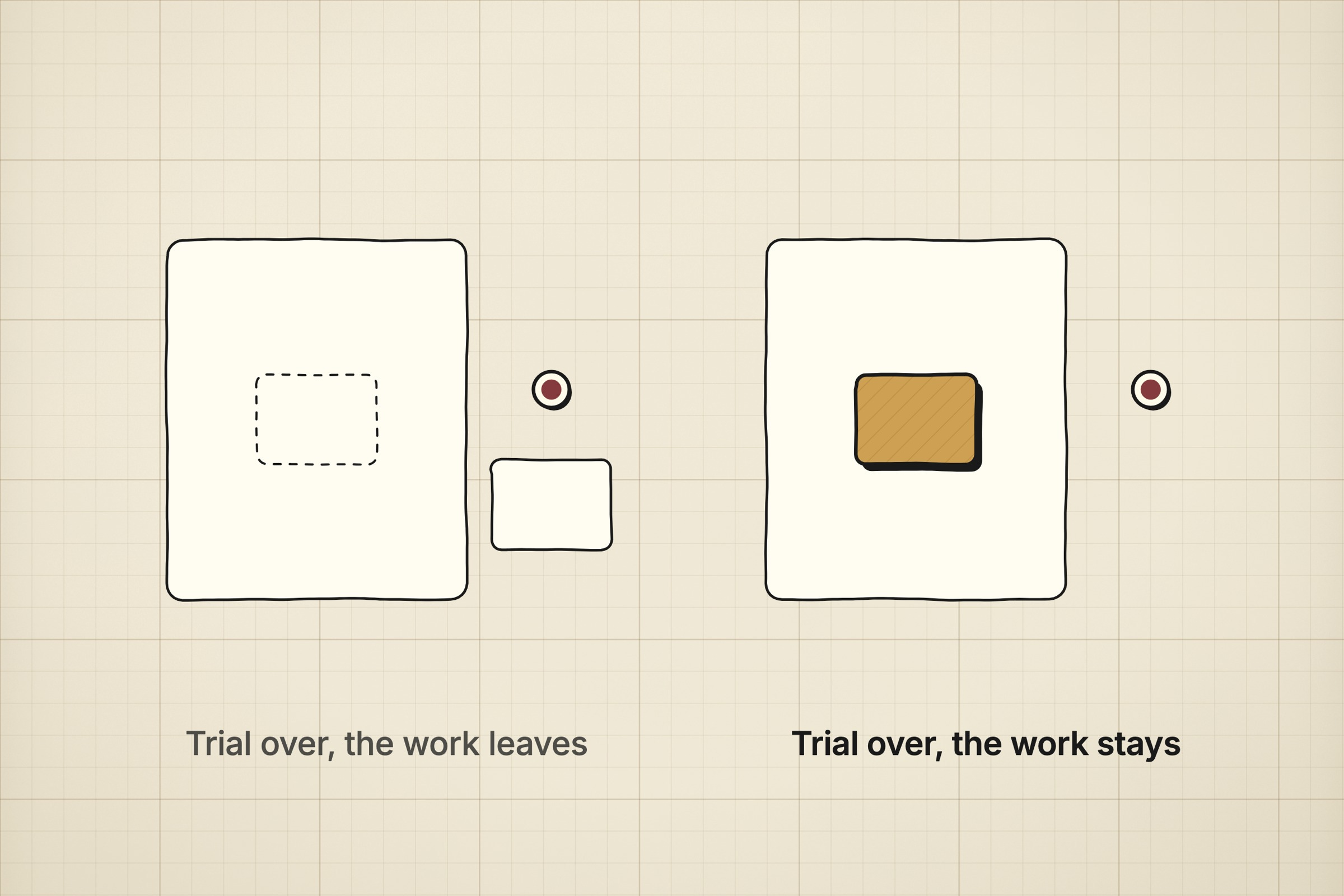
What happened: during YC (early 2024) Max sold 2- or 4-week pilots (mostly paid + priced per seat) to Nordic firms. The batch ended at almost $1M of ARR and Max says every pilot converted. The pilot then became how Legora sells, usually side by side with rivals.
The details:
Some firms want to skip their security review by running the pilot on test or public documents instead of real files. Legora pushes back because that's "a recipe for... low engagement" (CRO Patrick Forquer). The trade is a bit of pain up front but the firm gets through security and agrees what to test, who joins, what counts as a win etc, so you front-run friction but when you win conversion probability is also way up.
Pilots are mostly free now, acorrding to Ricardo Anaya their first US legal engineer (their name for former lawyers they hire to run pilots + roll-outs), because "we don't want to add a friction".
The CFO reported a 75% pilot win rate for Q3 2026 to date.
So what: this is basically a risk reversal play where a firm tries it on its real files and keeps whatever it built on top. And because it runs next to rivals, the lawyers in this case get to compare the tools on their own work (easy decision).
Lever 2: Queued new customers until the product stopped crashing
"We only have one shot with these lawyers because they are very impatient. If it doesn't work, they're not going to come back." (Max Junestrand, 20VC)
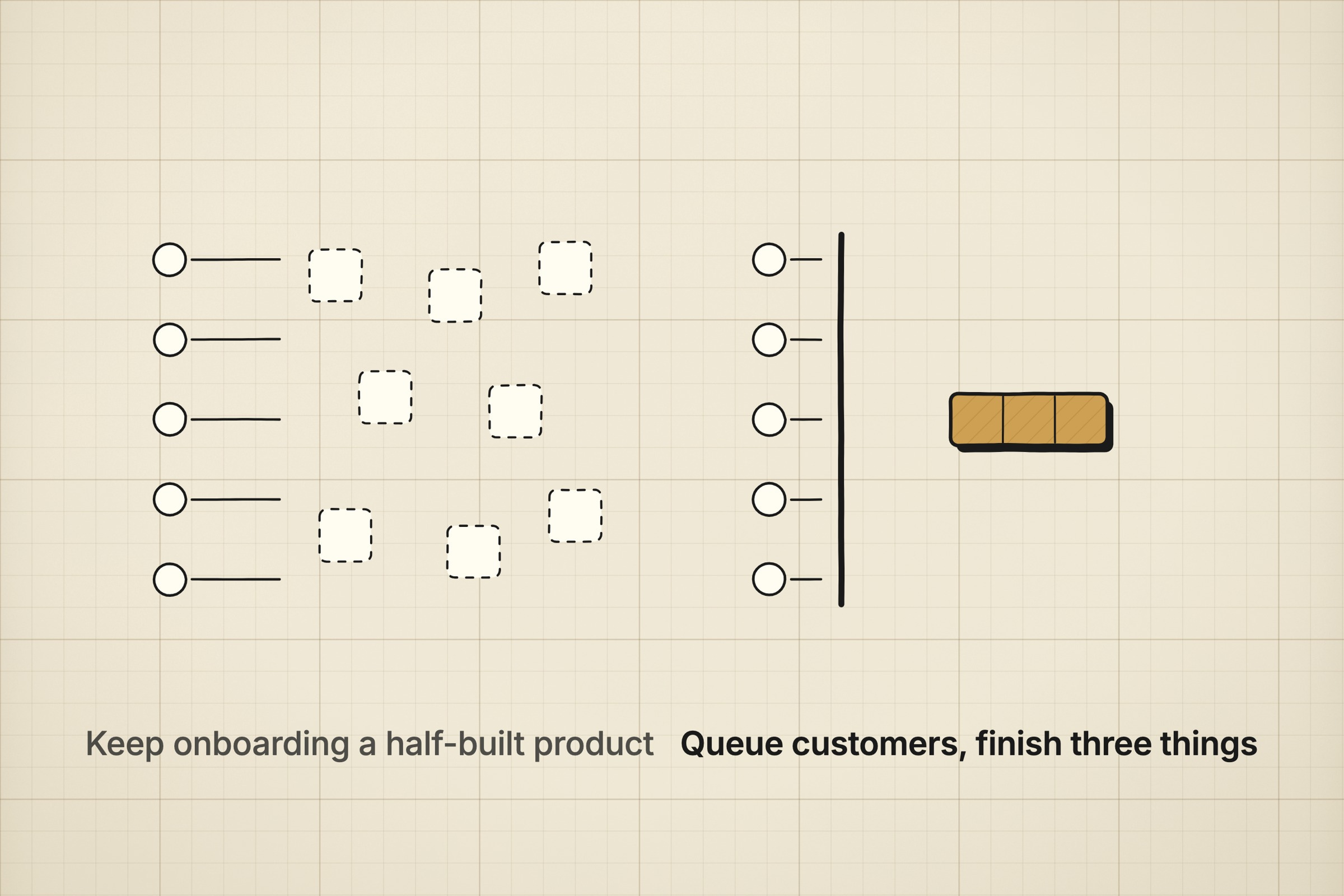
What happened: in spring 2024 they raised $10.5M from Benchmark for their seed and (only weeks later…) a $25M Redpoint Series A. At the first board meeting apparently Max said nobody new would get onboarded until the product coped with big document reviews. Firms that wanted in still signed but went into a queue which they opened on 1 Oct 2024 (c. 6 months).
The details:
A 1K-document review would hit usage limits and crash, and Max says answers were so slow the system was "like a typewriter". The fix was "a good queue system" and "a good file processor", + no new features.
Queued firms could still cancel and weren't counted as revenue, silver lining is that it arguably made Legora look “in demand”.
ARR barely moved though and one month they "made more money from interest rates on those 35 million than we did from customers".
In September they cut to 3 products and "removed 5 or 6 other things that we were building, just deleted the code".
On launch day they were "ready to onboard a thousand lawyers a day", and Max says revenue roughly doubled every quarter after that.
So what: lawyers only give you one shot, so in this case keeping new firms waiting until big reviews stopped crashing was likely the right call (especially using “european summer” as a handy argument). You need a lot of cash in the bank for that (they'd just raised twice consecutively).
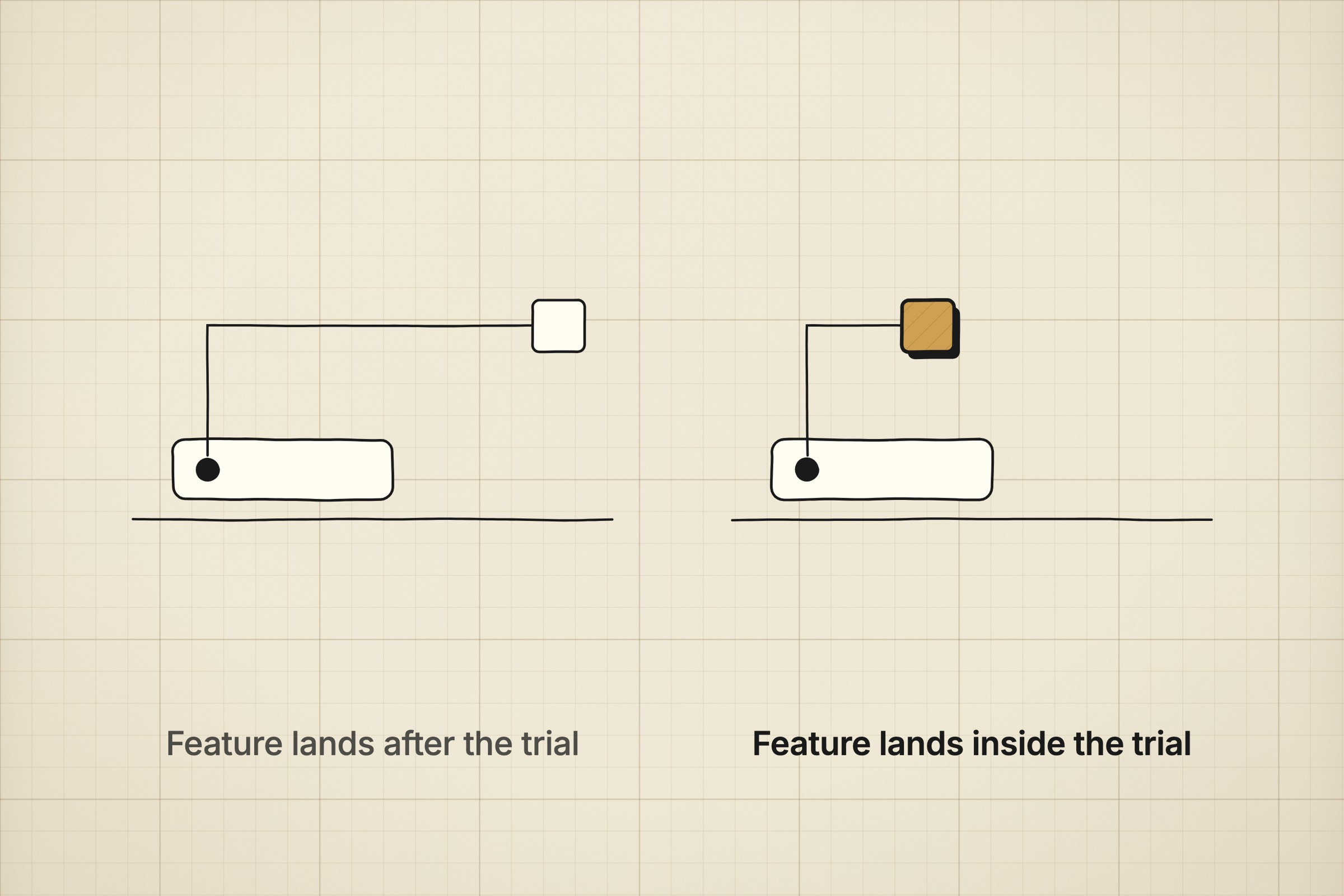
Lever 3: Built missing pieces fast, inside trial windows while buyers were still deciding
"It was me running out and selling things that we didn't have yet, turning around and calling my two co-founders saying, 'Guys, you got to build this until Monday because then I'm onboarding them.'" (Max Junestrand, ICONIQ)