👋 I'm Ivan. I write about how top 1% startups grow.
In case you missed it:
P.S. Paid subscribers get free months of Notion, Granola, etc. See the perks.
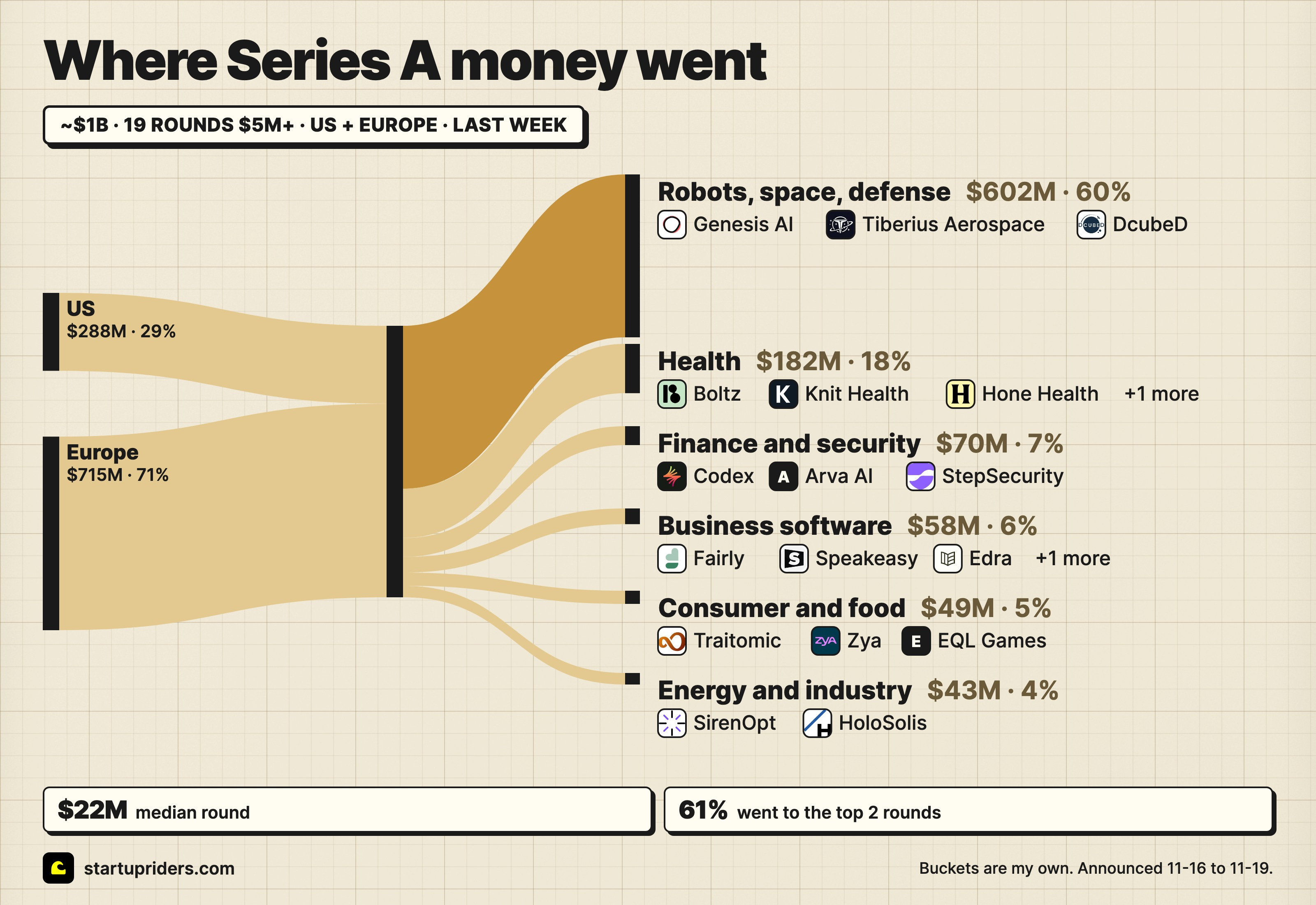
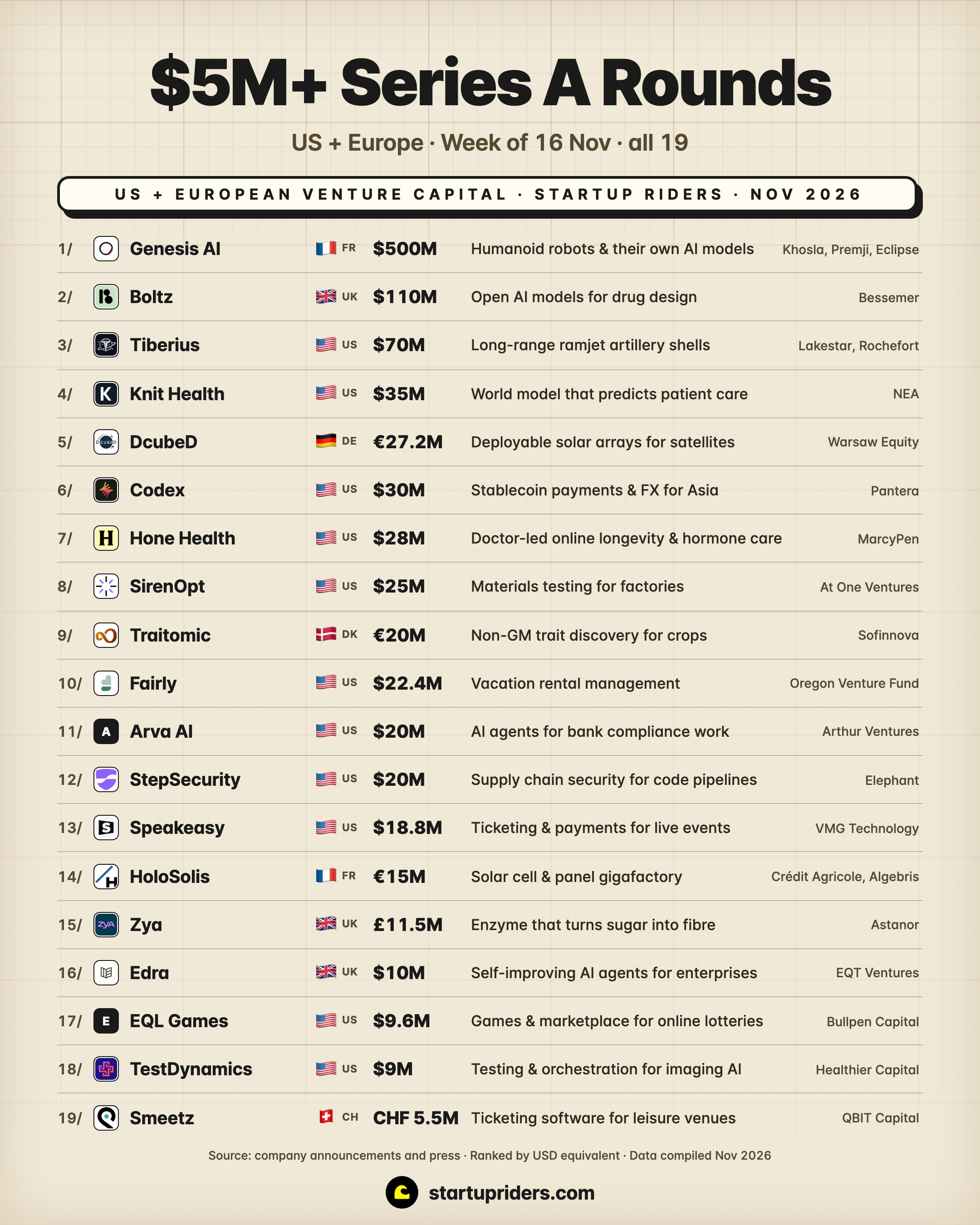
1. 💰 Where the money went
Series A · US + Europe
🚀 Building something? I invest €100K-3M at pre-seed and seed through JME. Reply to this email with your deck.
2. 📈 How they grew
Hello there!
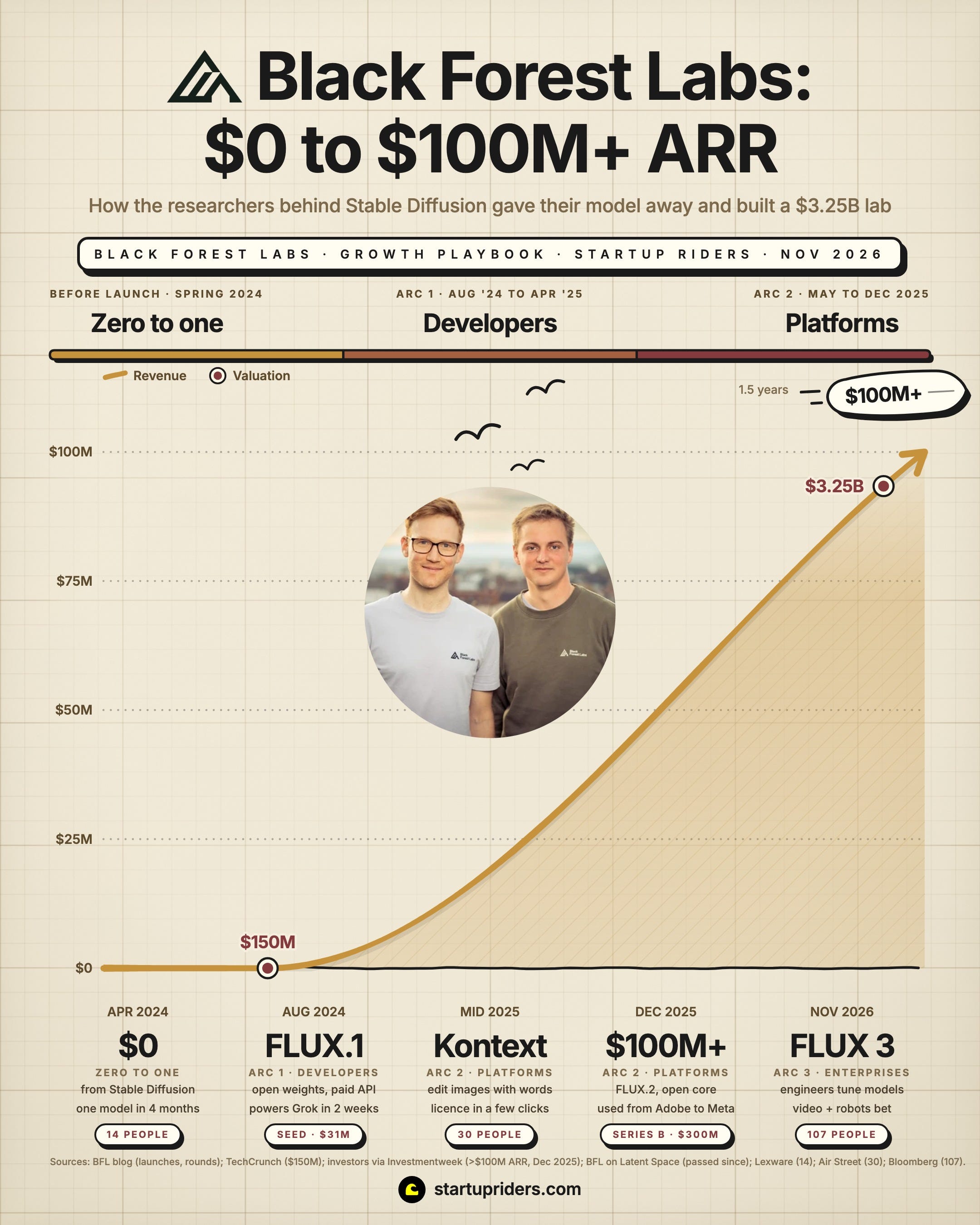
This week I'm diving into 🌲 Black Forest Labs, the AI lab from Freiburg behind the FLUX image models. They went from $0 to $100M+ ARR in about 1.5 years:
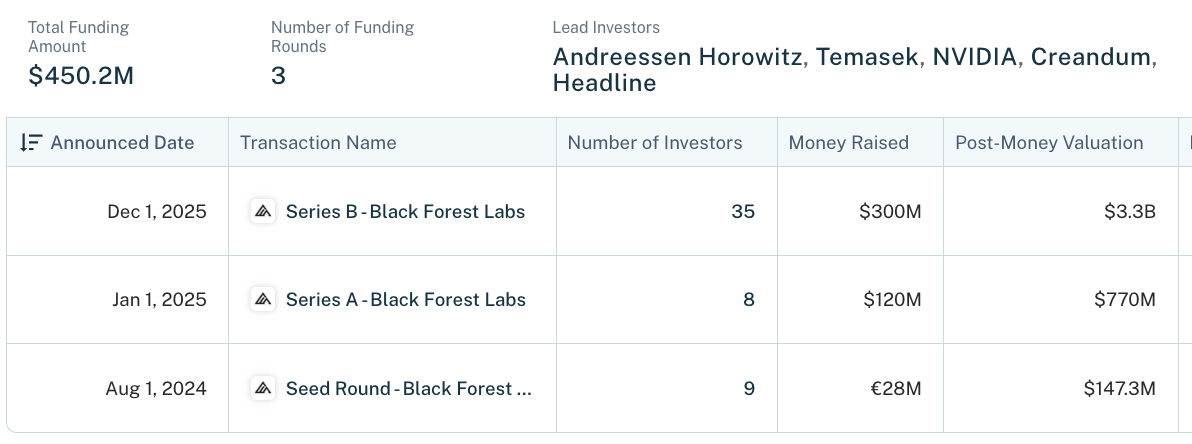
In a nutshell:
Product: AI models that make and edit images (and since 2026, also video) from a typed instruction. Apps use it to do a bunch of things like turning one product photo into a full product photo shoot, keeping the same face across new scenes, filling or swapping backgrounds in Photoshop etc.
Money: apps and developers pay per image either to them or through hosts like fal and Replicate (companies that run AI models on their servers for developers). Companies that want to run a free model on their own servers and make money with it buy a monthly licence, and the biggest buyers sign enterprise deals from 200K images a month. Revenue was reportedly ~$96M ARR by Aug 2025 and, per investors, "from zero to over $100M in 18 months" by Dec 2025. Safe to assume they’re well past that today.
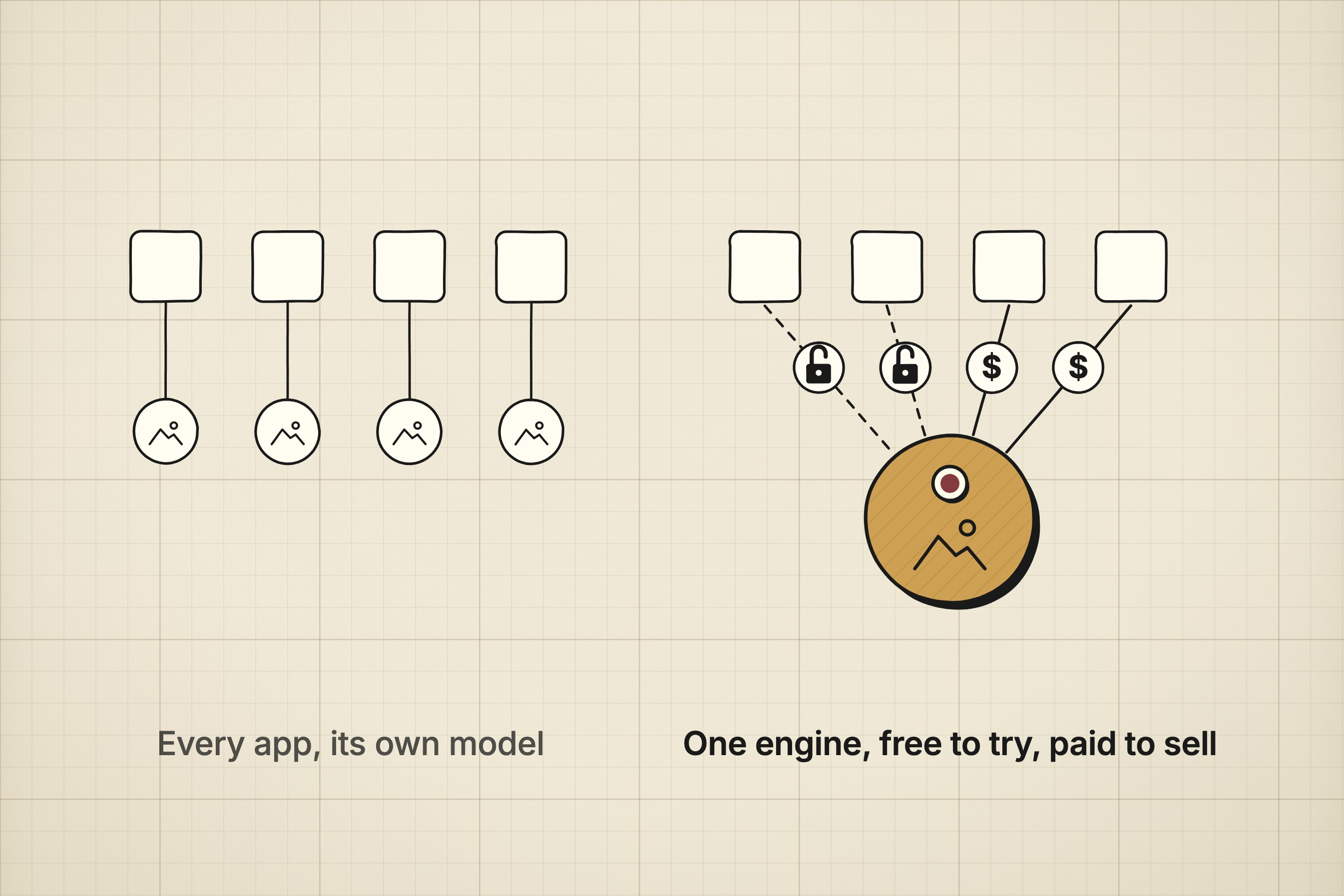
Strategy: picks and shovels + platform play, run as what they call "open core". They sell the image engine to every app in the AI image gold rush instead of building a consumer app, and give free versions to developers to build on. Apps get a top model without training their own, devs get one they can download and tune for free, and BFL gets paid when someone gets paid with it:
📐 Quick note on editorial + methodology: this analysis focuses on the 80/20 mechanics that explain their growth (not a comprehensive profile, not an endorsement or investment advice). I use AI like a fund leverages an analyst for groundwork, the direction + judgement are mine. Company-reported figures are marked, treat estimates as directional. Dots only connect looking back (hi, survivorship bias), but there's still gold in how they did it.
Zero to one
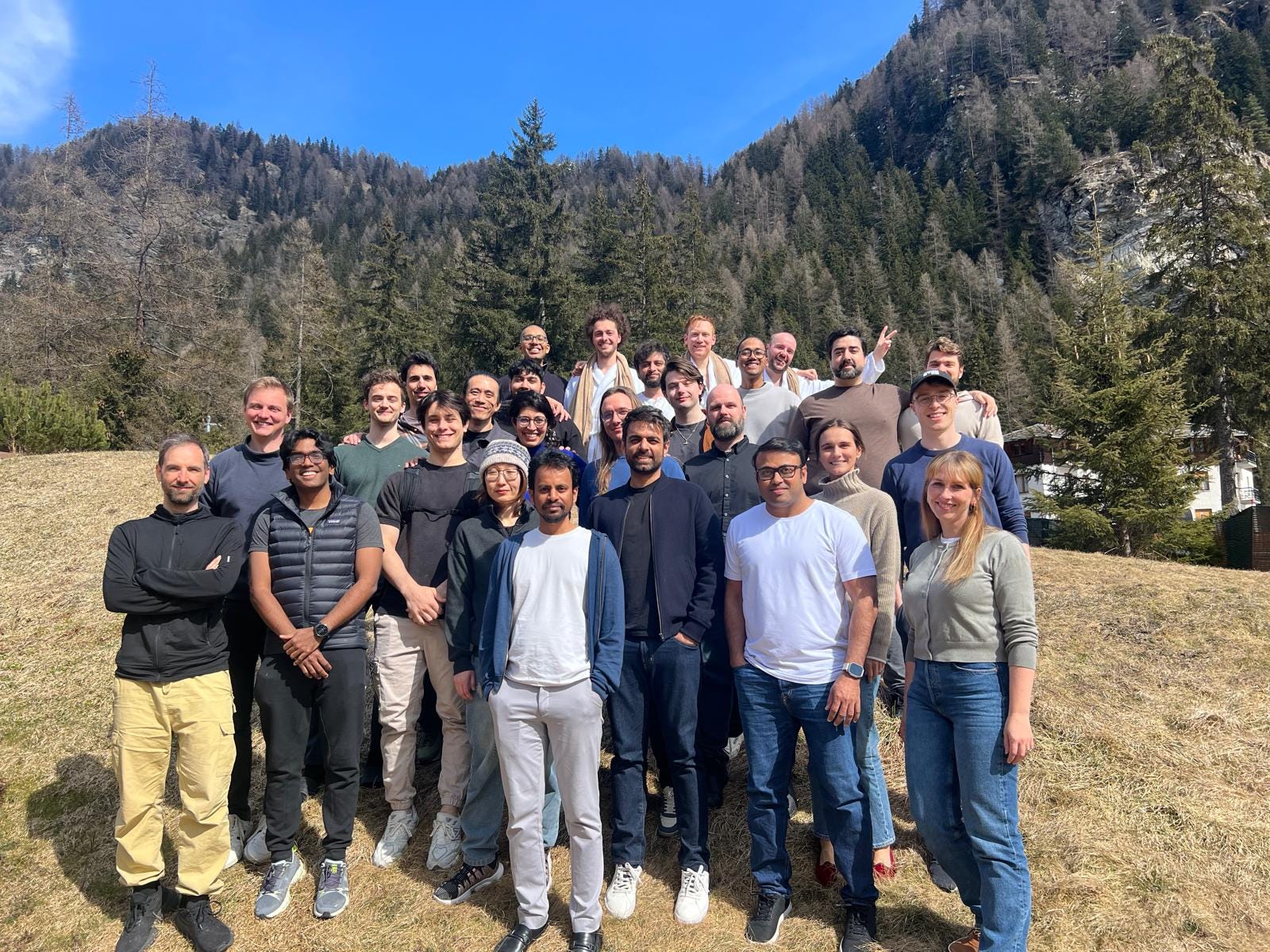
Who: 3 PhD researchers whose work became Stable Diffusion.
Robin Rombach (CEO): started in theoretical physics and "didn't really like programming at all" then joined the computer vision group in Heidelberg in 2017/18, where Patrick ended up supervising his master's thesis.
Andreas "Andi" Blattmann (co-founder, now leads research): turns out he and Robin were born 15 km apart but only met during their PhDs.
Patrick Esser (co-founder): Robin's thesis supervisor, was working at Runway when they trained Stable Diffusion together with Stability AI
Where they started: tiny lab in Heidelberg competing with Google, Nvidia and OpenAI on papers with small GPU boxes "racked up in the basement of our institute". The lack of compute pushed them into models that took fewer resources which led to Stable Diffusion in 2022. Stability AI's ~$100M Series A then paid for a research lab Robin and Andi ran for ~1.5 years, they picked Freiburg for it and hired the team themselves.
Market wedge: in early 2024 the best image models (DALL-E 3, Midjourney etc) were all closed and the open ones still struggled to draw hands "actually having five fingers". Having already built Stable Diffusion and a couple more models at Stability, they "pretty much had the recipe" and went after 1 domain only, a model "10x better than everything else". Image was the easier start ("one of the easier modalities"), since video was the real plan.
The MVP: they started in April 2024 with 14 people and went on their first offsite to an Airbnb in France near Freiburg, "just us hacking 24/7" (Freddy Boesel, founding team), with everybody cooking one evening for the others. They started training FLUX.1 that week and "it took longer to register our GmbH than to train FLUX.1" (😅). It shipped Aug 2024 with a $31M seed led by a16z.
First users: "a couple of very large customers" were in before their paid service was public. After launch the free model got 700K+ downloads in 1st month and the top community review was titled "Flux is what we wanted SD3 to be".
How BFL is built
The company seems to have 3 parts (research + product, growth through the free models and partners, and sales). As far as I know for the 1st year or so the first 2 did all the selling while Andi (researcher) was running go-to-market himself.
The first dedicated sales jobs only went up in April 2025, and in an interview out in Aug 2025 their finance lead said there were still only "a couple" of salespeople. Today a Head of GTM runs that side while Andi is back leading research.
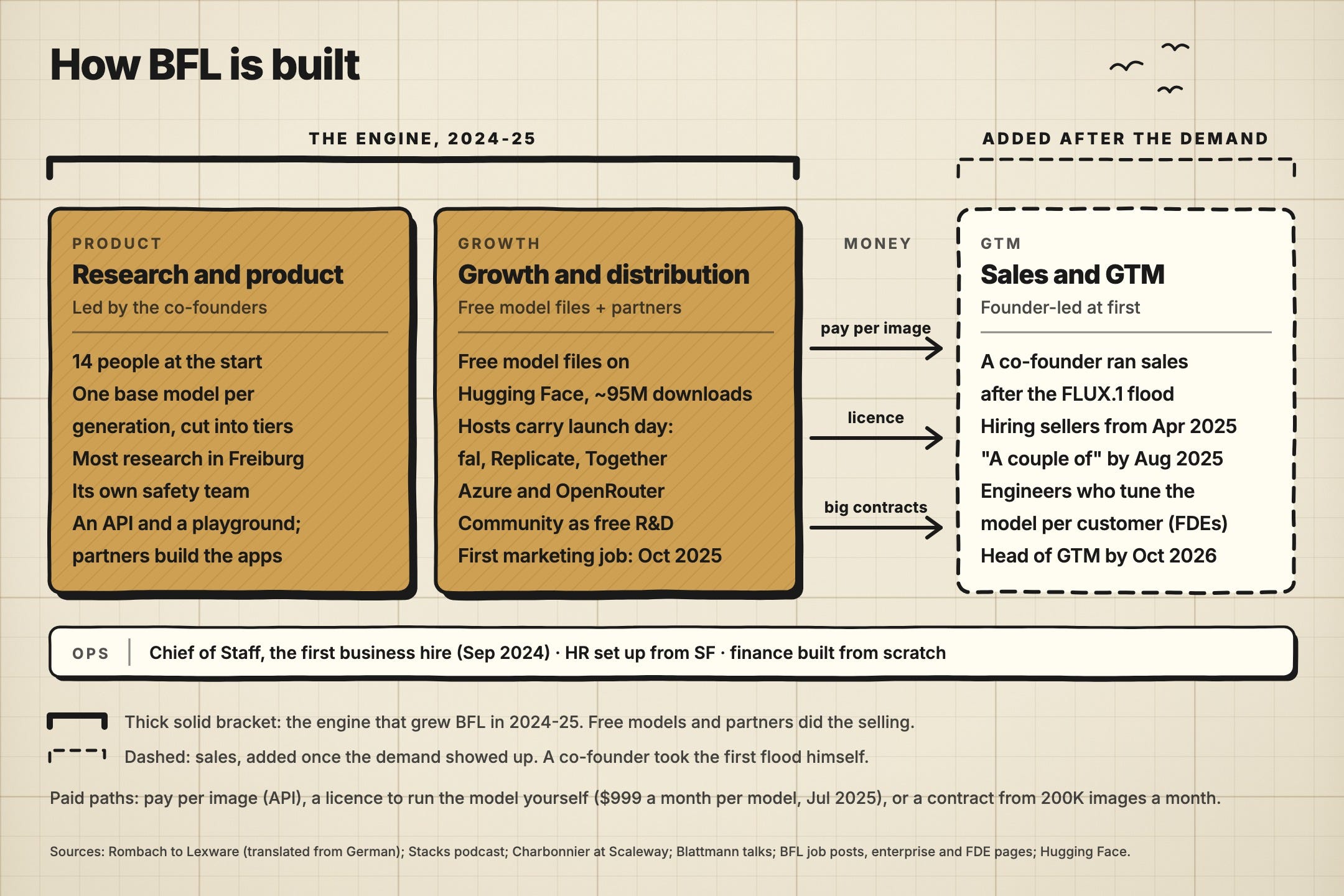
How the team was built:
Apr 2024: 14 people, founders split who does "company building" vs the research, first non-technical hires come after the first model shipped.
Sep 2024: first business jobs = Chief of Staff / BizOps + Biz dev generalist.
Apr 2025: first account exec, solutions engineer and partnerships managers.
Jun to Sep 2025: 30 people, with a SF office opened that year. RevOps + first forward-deployed engineer jobs went up in September.
Oct 2025: first growth marketer job, to grow "without relying on paid acquisition".
Aug 2026: field marketing, to turn the attention FLUX gets "into pipeline".
Oct to Nov 2026: 100+ people. Most of the research team still sits in Freiburg.
Now let’s get into the 8 growth mechanics I found most interesting 👇
Lever 1: Gave the product away, charged commercial users
“Open source is just a very good way of extending a funnel.” (Andreas, Fortune)
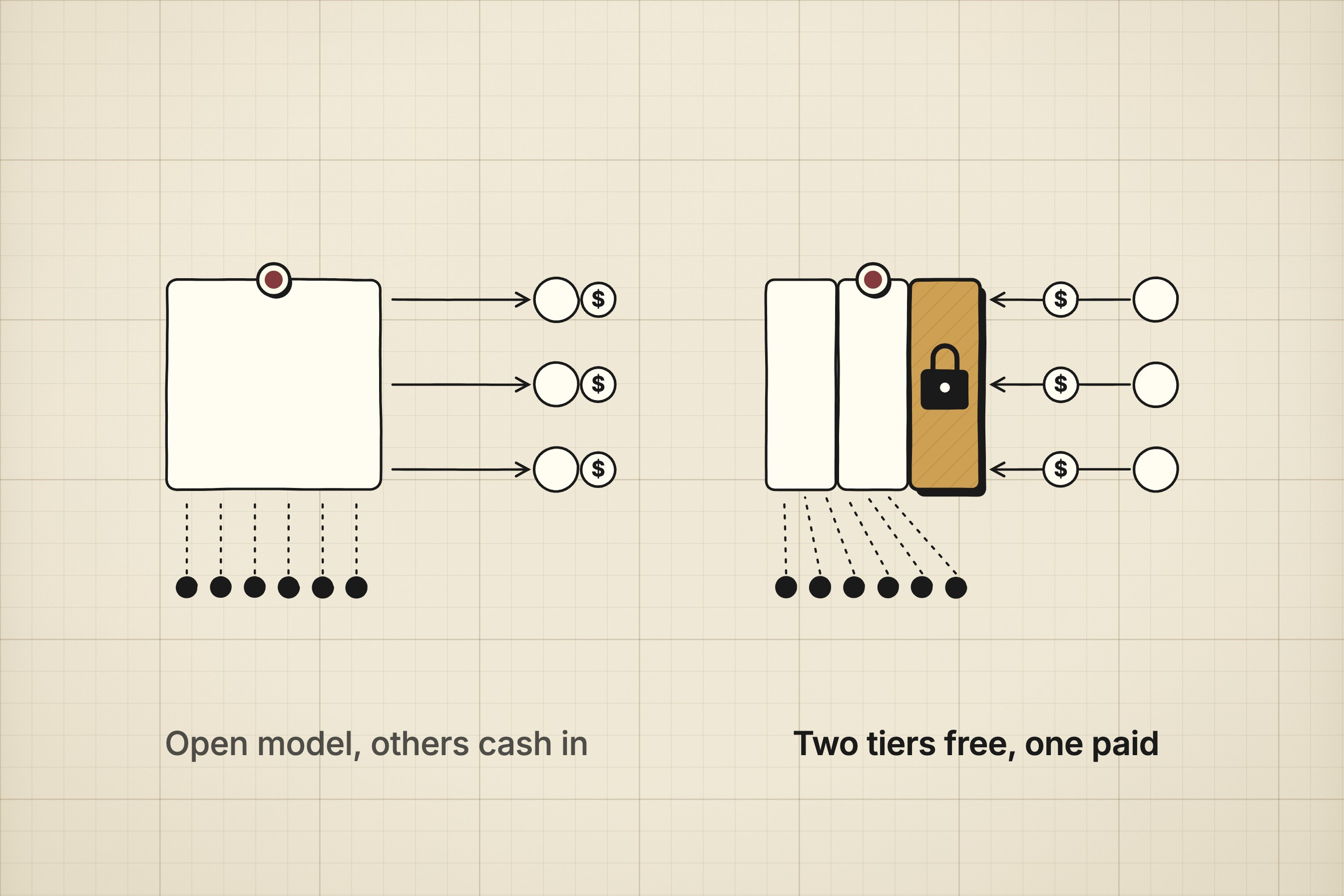
What happened: this was their first move decided before they had users, after watching other companies make the money on their models at Stability. On launch day they shipped FLUX.1 as 3 versions of the same model. Their best one [pro] stayed behind their paid API, and [dev] went out as open weights with a licence needed once you make money with it. [schnell] was free for anything.
The details:
Cut every version from the same model: [dev] was distilled from [pro] and then [schnell] was also distilled again from [dev] down to 4 steps.
Put free ones where devs hung out: weights went up on Hugging Face and by Feb 2025 Rombach said [dev] "used to be the most popular on Hugging Face" until DeepSeek knocked it off.
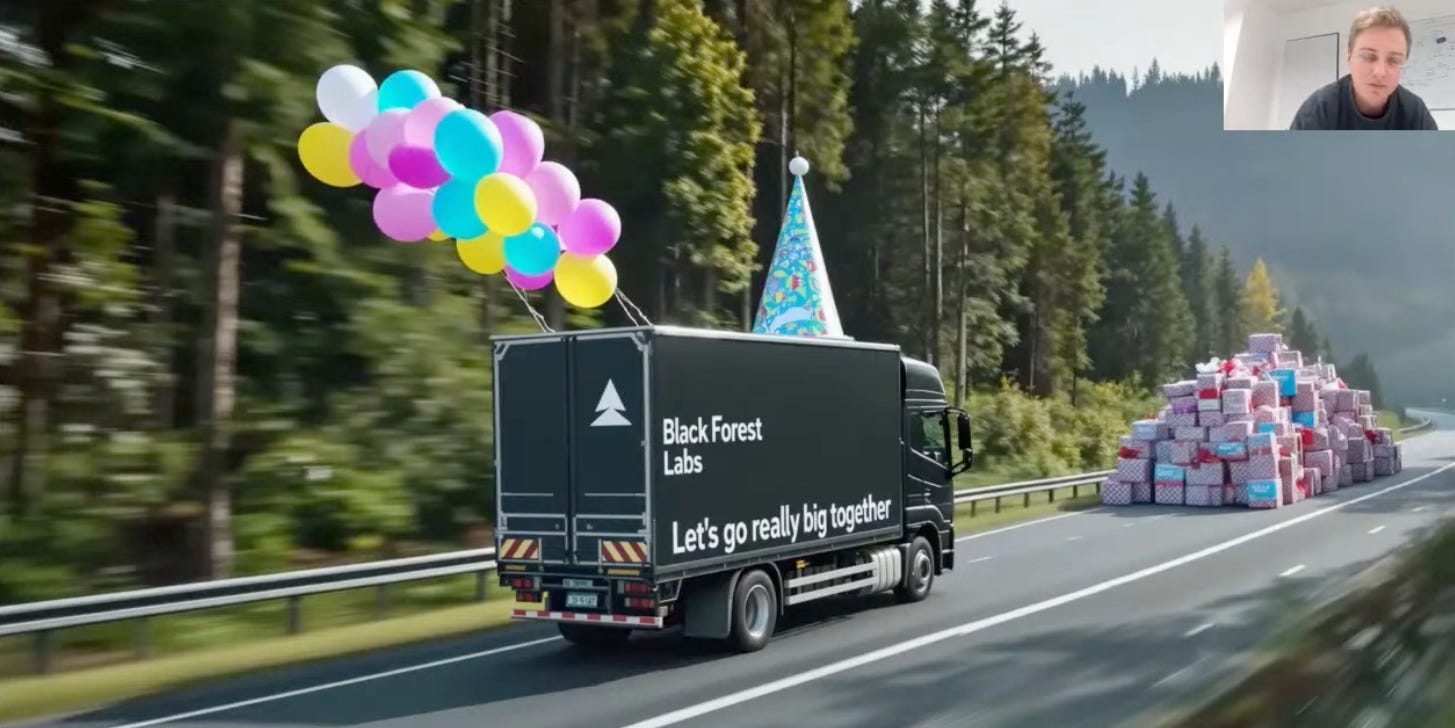
So what: this is their open core approach where free copies were “good enough” so that devs built on them (doing a lot of R&D for BFL for free) and the ones who start earning with it walk into a licence or the API.
Arc 1: Developers
From launch to spring last year they went from 15 → 30 people (with no sales team yet) and their own servers still ramping up, and ran into a firehose of dev demand:
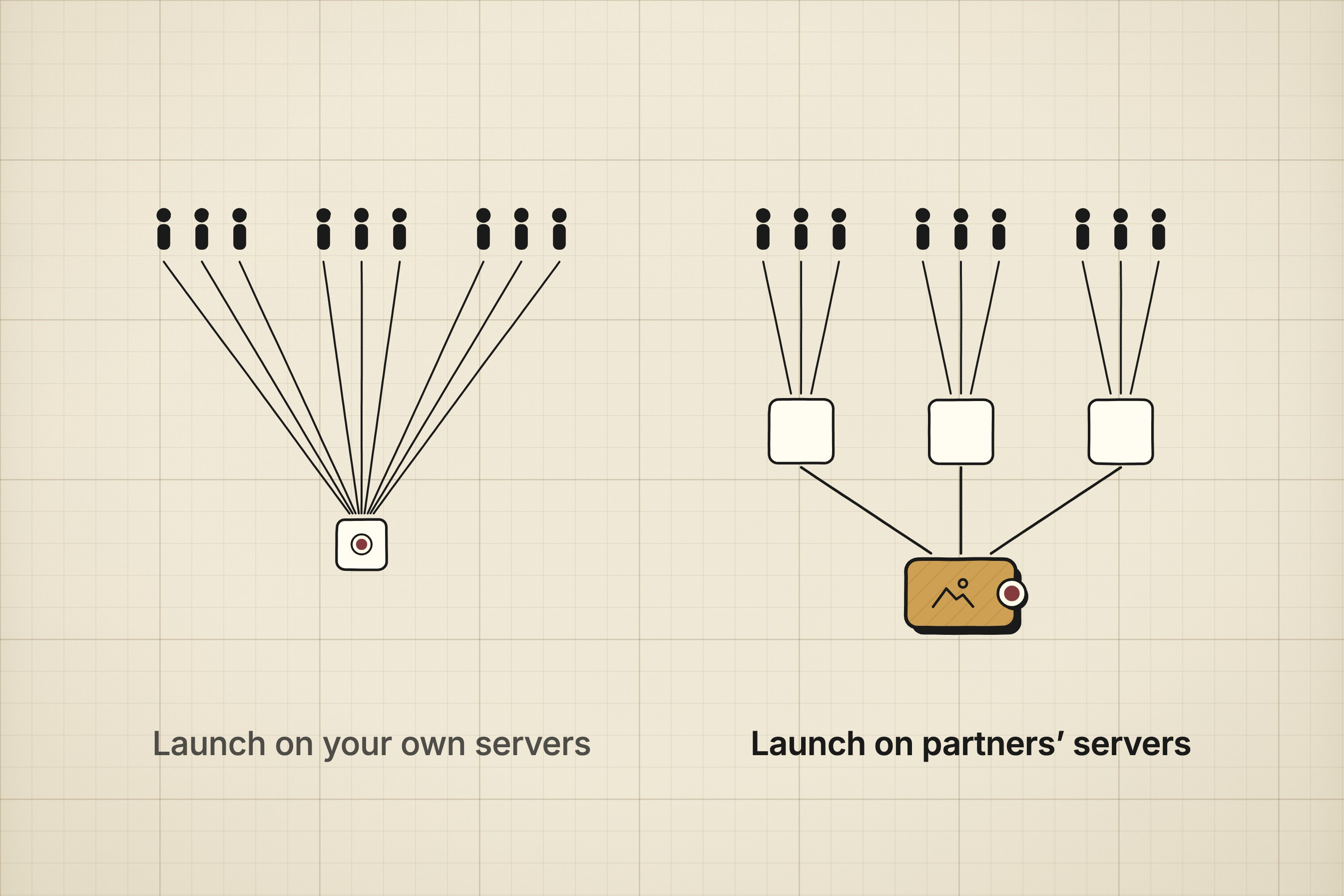
Lever 2: Let partners carry the launch-day traffic + hype
“I think what we are doing is that we want to own everything that makes the model better… with a lot of other things around it, we partner relatively intentionally” (Freddy Boesel, fal)