👋 I'm Ivan. I write about venture capital + how top 1% startups grow.
In case you missed it:
P.S. Paid subscribers get free months of Notion, Granola, etc. See the perks.
1. 💰 Where the money went
Series A · US + Europe
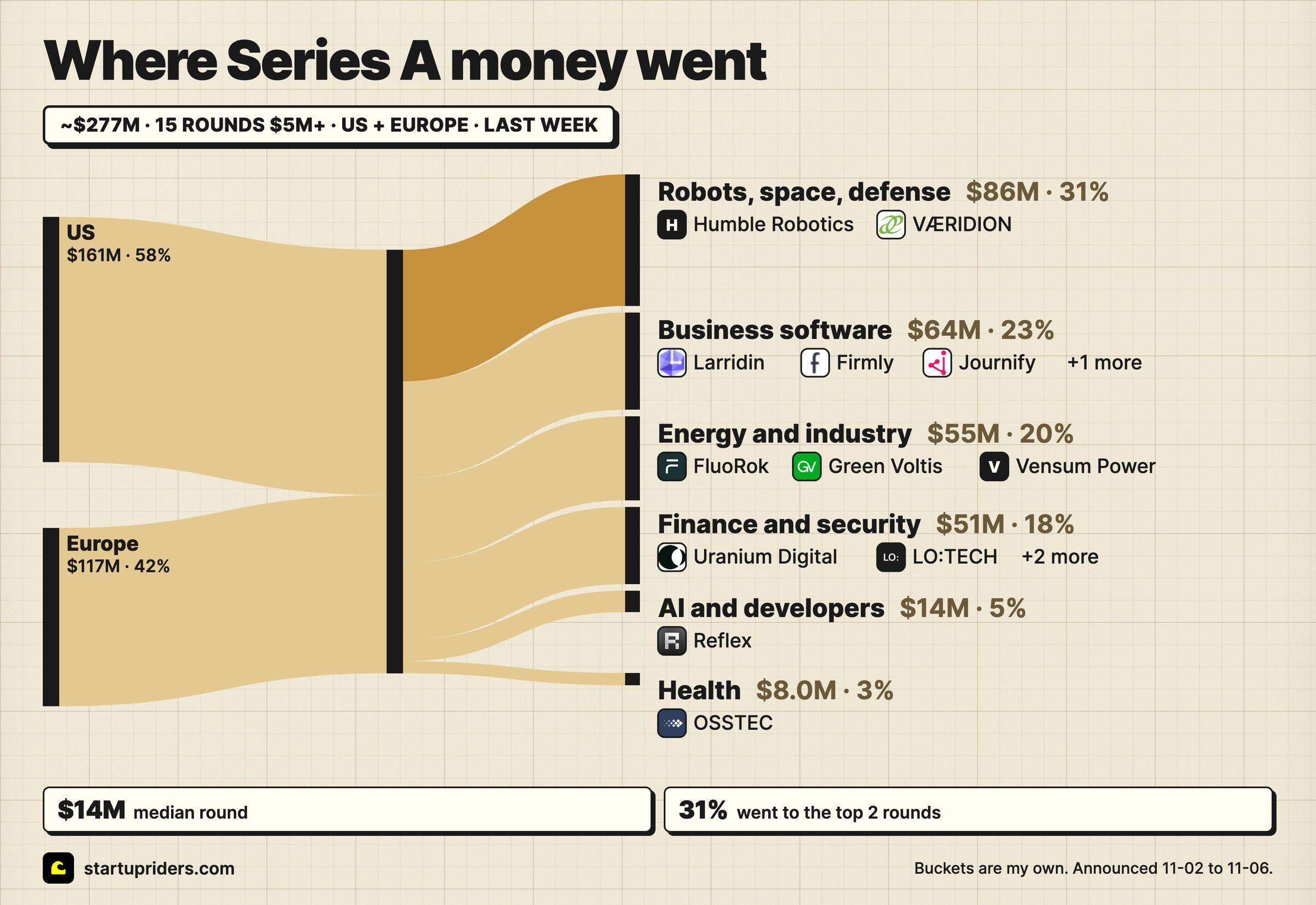
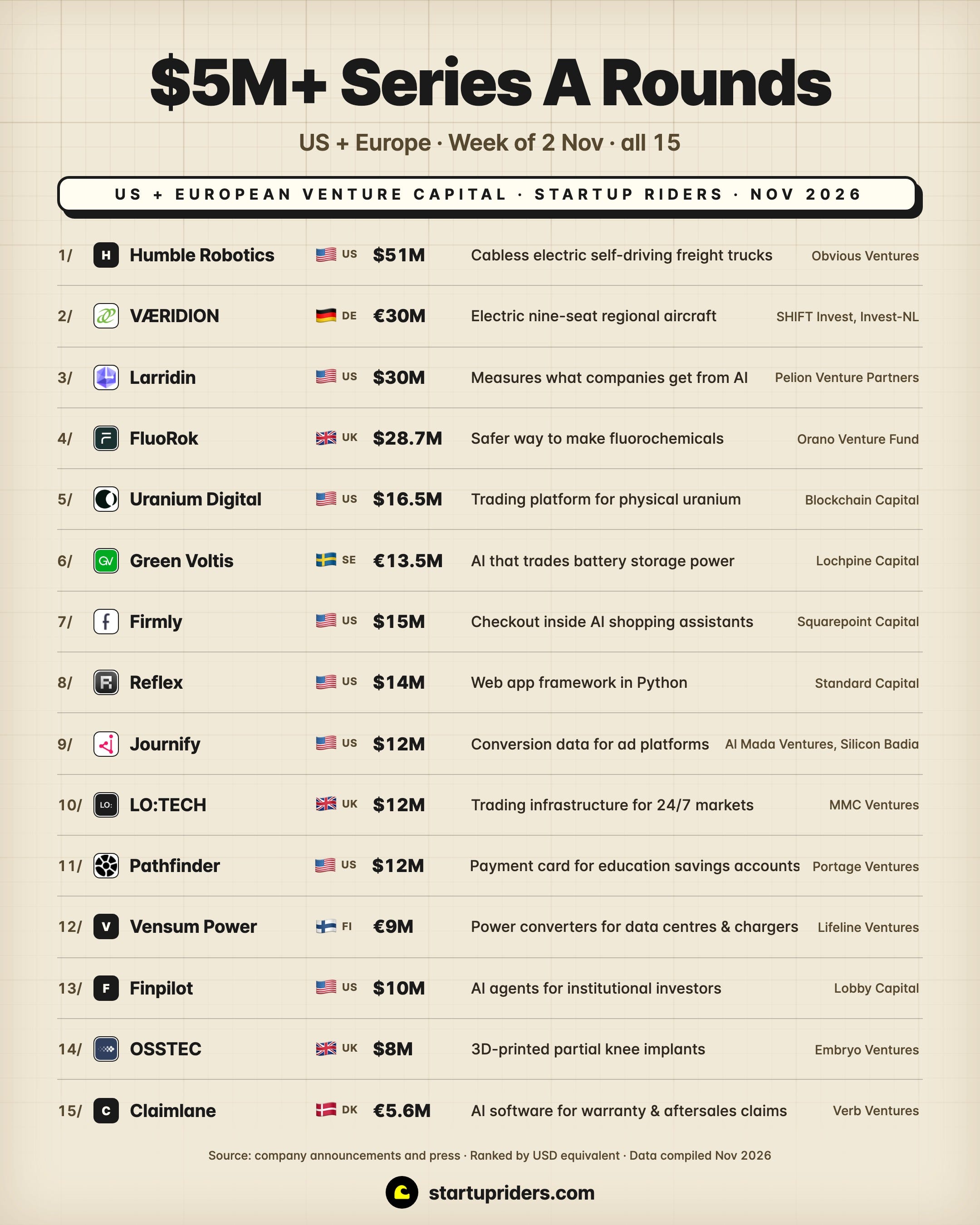
Continuing my attempt at mapping worldly product-market fit, here’s what came out of our Series A Terminal this week (would love your thoughts, reply to this email!):
🚀 Building something? I invest €100K-3M at pre-seed and seed through JME. Reply to this email with your deck.
2. 📈 How they grew
Hello there!
This week we're diving into 🥄 Bending Spoons.
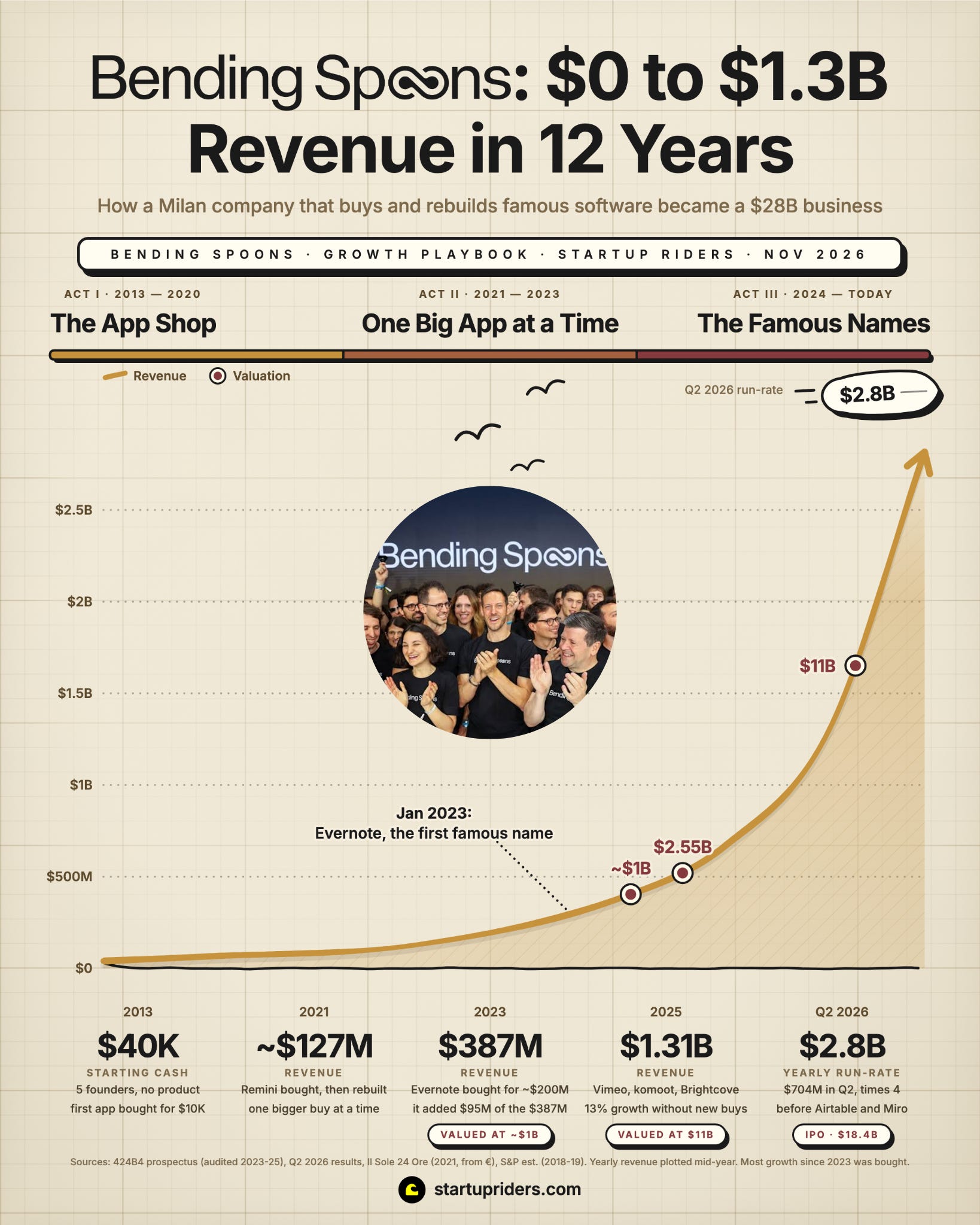
I’m stoked about this one because this is an Italian company, from Milan, that shows how you can build a phenomenally successful business + IPO on the NASDAQ from Southern Europe. These guys buy (and rebuild) software millions of people already use (you’ve probably heard of Miro, Airtable or Evernote), now worth around $28B.

In a nutshell:
Product (more like a playbook) = acquire, transform + optimize, then reinvest. They have 500M+ monthly users and 9M+ monthly payers.
Money: 93% of 2025 revenue came from subscriptions. Revenue went from $387M in 2023 to $1.31B in 2025, with $2.78-2.82B guided for 2026 before counting Airtable and Miro. Most of it was bought. Organic growth was 13% in 2025 and 3% in Q2 2026, most levers discussed later are about making a bought product earn more.
Driver: "We would, in effect, be outsourcing the search for product-market fit, while directing all of our energy toward excelling at everything else." (founders)
Strategy: this is a counter-positioning + scale economies play. They buy software with product-market fit + quality, run it on a shared machine that makes it more profitable, then use the cash to buy the next one. The “machine” = a set of in-house tools + one team that moves between products.
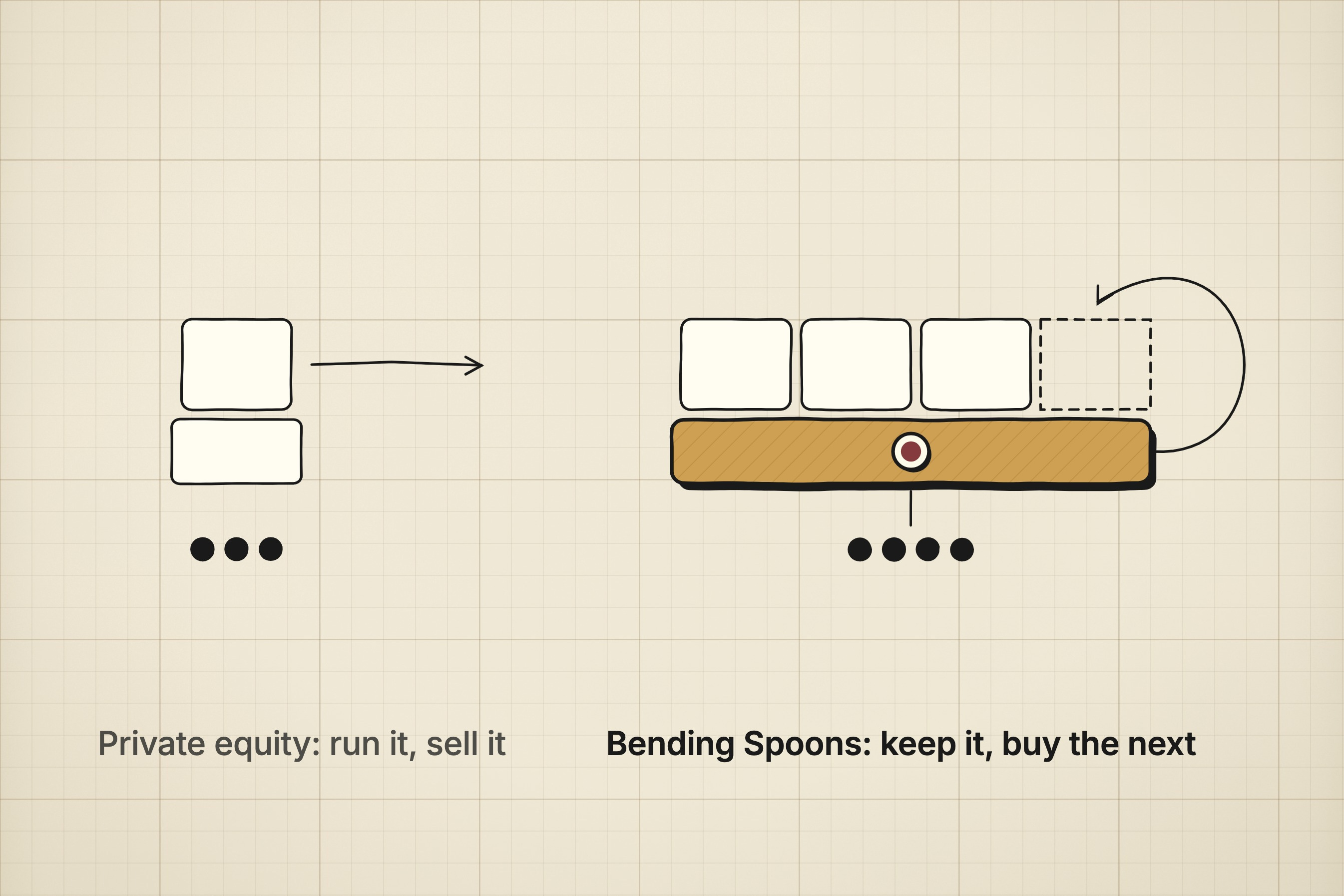
7 growth mechanics I found in this drop:
Buying products people already rely on
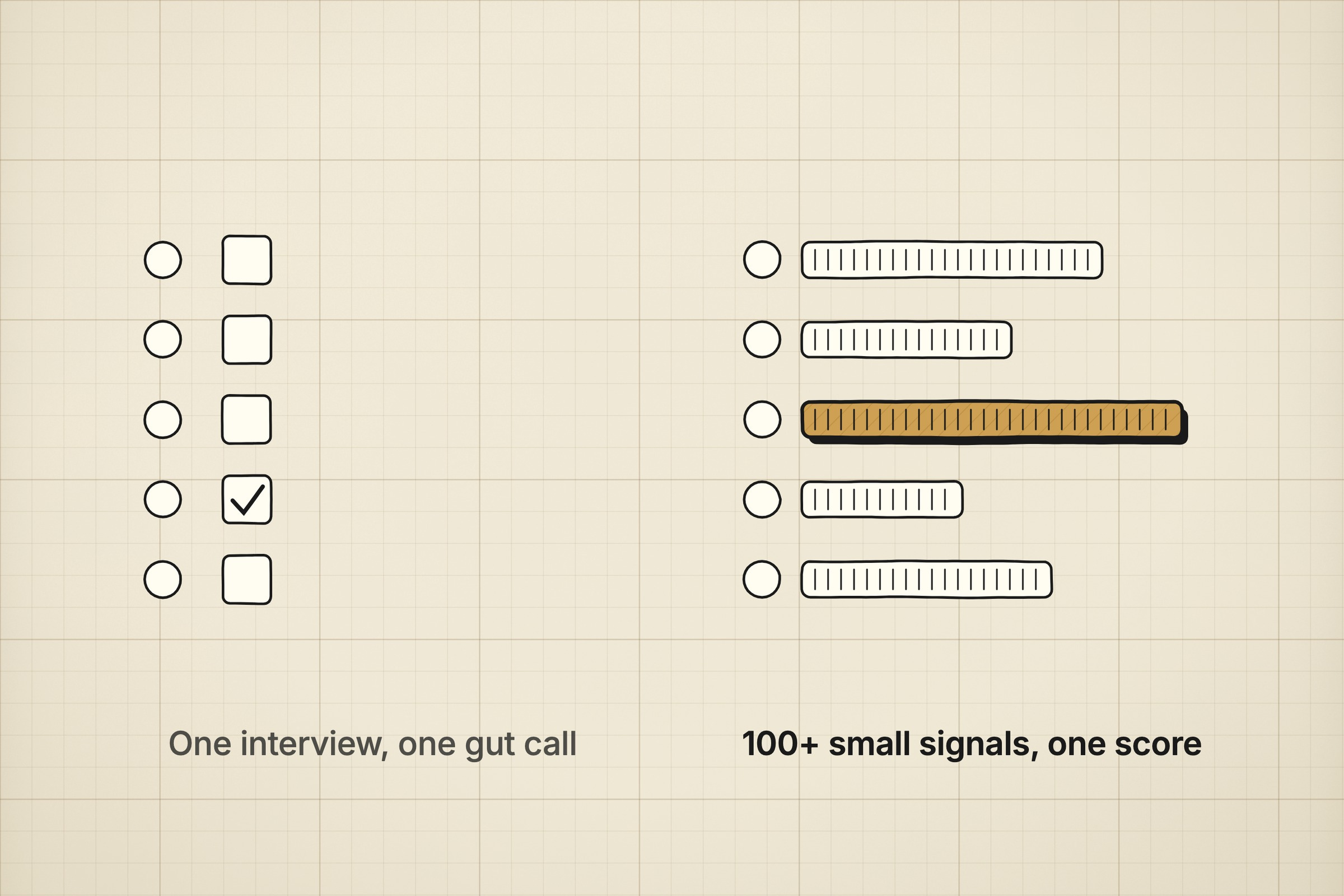
Hiring scored on 100+ signals
Deals that repay their own debt
Small team, 1 shared toolkit
Complaints fixed before features
Heavy users pay more, light users free
Constant tests on price and free features
📐 Quick note on editorial + methodology: this analysis focuses on the 80/20 mechanics that explain their growth (it's not a comprehensive profile, not an endorsement or investment advice). I use AI like a fund leverages an analyst for groundwork, the direction + judgement are mine. Company-reported figures are marked as such, treat directional estimates as directional. Dots only connect looking back (hi, survivorship bias), but there's still gold in how they did it.
Zero To One
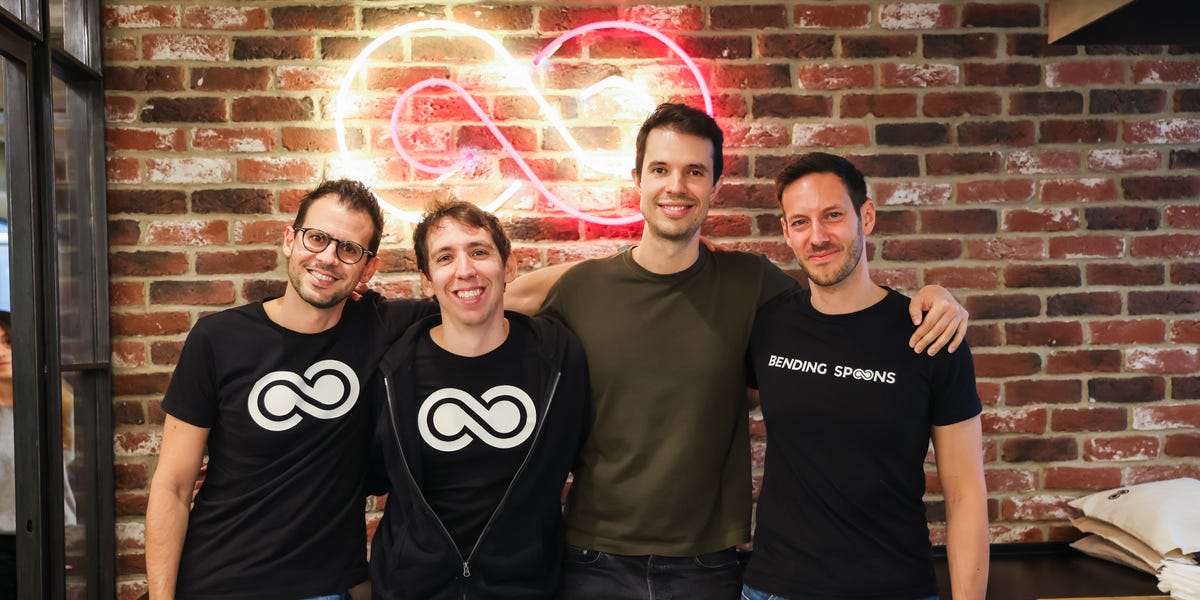
Who: 5 co-founders from the same startup (“built on its ashes”):
Luca Ferrari (CEO): from Verona, took a job at McKinsey (2010-2012) using his salary to pay the others' food and rent.
Francesco Patarnello: from Padua, he was the first startup's CEO and ran Evernote himself back in 2023.
Matteo Danieli (product, former CPO): from Vicenza, left a PhD after Nokia, and filmed the 2010 trip where they decided to start a company (it's on Vimeo, which they now own!).
Luca Querella: from Turin, had built 20+ iPhone apps.
Where they started: they built Evertale (phone app that used AI to write a diary) and raised about $1M but by mid-2013 had "essentially no revenue". The investor sold them its shares for $1 rather than pay lawyers to close it so they kept the leftover $40K and started Bending Spoons. To raise cash for a first purchase they tried building software for others which landed one €10K burger-chain app after months of cold calls ("I had a real breakdown... I cried").
The MVP: in 2014 they paid $10K for an iPhone keyboard app with "negligible revenue" but a bunch of users and a good App Store position and rewrote it completely. They "ultimately made 20K" off it which paid for the next small deals and they were off to the races.
First users: came with the purchase + App Store ranking kept bringing new ones.

Growth Mechanics
Lever 1: Make Buy something people want
"We let others seek market fit and then, if they will sell it to us, we will acquire their company and try to make it even better." (Luca Ferrari, CEO and co-founder, 20VC)
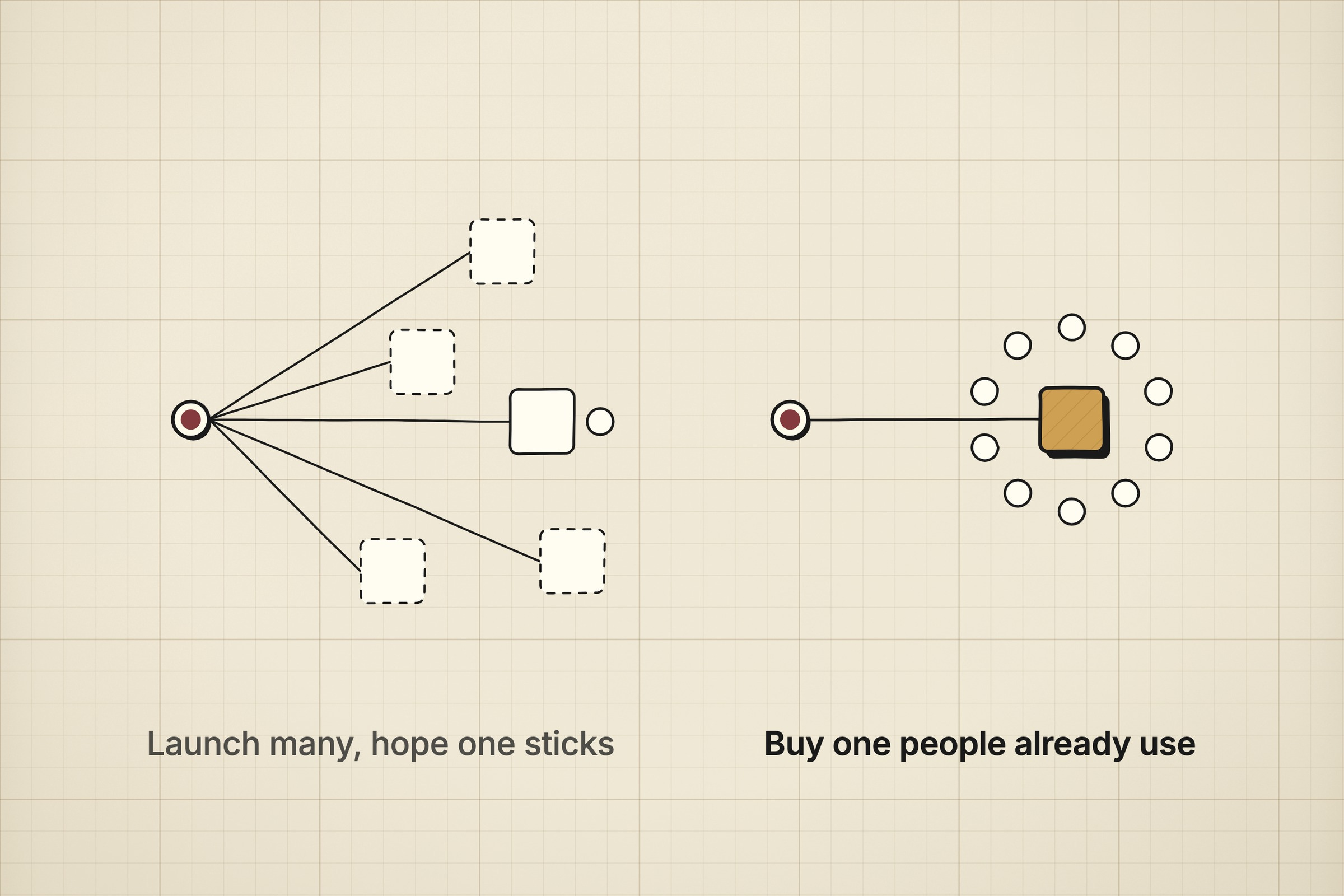
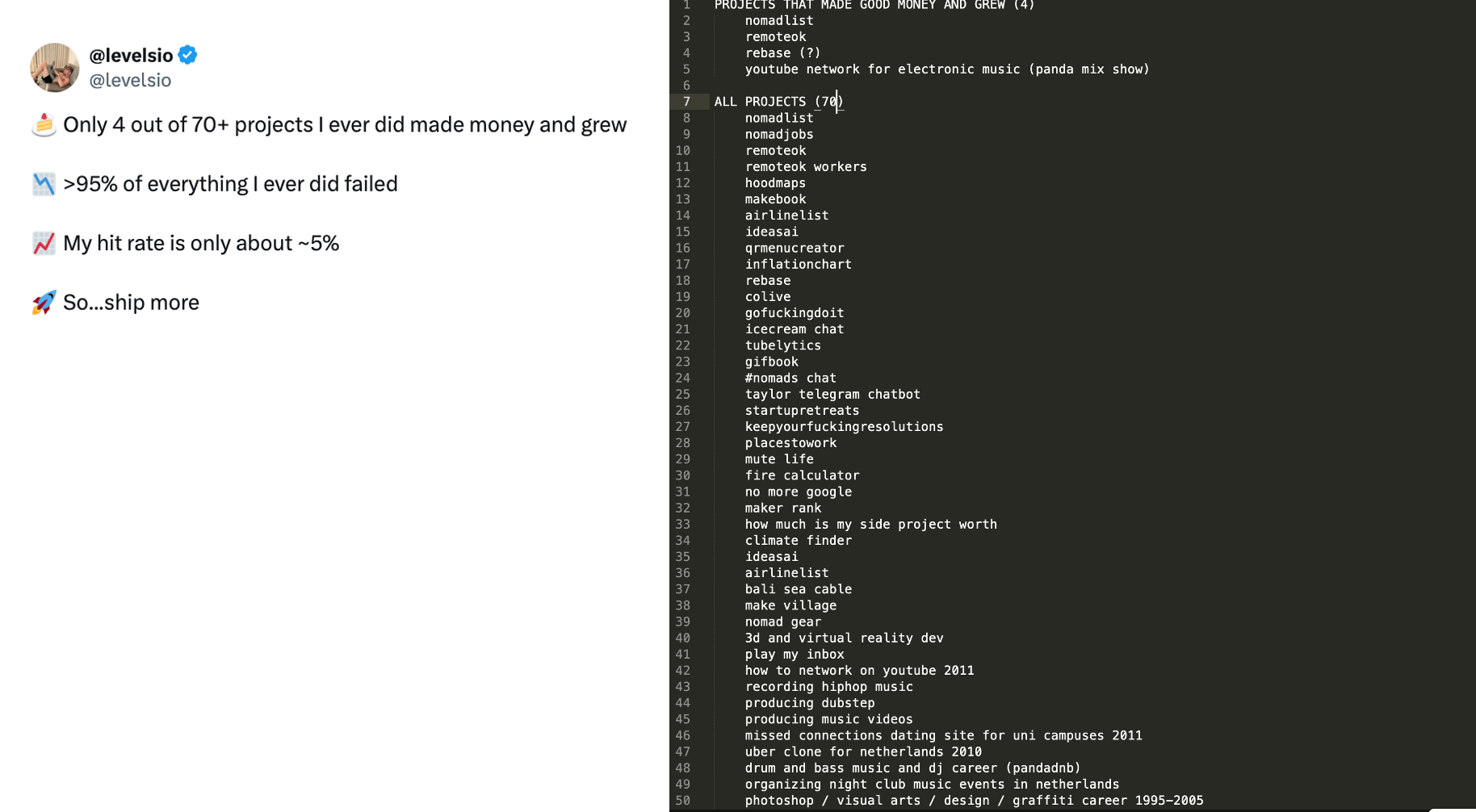
What happened: most people don’t realize how many things you usually have to ship before something sticks. In their case the products they built themselves initially kept coming out small / without product-market fit. A basic fonts app made them around $10K, a live quiz game lost money, they put about $6-7M into a "Netflix of mobile games" before shutting it etc. Buying became their main play and where it turned out they had the best founder-market fit (operational excellence).
The details:
Their prospectus lists what they screen for = "strong customer retention", future revenue "largely supported by existing customers", little need for paid ads and many years of customer data. Largely neutral on whether the target is still growing.
In 2025 they looked at 2.5K+ companies (most too small for them), studied about 200 in depth and bought 6 (not too dissimilar from an early-stage VC funnel really).
In Q1 2026 the average subscriber (weighted by what they pay) had first signed up 8 years earlier (not necessarily paying the whole time).
Remini (their photo-enhancing app bought in June 2021) made about 9.5x its 2021 revenue by 2025 (an unaudited chart in the filing).
So what: buyers typically pay for growth, but Bending Spoons is happy to buy something that’s stopped growing as long as the customers stick around (of course, with implications for the offer’s price, e.g. Airtable), to then apply their “operational excellence” sauce + scale economies to drive value.
In a way they are buying the “AI panic”. They paid $1.3B for Miro (valued at $17.5B in 2022) partly because investors now fear the AI labs will build these apps themselves (Claude just launched whiteboards). They don’t need to be long or short AGI, only for the apps to pay back before everyone moves into one assistant (if that ever happens), and I’d bet people keep paying for software they enjoy using (e.g. nobody uses Granola because it’s the only way to take notes).
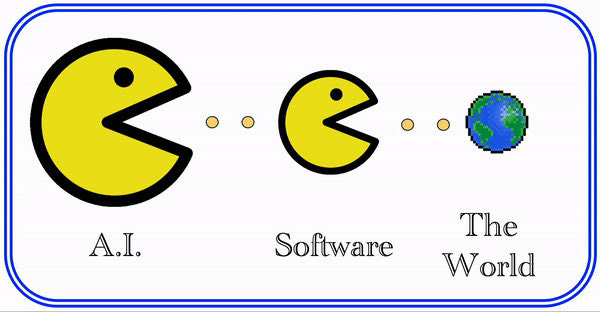
No crystal ball here but a few related points to make you think on the bull side:
Free and bundled isn’t new for them: Evernote for example has lived next to free Apple Notes for 10+ years, Airtable was growing ~30% a year next to free Google Sheets, Miro hit a $17.5B valuation while Microsoft gave away a whiteboard with Office, etc.
AI likely cuts costs faster than it cuts customers: 90%+ of code changes are written or co-written with AI, aka a slowly shrinking product can still make more cash.
They can plug into the assistants instead of fighting them: e.g. Eventbrite already has a ChatGPT app for extra distribution / a new way to grow opened up.
Lever 2: Hired by scoring applicants on 100+ signals that predict performance
"We look for all signals and then test signals against future performance to determine whether they're predictive or what combinations of signals are, and keep iterating." (Luca Ferrari, Sequoia)