


👋 I’m Ivan. I study how top 1% startups grow.
🌊 Granola’s Growth Playbook
Hello there!
Every operator I know has now heard the story of Granola hitting unicorn status but most have no idea how it actually happened.
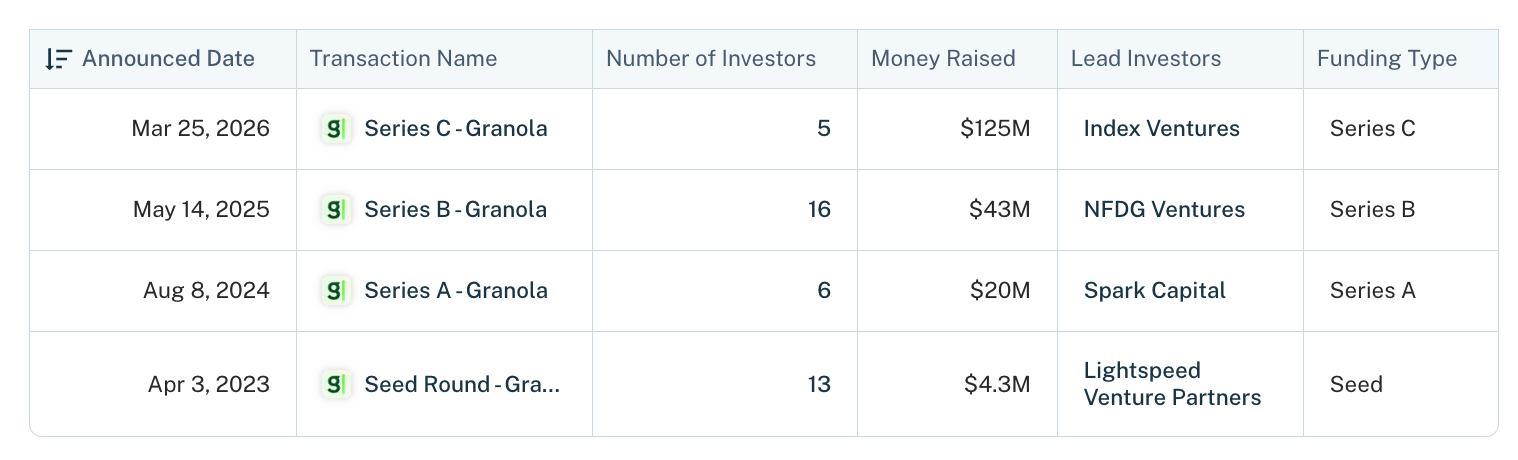
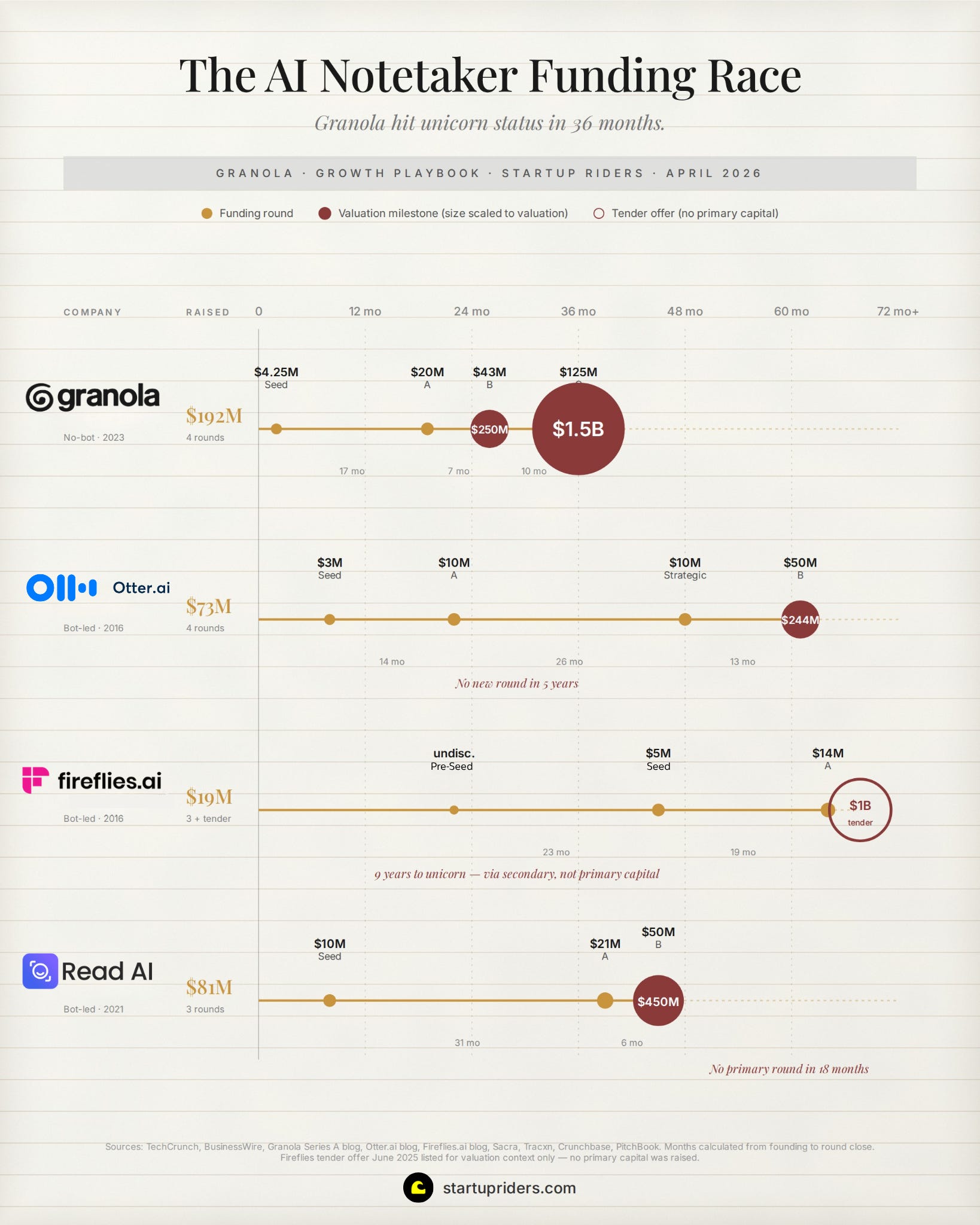
Their usage growth and financing rounds speed has made them quite the outlier:
Granola calls itself a “steering wheel for LLMs”. I interpret it as, in a world where ChatGPT and Claude can answer almost any question, their product is the thing that steers those models with the context of what was actually said in your meetings.
Every move in the growth playbook below is basically a brick in that steering wheel.
So I spent the past week pulling apart 10+ founder interviews, every analyst report I could find, and a few profile + metrics floating around the internet.
What you’ll learn in this edition:
The “year in stealth” playbook that cut 50% of features before launch
Why they refused to build a meeting bot when every investor told to
The frontier-model rule that turned a 12.5x cost collapse into a moat
Their “5 Hidden Rules for Building AI Products”
The Recipes launch that turned the angel cap table into a distribution amplifier
The MCP/API/Spaces pivot that turned a notepad into the context layer
And as usual, a few growth lessons for you to steal at the bottom.
Let’s dive in:
📐 Editorial and methodology note: Granola sponsors today’s edition but did not review or approve this Playbook before publication. The Growth Playbook format is mine, I’d write this breakdown whether they sponsored or not. This analysis focuses on the 80/20 mechanics that help explain Granola’s growth (not a comprehensive profile, and not an endorsement or investment advice). Sourced from 18 podcasts and long-form interviews, plus TechCrunch, Bloomberg, Sifted, Sacra, and Granola’s blog. Treat directional estimates as directional.
Act 1: The Wedge (May 2023 → October 2024)
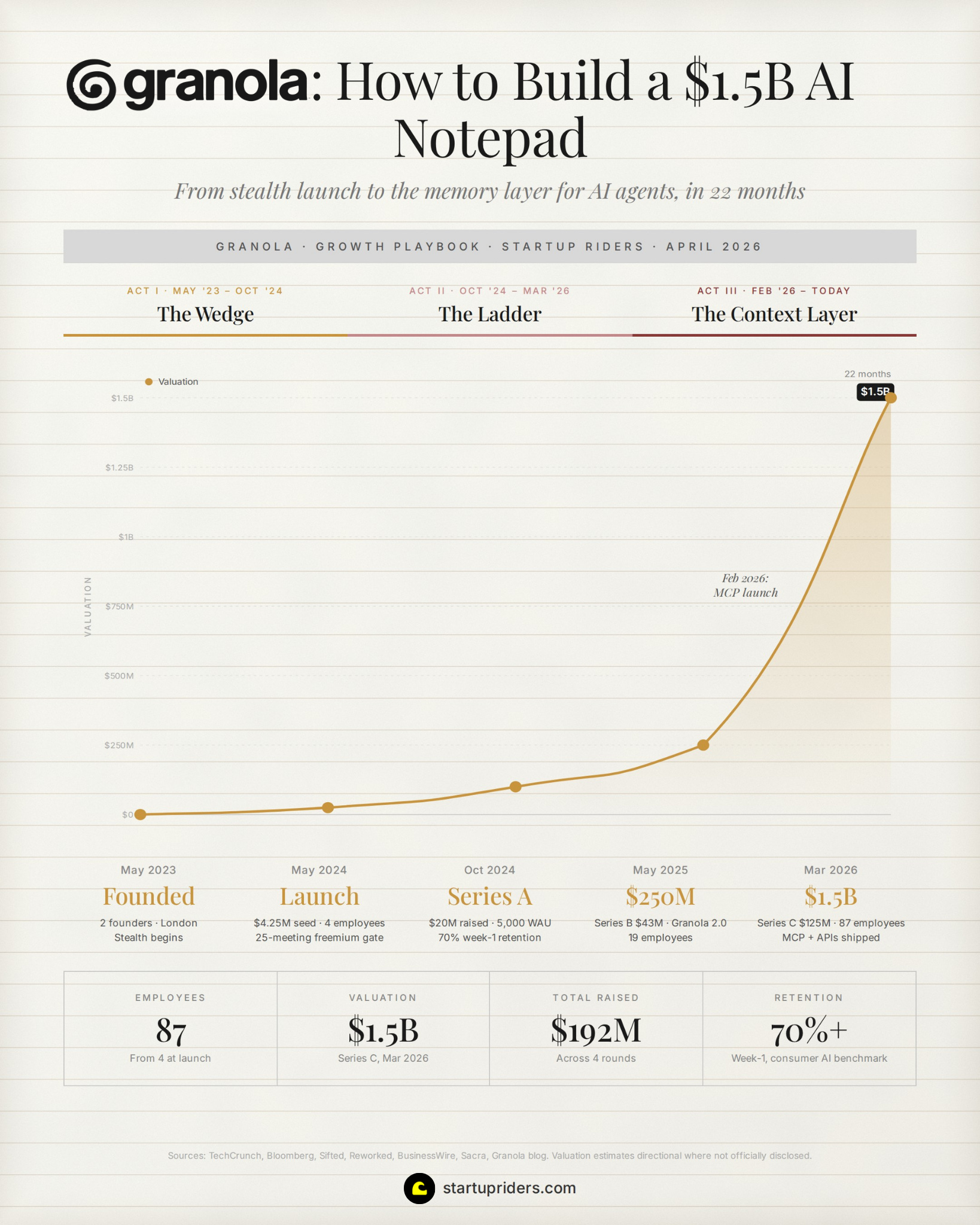
From $0 to 5,000 weekly users.
Chris Pedregal had just sold his last startup, Socratic (ai-powered tutor for high-schoolers), to Google. He quit Google because he wanted to build something on top of GPT-3.
“Within a week of quitting Google I started playing with the instruct version of GPT-3 that had just come out. I was blown away. I was like, okay, this is new. This is different. I don’t know what it is exactly.”
He started looking for a co-founder and stumbled into Sam Stephenson’s profile. Sam was a designer who’d been working on the same idea space from the design side, also based in London, at the note-taking startup Ideaflow. Pedregal sent him a cold email asking to grab a beer and they were off to the races.
They co-founded Granola in March 2023 and within two months they’d closed a $4.25M seed round led by Lightspeed (Mike Mignano was there at the time).
Then they went quiet for a full year.
Growth Lever 1: A stealth year to cut half the product before launch
The stealth year was about increasing feedback loop speed (not secrecy).

Before hitting product-market fit, they were onboarding users manually until they got to about 150 by launch day.
From the MAD Podcast:
“What is the fastest way for me to learn? Will I learn faster if I launch publicly or will I learn faster if I don’t? For about a year, the answer was we’d learn faster if we didn’t launch publicly”
The cost of a public launch in phase 0 is very high because once you have public users, you can’t pivot the core interaction without breaking trust, and they were most likely going to need to pivot.
The first 6 months they built a real-time interaction where you’d type a keyword, hit tab, and Granola would autocomplete the note in real time during a meeting, which made for an incredible demo, they spent 6 months trying to make it work.
Aaand it didn’t.
The notes were good but if a computer is writing notes for you in real time, you can’t help but read them and if you’re reading them. Which kind of went against the whole point of Granola making you more present.
They scrapped the interaction pattern and rebuilt it as a calm text editor that does the magic at the end of the meeting, which was likely a less impressive demo but a way better product.
Pedregal on Invest Like the Best:
“If we had launched that publicly, we never would have been able to switch it. There’s no way. Users would have learned a new behavior. We would have not retained that many users, and that would have been it.”
The stealth year ended with one more move that I think is the single most underrated growth decision they made which was to cut 50% of the features.
One interesting pattern I’m finding in the last few editions analysing growth playbooks of Harvey, Lovable and Perplexity is their willingness to take on hard product trade-offs, almost “courageous”, as long as the iteration cycles were fast enough. I often see startups dying due to a combination of both these factors, hiding behind a false sense of security, not choosing a path with conviction.
“We were in stealth for a year and we kept adding things and adding features and adding views. By the end there was this version of Granola where you could swipe and there were all these panels, your transcript, your notes, your private notes, your notes in another language. It was really like that. We looked at it all and we cut out 50%.”
My take-away here is that the speed at which you can iterate the core interaction is the most valuable asset of an early-stage AI product, because public launches lock you in while stealth can potentially buy you the right to be wrong many times.
Growth Lever 2: Targeting VCs to win the founders behind them
Granola launched publicly on May 22, 2024 with a team of 4 people and a simple pricing of free for the first 25 meetings, and then $10 a month (more on what happened to that price in Lever 5).
Pedregal decided to go after the most specific user persona he could think of, which were venture capitalists. From the MAD Podcast:
“We needed a user type that has a lot of meetings, relatively formulaic, with a relatively formulaic note style, and that we have easy access to. VCs.”
VCs are the smallest market you could pick because they don’t pay much for software, there aren’t that many of them and investors normally see “building for VCs” as a red flag because “the TAM is so small”.
But Pedregal was building for the VC distribution (smart).
Investors are loud on Twitter, talk to founders all day and meet other investors at every dinner. And if a VC starts using Granola, every founder in their portfolio likely sees it, every co-investor sees it and most importantly, VCs were the people Pedregal could get coffee with in London on a week’s notice.
Then, on launch day, he told the team “now we stop building for VCs”.
“As soon as we launched, we said okay great, now we’re done with VCs. We’re going to focus on a different user type. And we chose founders, just because we thought they’d be the hardest. If we could build a great product for founders, then by default it would be a decent product for everyone else.”
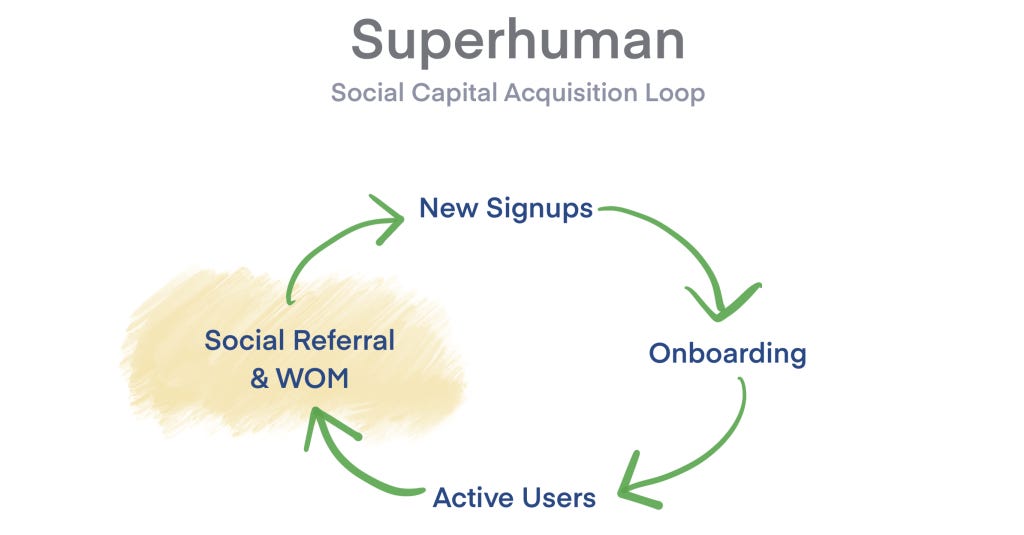
VCs were the wedge and founders were the spreaders.
This is similar to the Superhuman strategy and it’s my favorite kind of Trojan horse because you pick the user with the highest signal density per user (not the user with the highest market size per user). If you get them to use it intimately you’ve recruited every person they meet to evangelize on your behalf.
By Series A in October 2024 57% of Granola users were in leadership positions. Which is interesting because Granola didn’t target executives but apparently many of those who were picking up the tool became leaders shortly after.
Growth Lever 3: Refusing the meeting bot to win the meetings that mattered
The AI bot is now a conversation starter for a human to bring up Granola and to vouch for it.
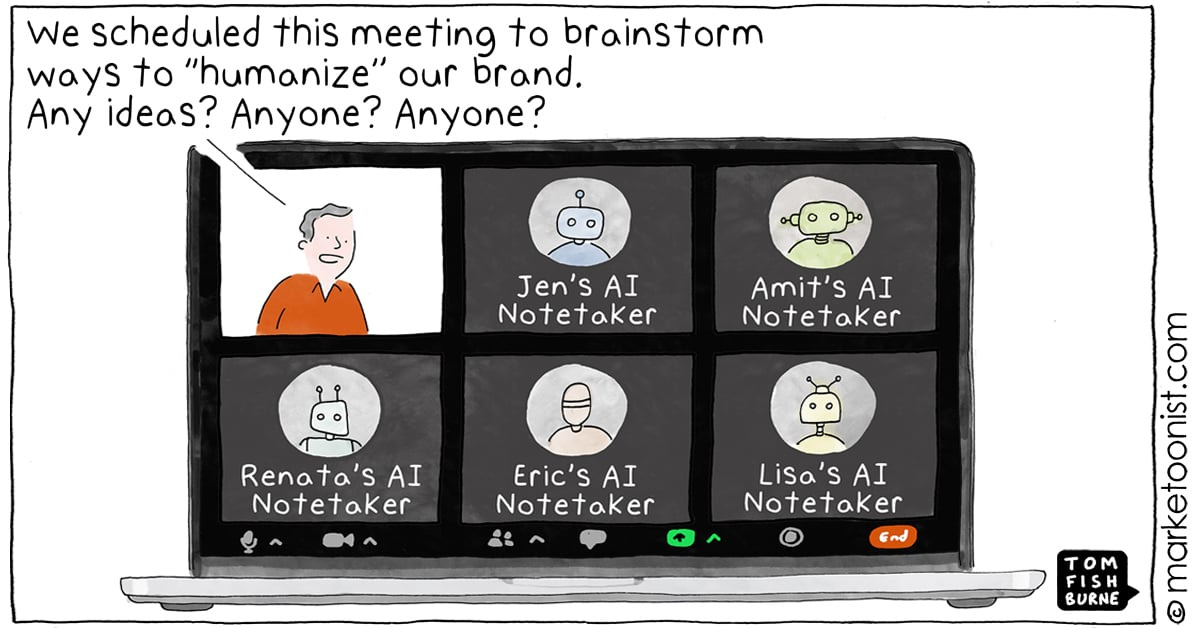
When they launched, every other meeting note-taker in the market joined the call as a visible bot because the bot was their distribution (and it was very annoying).
Granola’s investors told them they were crazy to give that up, but as is usually the case, outlier founders tend to dance to their own beat:
“Bots make you feel kind of weird. A big black box on the screen, sometimes shows up before you’ve joined. But beautiful from a growth distribution standpoint. Every user is exposing everybody they’re meeting with to your product. So everyone thought we were kind of crazy not to do that.”
The cost of the no-bot decision was real and immediate because Granola had no built-in viral loop, no free billboards, no “what’s that bot in the meeting?” recruitment moment and so on.
In return they got something that ended up mattering more which is the right to be in sensitive meetings.
Bots get banned from confidential calls like board meetings, M&A discussions, and executive 1:1s. They usually get rejected by lawyers, doctors, therapists you name it.
So the visible bot maximizes top-of-funnel but minimizes ceiling and they understood that early.
Granola’s experience was to seat on your computer, never announced itself to other participants (someone in a GDPR office right now is having a moment), never recorded audio (transcript only, that decision saved them from many enterprise blockers later), and worked across Zoom, Meet, Teams, Slack Huddles, and in-person calls without any per-platform configuration.
What they discovered is that giving up the viral bot didn’t kill virality but did change the loop:
“If you have a Zoom call and your AI bot shows up, people are now telling each other, ‘Hey, what are you doing with an AI bot? Why aren’t you on Granola yet?”
What’s really cool is that now the competitor’s bot became Granola’s growth loop (this has happened to me, multiple times).
Growth Lever 4: Running frontier models so the moat would be quality
Use the latest, most expensive frontier model. Even when it’s economically unsustainable. Especially when.

In 2023, every meeting note that Granola generated probably cost a few cents in inference, but a heavy user doing 6 meetings a day on the free plan was unprofitable. Which meant every other notetaker in the market used cheaper models or self-hosted to protect margins.
Pedregal told Peter Yang on Behind the Craft why this was actually an advantage:
“AI is different because these models are still expensive to run. Our costs scale linearly with users. This creates an opportunity: as a small startup with fewer users, we can use cutting-edge models that would be financially impossible for big companies to deploy at scale.”
Granola was small enough to run frontier models on every user. But competitors couldn’t, like Otter which likely had $100M ARR and millions of users at the time, couldn’t switch to GPT-4-class models on every transcript without blowing margins.
Then frontier costs collapsed, with the price of transcription alone going from $0.25 per minute in 2021 to $0.02 per minute today, which is a 12.5x cost compression in 5 years, on the single most expensive line in Granola’s stack.
Sam Stephenson on Cognitive Revolution in April 2026:
“There was a time where half of our burn rate as a company was going on transcription. That’s a lot better and more under control now.”
The bet was that running expensive products today is a temporary disadvantage that becomes a permanent advantage. They have apparently been running on frontier-model output since launch, with internal eval tooling that lets the team route across OpenAI, Anthropic, and Google models and swap them overnight without breaking what they call “the Granola voice.”
By the time the costs collapsed users had been trained on a quality of output that nobody else could probably match.
📐 Sidebar: the CEO’s 5 Hidden Rules for Building AI Products
Rule #1: Don’t solve problems that won’t be problems soon: The current wave of AI startups tend to have 2 types of product problems, those the next model release will solve, and those that remain regardless. The mistake tends to be solving the first kind. For example, Granola refused to build chunking for long meetings (context windows expanded), and refused to build multi-language tooling (newer models handled it natively). “As a product person, it goes against every instinct to deny users something they’re actively requesting. But, in AI, sometimes the best strategy is to focus on problems that will still matter even as the tech evolves.”
Rule #2: Go narrow, go deep: “General-purpose tools like Claude and ChatGPT are surprisingly good at many tasks, so if you are building a startup, it needs to solve a problem 10x better. The only way to achieve that is by choosing a narrow use case and making that experience exceptional.” The 10x often comes from non-AI work. For example they built an echo cancellation system for users with and without headphones, which as you can imagine has little to do with note-taking.
Rule #3: Context is king: Pedregal treats the LLM like a smart intern on their first day. The product's job is feeding the intern enough context to figure it out, whereas most AI products out there fail this by writing system prompts that try to anticipate every output.
Rule #4: Your marginal cost is my opportunity: The lever we just discussed above. Frontier models are too expensive for incumbents to deploy at scale, small startups have a temporary cost disadvantage that becomes a permanent quality advantage as costs collapse.
Rule #5: Build products that have a soul. Cohesion comes from intuition, and if you like product as a discipline you’ve probably felt “delight” using Granola. Pedregal does a user call daily and has screens in the office showing real-time feedback, but designs from first principles. “When you’re constantly immersed in user feedback, you develop an emotional sense of what matters rather than just analyzing metrics.”
The numbers at end of Act 1
Half of the people who tried Granola were still active 10 weeks later, doing 6 meetings per week on average.
October 2024: 5,000 weekly active users, a $20M Series A from Spark Capital at undisclosed valuation, which closed in roughly a week after a single day of about 12 investor meetings.
Act 2: The Ladder (October 2024 → March 2026)
By January 2025, Granola was becoming more of a habit than a product with VCs evangelising to founders, founders adopting it for their leadership teams and leadership teams asking for company licenses and so on.
But the AI notetaker market itself was getting brutal (Otter was at $100M ARR, Fireflies hit $1B in a tender offer, Read AI raised $50M, Fathom raised $17M, Plaud was selling AI hardware pendants at $250M annualized, etc etc).
The question shifted from “how do we get users” to “how do we keep them when notes themselves become a commodity?”
Growth Lever 5: Pricing the team plan below the personal plan to force expansion
Each step nudges the exec champion harder toward bringing the company.
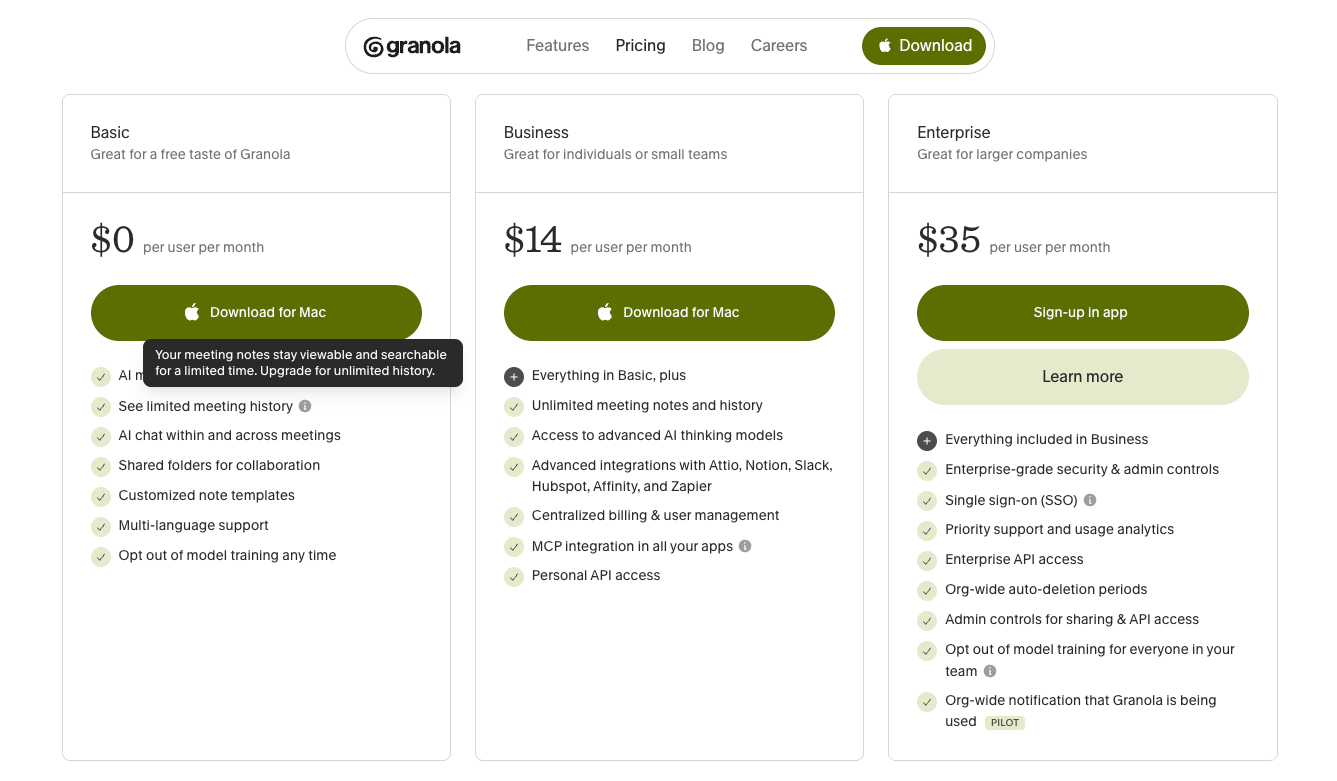
As you can see there’s no personal paid tier and if you want unlimited history, integrations, MCP access, or the better thinking models, your only path is the team plan. This was a recent change as far as I can tell.
The exec champion who used to pay $18/month for themselves now has two options, either stay on free with a 30-day note window, or bring teammates (growth loop).
The price card got there in 3 moves over 22 months (free → cheap → asymmetric → personal plan deleted):
May 2024: Launch with one plan free for the first 25 meetings, then $10/month. Same price through the Series A.
May 2025 (Series B and Granola 2.0): Add Business at $14/user and raise Individual from $10 to $18. Note the asymmetry where the team plan is now $4 cheaper than the personal plan. They kept that structure for 10 months or so. The exec champion already paying $18 sees Business at $14 and does the math, which is a pull to bring on more teammates (cheaper than staying solo).
March 2026 (post-Series C): Kill the Individual plan entirely, 3 tiers only: free, Business, Enterprise. Long-term Individual users get migrated to Basic with a 30-day history window unless they upgrade to a team subscription.
Granola already won the individual through Levers 2 and 3 and the bottleneck was acquiring seat number two+. So they priced seat two below seat one, then deleted seat one when the company was infrastructure-ready and individual revenue was a rounding error against enterprise contracts.
Growth Lever 6: Shipping Granola 2.0 to turn the notepad into a workspace
“The most valuable information in companies isn’t found in static documents or wikis, but in the daily conversations happening across teams.”

In May 2025, Granola raised a $43M Series B at a $250M valuation, led by NFDG (Nat Friedman + Daniel Gross), and the same week, they shipped Granola 2.0.
Up until that point, Granola was a personal tool, but now they shifted their positioning to become a workspace (“a second brain for your team”). What shipped:
Shared Team Folders: Sales calls, customer feedback, hiring loops, weekly syncs which anyone on the team can access (even without an account)
Chat with Folders: Query an entire folder of meetings using best-in-class reasoning models, with citations to specific meetings and transcripts
Enterprise Collaboration: Business and Enterprise users can explore any public folder inside their domain. Useful for competitive intel, customer success, onboarding new hires etc
Stephenson summarized the user-facing thesis:
“With every call in one place, sales leaders can ask ‘Why are we losing deals this quarter?,’ product managers can investigate ‘Which UX issues come up most often?,’ and recruiters can understand ‘Where do our interviews keep stalling?,’ all answered instantly with source-linked citations.”
Kind of reminds me of a cross-functional + ai-native Gong.io.
This new iteration sold you the unified record of every conversation your company has ever had and by Series B, they were processing millions of minutes of conversation per day (remember they don’t store audio, just transcripts, which is a smart product trade-off discussion in itself), with 19 employees.
The angel cap table (or: how the Superhuman strategy compounded into the Series B)
NFDG led the series B but the angel roster on that round is a who’s-who of distribution-rich operators:
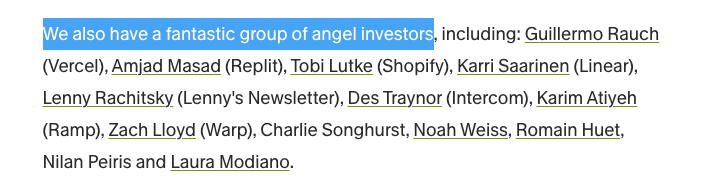
What’s cool is that these people also have audiences, and they recommend tools.
So we see the Superhuman strategy going one level higher here where you have VCs as the initial wedge, founders as spreaders, leadership teams converting, and Angels pre-loaded with audiences.
As a little example of the power of leveraging your cap-table, in September 2025 they shipped Recipes (prompts paired with the context of your conversations, written by people who know what great output looks like).
And the launch contributors were:
Lenny Rachitsky : “Write PRD”
Matt Mochary: “Coach Me”
Ridd: design feedback Recipes
Peter Yang: “Gather product feedback”
Nikita Bier: consumer growth Recipes
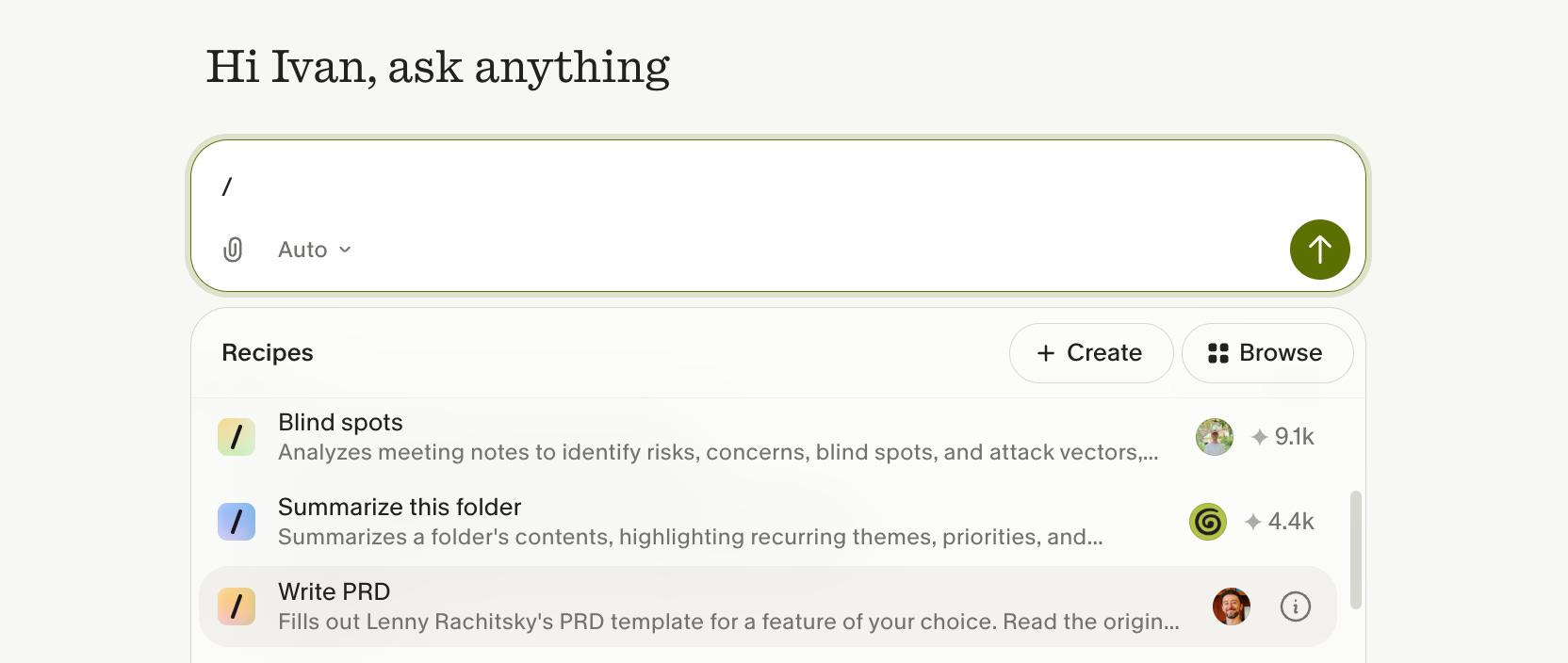
A second-order effect of 2.0 that the founder talks about often is that the viral loop changed. Before 2.0, virality was social, but after, virality was structural:
“So often I’ll be talking to a user and I’ll ask how they found out about Granola. And they’ll say, I was in this meeting, and 30 seconds after the meeting, these beautiful notes just popped up in Slack and I was like, how did you do that? And then they dig and they find out it’s Granola.”
Growth Lever 7: Anchoring the habit to the calendar to never be forgotten
Half of the people who try Granola still use it 10 weeks later, doing an average of 6 meetings a week.
By Series A Granola reported a week-1 retention of 70%+, which is exceptional for consumer AI, and by mid-2025, millions of minutes of transcript were flowing through the product’s data layer every day.
The reason this matters is that meetings are calendar events and calendar events repeat:
“The beautiful thing about meetings is that they’re on a calendar. There’s a very specific moment where we know you’re going to do a meeting. The combination that Granola is useful and we can send notifications at the right moment, that’s what leads to retention.”
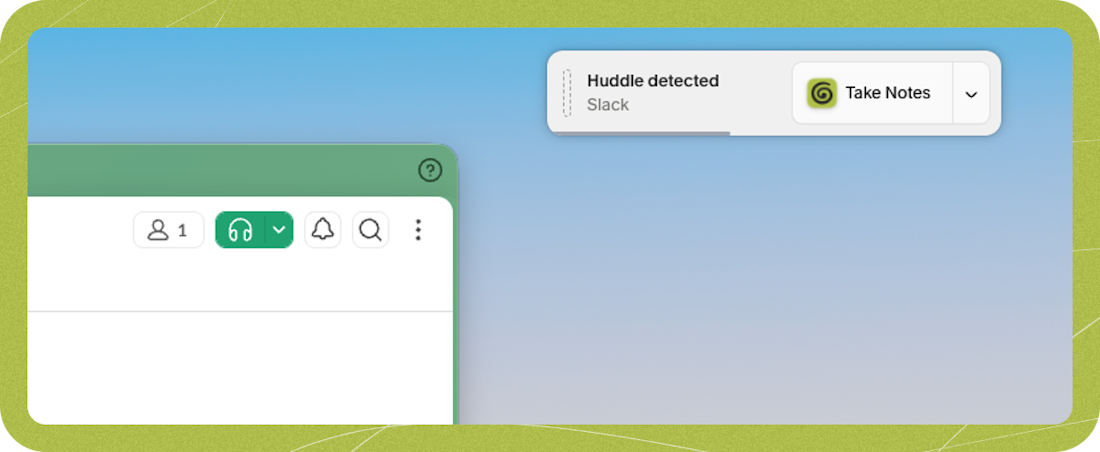
Most consumer AI products lose users to forgetfulness due to the classic “Oh, I just forgot to use it.”, but Granola fixed it by anchoring to a habit that already existed in the user’s calendar (and by the way they do this super smoothly, I like the detail of the time running down on the notification, makes me want to “run to click on it”).
Growth Lever 8: Building from London to win Silicon Valley
“We are an American company that happens to be in London. We built for Silicon Valley. We built for the American market explicitly.”

Granola is headquartered in London, but Pedregal is American (and Stephenson sounds pretty British to me). They built the company in London for personal reasons (Pedregal’s wife is English, and both have families there). But they made a decision early on to frame Granola as a Silicon Valley company that happens to be in London.
All copy is American English, all early users were US-based founders and VCs and the first office expansion (Q1 2026) was San Francisco, with 5 sales reps shipped over to start it. The Series B and Series C investor lists are entirely US-based and the product launches time to US news cycles.
“If you’re in London, it’s too easy to think about the UK and Europe. My general view is that in this AI space, you need to be competitive in the US. Otherwise someone will win the US, and then you’re going to have to fight them in Europe. There’s no reason why you can’t go after the US market from here.”
The notetaker wave: where Granola sits in the race
Act 3: The Context Layer (February 2026 → today)
Days before the Series C, Granola encrypted their local cache (the file on your Mac where meeting notes live).
It was a security upgrade but it broke something users had built on top of (their own AI agents wired up to Claude Desktop and Cursor, reading directly from that file).
When the cache went encrypted, those agents stopped working and users got mad on the internet, including an a16z partner who posted that the app now had “zero value” in an agent-managed world.
The founder apologized and promised proper APIs were coming and just days later, they shipped them.
Growth Lever 9: Shipping MCP to become the memory layer for AI agents
“Think of it like USB-C for AI apps.”
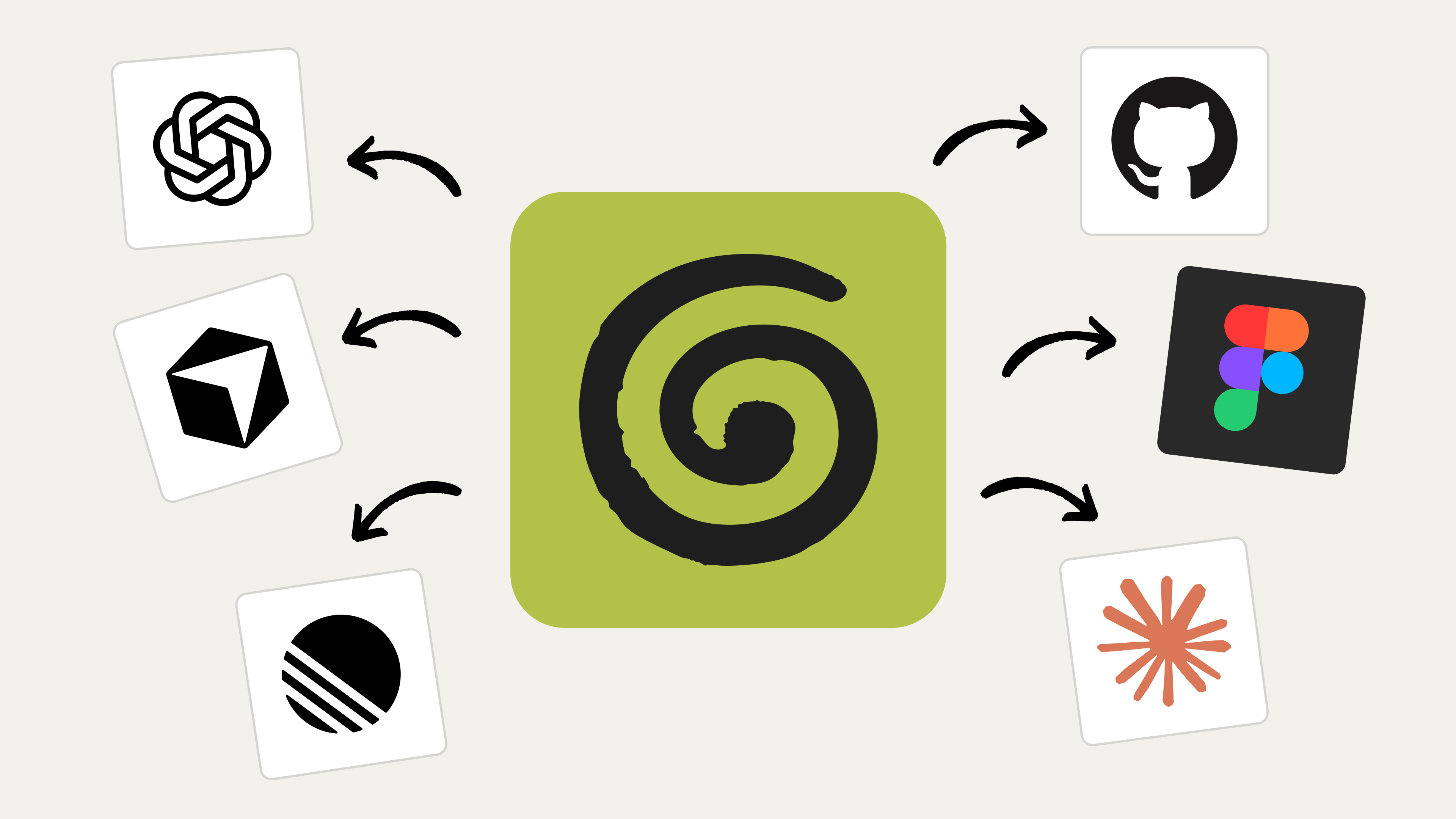
When Granola launched their MCP server they gave away their data layer. Now you could connect it to Claude, ChatGPT, Cursor, Lovable, Replit, etc and any of those tools could pull from your Granola meetings on demand.
Every AI agent that wants to be useful at work needs to know what was said in your meetings and Granola became the only company that could serve that context.
“Conversation transcripts are the richest source of context for what’s happening across your company. When paired with powerful AI models, they can unlock workflows that wouldn’t have been possible before.”
This means that meetings are the densest unstructured data your company produces, which is the trojan horse the founders had been talking about since 2023.
Growth Lever 10: Opening the data layer with APIs to flip the price ceiling
The highest-quality memory substrate that exists for a knowledge worker
Three weeks after MCP, they announced the Series C and shipped 3 more pieces:
Personal API: for individual users on Business and Enterprise plans, programmatic access to your own meeting context
Enterprise API: for admins, programmatic access to the whole team’s context, with SSO, SCIM, and access controls
Spaces: team workspaces with granular permissions
Spaces apparently took about a year to build:
“We’ve made the product secure enough and compliant enough. The fact that we were able to work with DoorDash, that’s testament to all the work the team’s done.”
The APIs change the price ceiling and as notes commoditize, the value moves from the notes to the structured context layer that powers AI agents. And while you can’t charge $200/user/month for better notes, you can charge that for the layer.
Similar playbook Perplexity ran with Computer in February 2026, which is an economic flip wrapped in a product launch.
But the real question in all our minds is still, is Granola defensible against foundation models?
You’ve heard the bear case a million times. Transcription is a commodity, summarization is a free model call, ChatGPT and Claude both shipped persistent memory, distribution is uphill, the category has failed, Granola is a feature not a company etc, etc. Heard it, moving on.
Best thing about being a VC is that its made for optimists because you gotta think about what could go right (otherwise you’d never invest in anything in a field surrounded by constant startup mortality and outliers).
So here’s my bull case:
Beautiful products own mind share, and mind share is the cheapest CAC there is: Granola’s whole product is kind of “a feeling”, you see it because people don’t say “the AI notetaker”, they say “Granola”, it’s already a verb in tech.
Owning the workflow could beat owning the model: The valuable position is “we own the daily ritual.” The same way Notion isn’t a better word processor, they just own where work happens. Granola aims to own the moment a meeting starts (a workflow you do 5x+ a day).
Cross-platform persistence is structurally different from any platform’s native feature: Microsoft can win Teams meetings but they can’t make your Zoom call show up in your Microsoft notes (for now, afaik).
Meeting context could be the highest-quality memory substrate: OpenAI can ship “memory” but they can’t ship a year of your team’s actual conversations (yet).
The “wrapper” critique aged badly: People said the same thing about Cursor (wrapper around VS Code + Claude), Perplexity (wrapper around search + LLMs), Harvey (wrapper around GPT-4 + legal docs), all at $100M+ ARR…
The whole space is still in exploration mode (not exploitation mode): I like this frame from the founder. Nobody knows yet what the persistent memory substrate for AI agents looks like.
The net net is that if the meeting context becomes the dominant memory substrate for AI agents over the next 24 months, whoever owns ingestion of that substrate has a chance at a (very) big outcome.
We’ll see!
5 Growth Lessons You Can Steal
My biggest takeaways:
Stayed in stealth long (for our times): Granola spent a year onboarding 150 users one by one before they launched and used that year to scrap their core interaction pattern and cut 50% of features.
Picked their wedge by signal density, and kept compounding the status ladder: Granola targeted VCs first knowing the TAM was tiny because each VC user produces an outsized amount of evangelism, network spillover, and product feedback.
Easy trade-offs, hard life. Hard trade-offs, easy life: Granola took a bunch of hard product trade-off decisions (i.e. walked away from the meeting bot), which was the entire growth engine of their category at the time. Doing it would have locked them out of the most valuable meetings, and the competitor’s bot ended up being Granola’s growth loop anyway.
Ran frontier models even when the unit economics didn’t work yet: They ran on the most expensive available LLMs since 2023 because they bet costs would collapse before competitors caught up on quality, and they were right.
Used pricing strategically: Once an exec champion is using your product, the cheapest path to seven more users is to make the team plan obviously cheaper than the personal plan they’re already paying for.
That’s it for this week, friends.
Cheers,
Ivan
P.s. If you want to help me out, the best thing you can do is share my work. 🙏
🚀 Building something in this space? We invest €100K-3M at pre-seed and seed. If you’re raising or know someone who is, please send us your deck via DM.
📚 Bibliography
Founder voice, primary sources:
Behind the Craft (Peter Yang), The 5 Hidden Rules Behind Successful AI Products: Chris Pedregal (Granola), Jan 19, 2025
Every / AI & I (Dan Shipper), The Secret to Building Sticky AI Products, Dec 2024
Invest Like the Best (Patrick O’Shaughnessy), Chris Pedregal: Building Granola, EP.412, Feb 25, 2025
The MAD Podcast (Matt Turck, FirstMark), How to Build a Beloved AI Product: Granola CEO Chris Pedregal, Aug 21, 2025
Generative Now (Lightspeed, Mike Mignano), Chris Pedregal + Sam Stephenson: Making Meetings More Effective with Granola, May 15, 2025
Lightspeed (written), Generative London: How to Win AI’s App Layer, with Granola, May 15, 2025
The Cognitive Revolution (Nathan Labenz), Sam Stephenson on Granola’s design philosophy, April 2026
Dive Club (Ridd), Sam Stephenson: The journey of designing an AI product, Mar 28, 2025
Product Talk, Chris Pedregal, August 2025
Speed Podcast, Sam Stephenson: From Designer to $250M Founder in Two Years, Sep 11, 2025
Long-form journalism and analysis:
The Information, How Granola, and AI Note Taking, Grabbed Silicon Valley’s Attention, Jul 12, 2025
Upstarts Media (Alex Konrad), Can Granola’s AI meeting notes eat bigger apps for breakfast?, Apr 2, 2025
Upstarts Media (Alex Konrad), ‘I Had To Close My Laptop’: Granola Adds Coaching, Recipes To Its AI Meeting Notes, Sep 30, 2025
Fast Company, This AI note-taking startup thinks it’s building the ‘steering wheel’ for chatbots, Feb 25, 2026
Reworked, Granola Lands $125M to Turn Meetings Into AI Memory, Mar 25, 2026
Over the Anthill, Granola: The AI Note-Taker with Big Plans, Jun 22, 2025
Funding and milestone announcements:
TechCrunch, Granola raises $125M, hits $1.5B valuation as it expands from meeting notetaker to enterprise AI app, Mar 25, 2026
Bloomberg, AI Notetaker Granola Hits $1.5 Billion Value in $125 Million Funding, Mar 25, 2026
Sifted, AI notetaking startup Granola hits unicorn status, Mar 25, 2026
SiliconANGLE, Granola raises $125M at $1.5B valuation for its AI note-taking app, Mar 25, 2026
BusinessWire, Granola Launches AI Workspace for Teams and Raises $43M Series B, May 14, 2025
TechCrunch, Granola debuts an AI notepad for meetings, May 22, 2024
Granola’s own blog:
Granola raises $125M to put your company’s context to work, Mar 25, 2026
Introducing Granola MCP, Feb 4, 2026
Granola integrations: complete guide to connecting your meeting tools, Mar 20, 2026
Introducing Recipes, in the all-new Granola Chat, Sep 30, 2025
Granola raises $20M (Series A blog), Oct 2024. Has the 10-week retention stat.
Granola Updates page. Feature changelog and timeline source of truth.
Analyst and market data:
Sacra, Granola company profile (the Superhuman strategy frame, the 57% leadership user breakdown)
Sacra, Granola vs Zoom (the $0.25/min → $0.02/min transcription cost-collapse data)
a16z, The Top 100 Gen AI Consumer Apps, 6th Edition (Olivia Moore + Anish Acharya), Mar 9, 2026
Notetaker wave context:
Otter.ai blog/BusinessWire, $100M ARR Milestone, Dec 22, 2025
TechCrunch, Plaud launches a new AI pin and a desktop meeting notetaker, Jan 4, 2026
If you enjoyed this, you might like:
→ Perplexity’s Growth Playbook: 0 → $450M ARR in 3.5 years
→ How Harvey AI Hit $200M+ ARR in 36 Months
Cutting half the product takes more discipline than adding more features.