š What 3 Years at Facebook Taught Me About Building a ā¬10K MRR Community Business
The playbook I used at Facebook, then used to build and sell my own.
š Iām Ivan. I study how top 1% startups grow.
Looking for an AI notetaker for your meetings? Granola is a lot more.
Most AI note-takers just transcribe and summarize. Granola is an AI notepad. You jot down what matters during the call, and Granola uses your notes plus the transcript to generate summaries, action items, and next steps from your point of view. The powerful part: you can chat with your notes. Write follow-up emails, pull out decisions, prep for your next meeting ā all in seconds.
I donāt promote tools lightly. This one earned its place.
If you want to test it, Iāve got a link for a free month š
š What 3 Years at Facebook Taught Me About Building Revenue Squared
Hello friend,
This edition will be a little different.
I just sold my ā¬10K MRR side-hustle to Nova.
Itāll be useful for those interested in either:
Building a community-first product, private community or vertical social network.
Or learning battle-tested tactics to build a successful community for your startup.
So letās get into it:
Act I: The Facebook BJJ origin story
Finding a co-founder
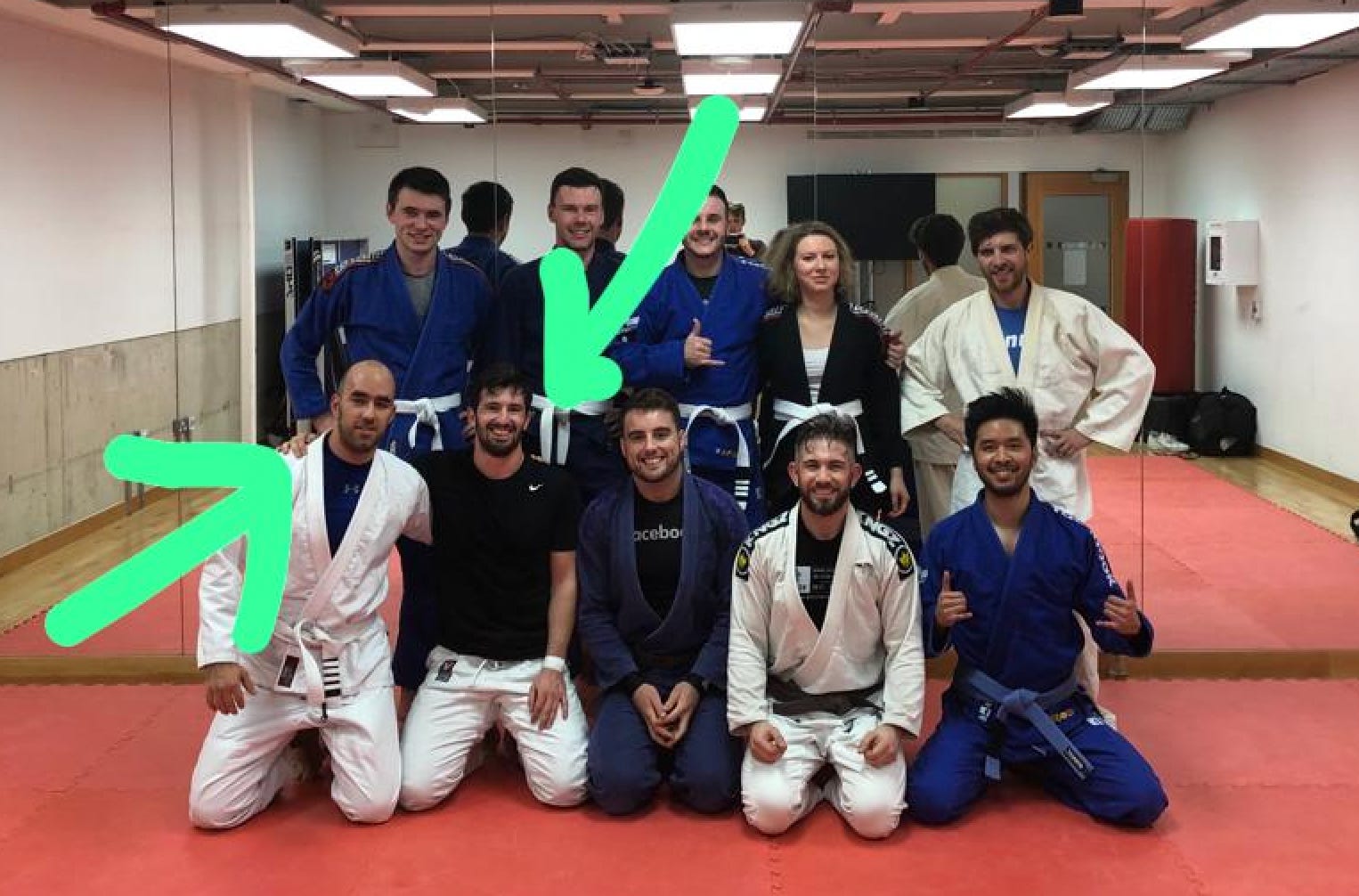
Back in 2017 I was walking around the third floor of our new Soho office when I stumbled upon a dude with a big smile and a Spanish-American accent, with a bunch of tatami mats stacked next to his standing desk.
We soon realised we were both obsessed with surfing, tech, and mixed martial arts.
We started the Facebook Brazilian Jiu Jitsu club at the London office (which spread across other offices across the world). Looking at the social club budget, we also figured out there was a āglitch in the systemā, which made it possible for us to start other clubs. Needless to say, we ended up with one martial art per day of the week including boxing, MMA, BJJ, wrestling and so on.
Some say that Zuck started training BJJ because of the trend we started š.
This was the beginning of my friendship and founding story with Jorge Bestard.
Building something people want (on the right flywheel)
We tried a bunch of things including building a training app, an ecommerce, a marketplace and a bunch of other ideas. But none of them took off, and we both felt something was missing.
Time went by and we kept throwing things at the wall. But this time it had to tick a few boxes, since we had both switched roles and felt strongly about helping our home turf.
The criteria were:
Build something cool
That helps our tech ecosystem grow
And thatās how we landed on Revenue Squared:
Problem
Tech sales is underrated: especially in the spanish-speaking world, where it is typically misunderstood (people think ācar salesmanā).
Top talent often doesnāt even know its an option: and that it can not only be very attractive in terms of income potential, but also in terms of career fulfilment.
Cleaning up your information diet and continuous learning is hard: Keeping up to date with the latest developments in sales - tooling, plabooks, market trends - is challenging, especially in a space mined with questionable āsales gurusā.
Sales can be lonely: And finding a curated peer group to bounce ideas off of when you are stuck, and that helps you guide your career choices, is hard.
Linkedin is bad at community: People have spent the better part of the past 10 years being āharvestedā, as passive consumers of information.
Solution
A highly curated paid membership community for the best tech sales professionals in the Spanish-speaking world.
Vision: The sales profession is understood as a great career path - attracting more talent into the tech scene in the Spanish-speaking world, both in terms of its earning potential and how interesting / prestigious the job can be.
Mission: Elevate the sales profession.
Validating demand (through pre-selling)
We both knew we didnāt want to re-invent the wheel in terms of business model, and that we wanted to get paid first before building anything to validate demand.
So hereās what we did:
Throw our top 50 smart GTM friends in a slack channel. Mostly spanish-speaking sales leaders from unicorns and high-growth startups.
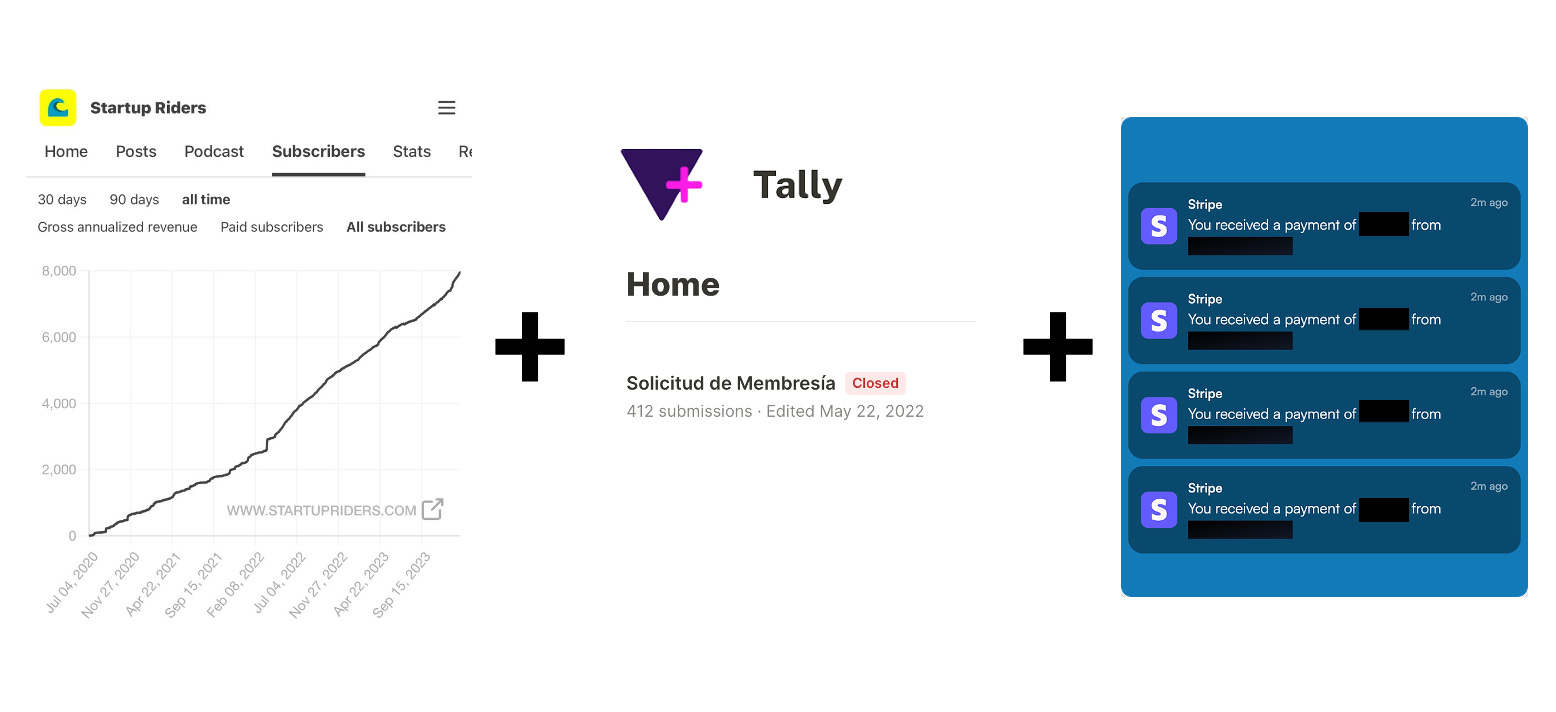
Wrote and published a sign-up form on Tally, with the value-prop and explicitly calling out that is is a paid membership community.
Scheduled 30+ interviews selecting from that list of 400+ submissions, and sent payment links to those who cleared our talent bar.
And it worked.
Act II: The Facebook Community Playbook
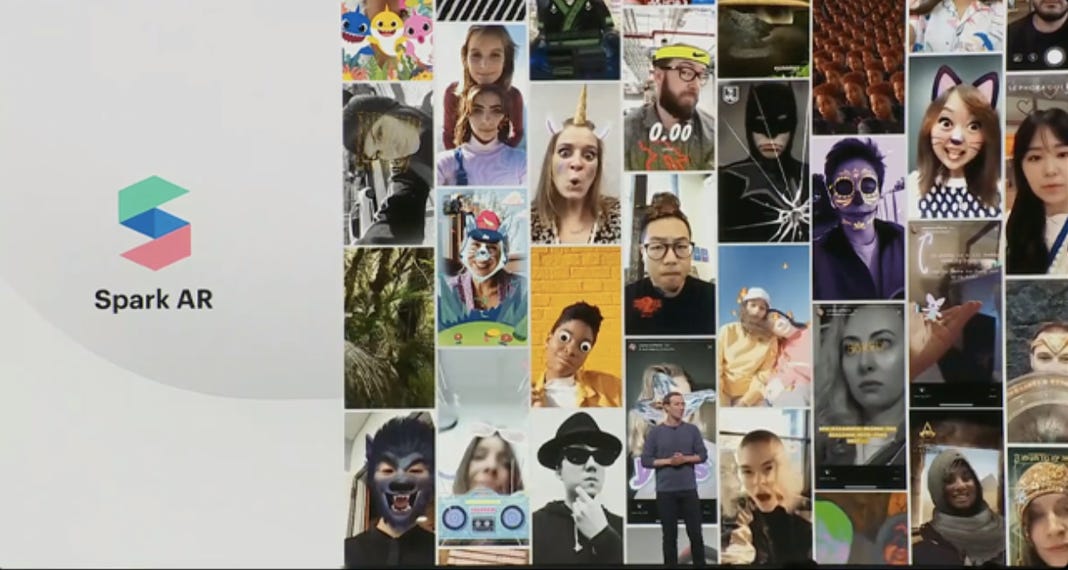
The Spark AR Community
There is a surprising amount of work that goes into building a successful community, especially when its a community-as-a-product.
I know because I was a Product Specialist on the Spark AR team at Facebook, working hand-in-hand with engineering and design to ship Instagram's AR camera effects. We built the community as a product lever because we saw the opportunity.
My team launched these filters in 2017, and went from zero to hundreds of millions of daily active users, over 1 billion unique camera effects used, and suddenly thousands of creators making a living off of building these filters.
The Spark AR Community grew to over 100,000 members. It was considered internally as a source of competitive advantage for the platform. And we proved with data that community creators were significantly more likely to publish effects and retain as active developers.
When we started Revenue Squared, we took those learnings and applied them.
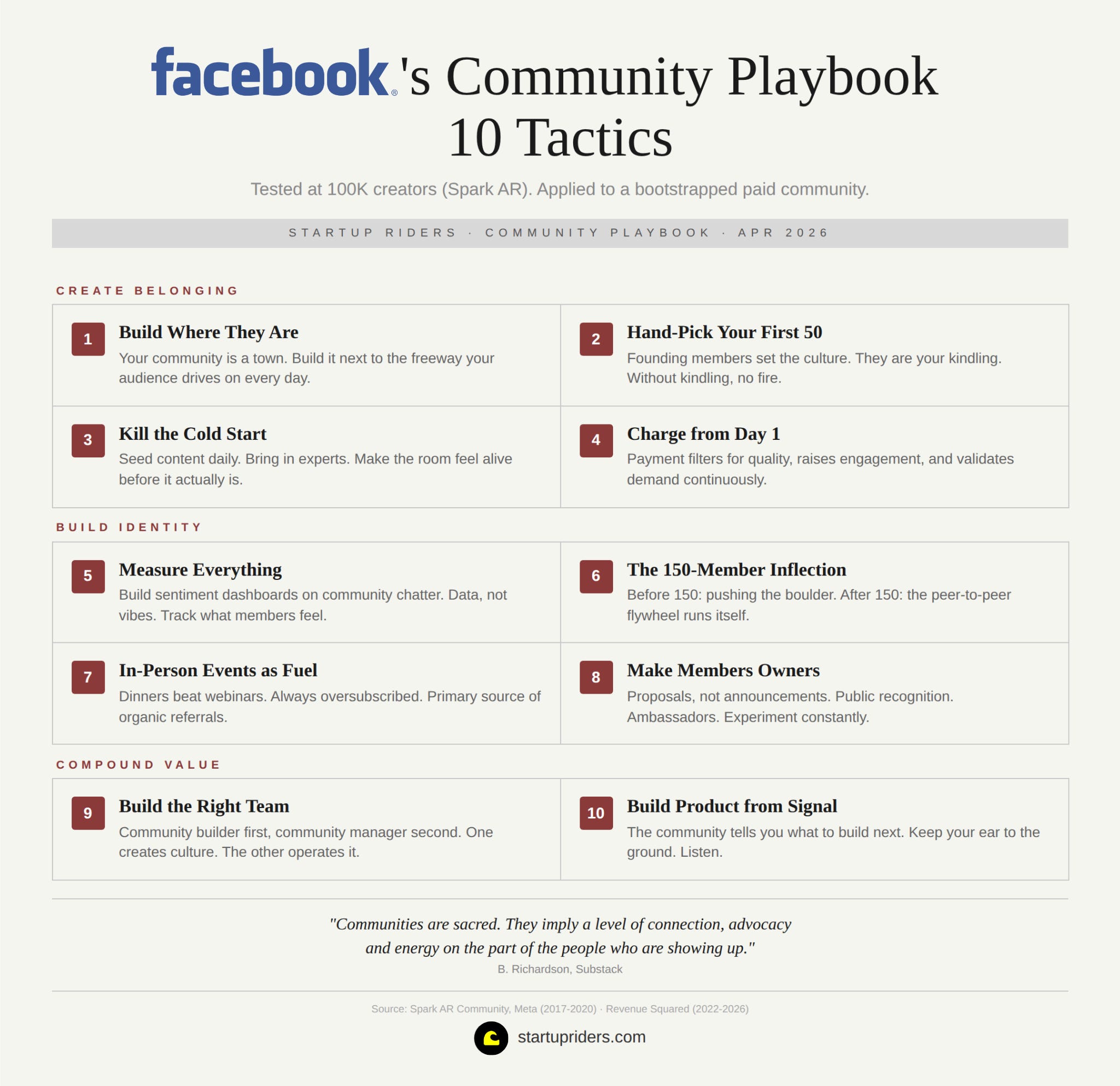
Here are the top 10:
1. Build the MVP where they already are
At Facebook, we built the Spark community on Facebook Groups. We looked at a bunch of options (custom platform, standalone app, stack overflow, etc). We chose Groups because creators were already logged in, already had notifications turned on, already had the muscle memory of checking their feed every day.
Whenever someone asks me about this I use a freeway analogy.
Your community is a town. The platforms your audience already uses every day are freeways. For salespeople, the two biggest freeways are LinkedIn and Slack. They're already on both, every single day, with notifications on. So we built our town right at that intersection. The Slack community was where members lived. LinkedIn was how new people found us.
The point is, don't make people take a detour to reach you. Build where the traffic already is.
The temptation is always to build something custom. Resist it for as long as you can.
Our R2 tech stack at launch was:
Tally (forms)
Webflow (website)
Slack (community)
Stripe (payments)
Google Meets (workshops)
Thatās it. We didnāt add Podia, Luma, etc until we had 150+ members.
2. Find your first 50 ākindling membersā + MVP
Andrew Chen calls this the āatomic networkā in The Cold Start Problem. Which means the smallest possible group of users that can sustain the network on its own.
Tinder for example did it by throwing a campus party where 500 students downloaded the app in one night. LinkedIn did it by having employees and investors invite their professional contacts. And Reddit literally faked early activity with multiple accounts to make the community feel alive.
At Facebook, the first Spark AR creators were hand-picked. My team identified the most talented AR creators we could find (create + technical usually), gave them early beta access, and brought them in one by one. These first creators set the tone for everything that came after. They built the best effects, answered other creatorsā questions, and gave feedback that shaped the product roadmap.
It was also super cool to see how excited our own Engineers got when they saw real people building amazing stuff in real time, collaborating, commenting and so on.
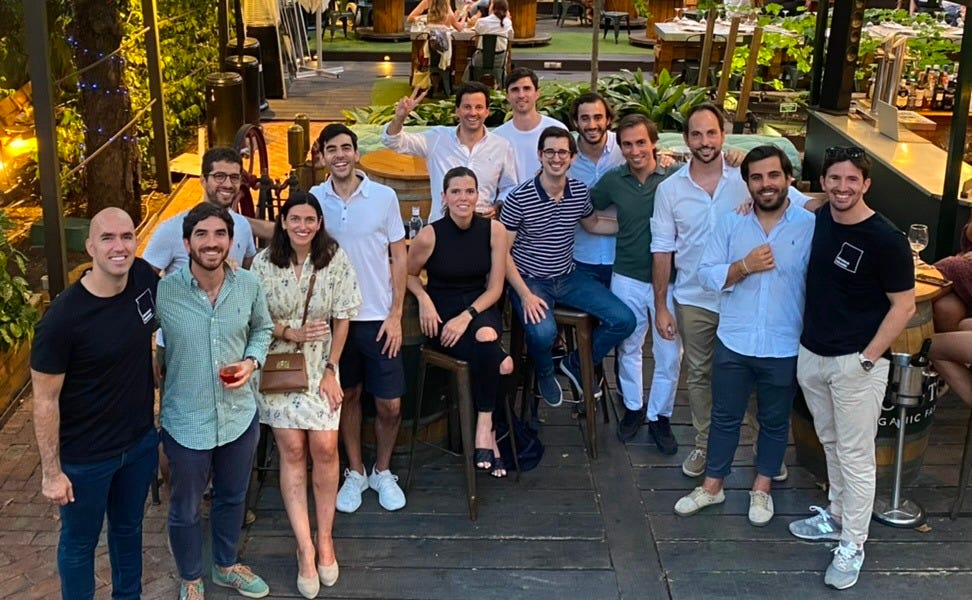
With R2, we ran the same playbook. Jorge and I had deep networks across tech sales from Facebook, Bloomreach, Canva, Miro and so on. Our first 50 members came from personal relationships. We literally threw our smartest GTM friends in a Slack channel. Then we started hosting dinners in Madrid and Barcelona, bringing together talented revenue professionals we thought weād enjoy hanging out with. Every dinner was oversubscribed and word-of-mouth did the rest.
You cannot crowdsource your founding members, you need to hand-pick them very carefully because they are your kindling. And without kindling, thereās no fire.
This is also super important for any startup thinking of bolting on a community for āsupport purposesā. As we discussed in our recent Growth Playbook about Lovableās journey to 400M in ARR, most communities become dumping grounds for negative sentiment if you donāt get this step right.
3. Kill the cold-start problem with curated seeding and setting the tone for culture
The thing nobody talks about but is crucial in the early days of any community, and also the most anxiety inducing, is that the biggest risk is silence. People join, see nothing happening, and leave.
At Facebook, we seeded the Spark AR group with content every day. Tutorials, creator spotlights, product updates, detailed comments to work showcases, announcing bug fixes.
I remember some of our most amazing content came from our Engineers or Designers directly pushing a demo of what they were releasing on the group. Some of them were almost āsuperstarsā in the eyes of these talented creators.
My teammates and I were in there constantly, posting, commenting, surfacing great work, from all across our org including PMs, Data Science, Research, Eng, etc.
With R2, we did the same thing. Before we had organic discussion, we seeded the Slack with data, articles, sales insights, and questions worth debating. One of our most popular channels ever is #Memes. We asked questions we actually wanted answers to and shared stuff weād found genuinely useful.
Hereās where we found Luisen through Twitter. He was at Salesforce at the time. He joined the team to run community management, and having someone dedicated to keeping the conversation alive made all the difference. But most importantly, he had a great pulse on culture, and maintaining that tone across all our channels.
4. Charge from Day 1
We started at ā¬20/month, then raised to ā¬30/month as demand grew, and experimented with a few different payment plans.
Charging did three things surprisingly well:
It filtered for quality, especially in a geo less prone to pay for stuff. People who pay are people who are serious about getting value and contributing.
It raised engagement. When you pay for something, you tend to use it way more.
It validated demand continuously. Every renewal was a signal that the product was working.
Of the 400+ that applied through our Tally form, we interviewed 30+ in the first few weeks. Only those who cleared our talent bar got a payment link, which set a high bar and created scarcity.
The scarcity drove word-of-mouth and word-of-mouth fed the top of funnel.
The bottom line is that, even though it does require some courage, when you charge for access the people who get in are the people who care.
5. Measure everything (the Vader Score)
When the Spark AR community started growing fast, it became impossible to manually track what people wanted, what was broken, and how they felt about the product. So I built a system.
It analysed every comment and post from the community every day and overlaid a sentiment analysis algorithm (called the Vader Score). This let me build dashboards with word clouds showing what came up most often, a data-driven approach to counting and prioritizing feature requests, and a per-feature sentiment tracker so engineers could see exactly how creators felt about the specific features they were working on.
It was like assembling an NPS score from raw community chatter and tracking how it evolved over time. It was great because it allowed us to pull on different product, bugs and other leaves that moved creator sentiment from 3.8 to 4.5+ out of 5 stars over the course of a year.
I also built what I called the āSignal Triangulation Program,ā bringing together Design, Research, Data Science and Product Marketing to cross-reference community signal with quantitative data and qualitative research, which became the foundation for how the Spark team made quality planning decisions.
At Revenue Squared, we applied a simpler version of the same idea. We paid close attention to which Slack channels had the most activity, what types of questions people were asking, and where the energy was. Even though Slack provides pretty meh analytics, we were also able to infer some insights to act on.
This is how we discovered that the #hiring channel was way more valuable than we expected, that the #anonymous channel was where the deepest value lived, and that people wanted in person events and workshops more than we thought.
6. The 150-member inflection point
There is a magic number in community building and in our experience with R2, the flywheel kicked in around 150 members.
Before 150, we were still pushing with seeding content, hosting everything ourselves, making sure every AMA had an audience etc. The community was getting warmer but hadnāt yet taken off.
After 150, the peer-to-peer value flywheel activated. People started answering each otherās questions before we could. The #anonymous channel became a place where someone could post a complex sales problem and get lots of thoughtful responses within hours.
People were posting about whether to stay or leave their current job, sharing real compensation numbers for negotiation help, and working through difficult management conversations together. The #hiring channel turned into the communityās most active surface, with members finding jobs and startups filling roles organically.
This is what I mean by the boulder starting to roll downhill. Before 150, youāre pushing but after 150, youāre trying to keep up. Sort of like product-market fit:
Robin Dunbarās research (which has held up for 30+ years) suggests 150 is in fact the natural group size where humans can maintain meaningful relationships, go figure! Gore-Tex discovered the same thing by accident apparently, they found that when more than 150 people worked in the same building, social problems started. So they capped every building at 150 employees with 150 parking spaces.
For building a community, you just need to be aware that there is an inflexion point at around that number. On one hand things get much easier (peer-to-peer), but on the other you have to pay attention and be ready to build process + features to help the community (and most importantly its vibe) scale appropriately.
7. In-person events as community fuel
In-person events became popular. We ran networking beers in Barcelona and Madrid quarterly, bigger events with keynote speakers like Gong. Small executive dinners, 8-12 people max, where members came prepared with specific GTM problems they needed help solving.
These dinners were always oversubscribed and generated some of the deepest relationships in the community, and were the primary source of organic referrals. Two of my closest friends in Barcelona today are people I met in the community. Members would tell colleagues about the experience, and the waitlist grew without us doing anything.
We eventually scaled this by creating Ambassadors: 2 per city to organize the local beer events. They were stoked to represent the community. It gave them status, made them feel like owners, and it took the operational burden off of us.
My lesson here is to not underestimate in-person. In a world drowning in digital noise, putting people in a room together really is a superpower.
8. Make members feel like owners and experiment (a lot)
At Spark AR, some of our best product decisions came directly from creator feedback. When creators felt heard, they invested more, they reported bugs because they wanted the product to improve and they suggested features because they cared about where it was going. We tried to lean into this hard.
We gave top creators early access to unreleased features, publicly showcased amazing effects, highlighted craftsmanship etc. It was cool because some of these effects were really amazing art: 3D meshes and textures and coded animations overlayed with emerging computer vision algorithms.
We ran Online Challenges that drove 150+ participants, and the success of the first one led to scaling the program 10x. We launched inspiration posts that caused a 130% spike in group engagement. We built a mentorship program that got 500+ signups. Basically running a ton of experiments to see what struck a chord.
At Revenue Squared, we applied the same principles with our own flavor. We built a diamond emoji culture: a Slack plugin tracked who received the most diamond emojis each month, and those top members got public recognition on our LinkedIn and Substack (which reached thousands of people). We ran annual sales voted āTop Performersā and gave trophies and certificates in public. We launched a bi-weekly peer to peer short 15ā networking call via Lunch Roulette. And a bunch of other experiments.
When we planned changes, we shared them with the community as proposals (not announcements), we asked for input and implemented suggestions. And then, we acknowledged the people who contributed ideas.
The bottom line is to make people feel like owners, test tons of ideas, kill them fast if they donāt work, ad them to the arsenal when they do.
9. Build the team around the mission
Community-as-a-product is deceptively hard to run because you are simultaneously a content producer, event organizer, moderator, recruiter, product manager and customer support agent. Across multiple surfaces, with paying members who have high expectations.
At R2, the team evolved in stages:
Jorge (VP EMEA at Harvey) and I started everything ourselves. The first 50 members, the first dinners, the first Slack channels. But as the waitlist hit 400+ applications, we were drowning in interviews and community management on top of our day jobs.
Thatās when Alvaro (Chief Sales Officer at Vivla) joined. He had run events at Ironhack and brought edtech experience that was relevant for the workshops and training we wanted to build. He started helping with events and took over the interview pipeline.
Then Luisen came in from Salesforce. He started on community management and eventually took on a broader founder and operational role, eventually leaving Salesforce to run R2 full-time in 2025.
Beyond the core team, we tested different profiles:
A community manager for day-to-day Slack management
A video editor for workshop content
A professional content creator for infographics
Julia Barrueco was great in helping us design and launch our web.
Alejandro from NocodeHackers was super helpful in helping us build the private members area, the LMS on Podia, the CRM on Airtable, automations on Zapier, analytics dashboards and payment chasing (Stripe gives a lot of headaches, around 5% of subscribers experience card failures and you have to manually chase them)
Event management vendors for our in-person events
And we had to manage content across multiple surfaces: LinkedIn, a Substack newsletter, YouTube, Instagram and so on (plus multiple experiments).
A big lesson here is that the distinction between a community builder and community manager matters, and one is much harder to find than the other.
A community manager moderates, answers questions, sends emails (operational work). But a community builder creates the culture, designs the incentive structures, finds the first members, kills the cold-start problem, shapes the identity and so on. The builder is 10x harder to find (90% of the time, probably a good idea to hire within the community).
10. Build product to scale and retain
At Spark AR, I saw firsthand how the community outgrew its original surface. When we hit 40K+ members on Facebook Groups, basic things stopped working. People couldnāt find content, questions got buried, the format was constraining etc etc.
We started planning a dedicated forum (Oculus-style) and introduced new surfaces like in-app documentation, contextual help, and a creator certification program.
The same thing happened at Revenue Squared at around 200-300 members, we had a product backlog. The Slack community was great, but members wanted more.
So we started building:
A private members area with perks, a member directory (āwhoās in hereā), and a member book portal so people could find and connect with each other based on their profile.
A learning management system on Podia with all the workshop recordings organized by level: SDR, Account Executive, Advanced. Spanish-language sales training that simply didnāt exist anywhere else.
Community management tools like a chat roulette / lunch roulette for peer-to-peer mentoring on autopilot. Members would get randomly paired for a 30-minute call every couple weeks.
Event management on Luma for both online AMAs and in-person events.
Slack channel management that grew from 8 channels to a more complex setup with specialized topics.
The lesson here is to keep your ear next to the ground at around 150-300 members because there is an inflexion point in volume.
The value prop that emerged organically
One of the most fun things running R2 was watching value show up that we didnāt plan for:
Finding a job: a very active #hiring channel, with many members landing their next role from companies hiring within the community.
Filling a job: startups posting open roles in the same channel.
Sales insights: someone posts a complex problem in #anonymous. People navigating whether to stay or leave a company, sharing real numbers for salary negotiation, working through tough management conversations.
Market intelligence: you get a high-fidelity sense of how companies are really performing by listening to their front-line troops. This helped members decide where to look for their next career move.
Dealflow: many members were starting companies or connected to founders. This ended up being relevant for my day job as an investor, too.
LinkedIn as Top of Funnel
We knew salespeople live on LinkedIn. So we opened a LinkedIn account for Revenue Squared and started publishing content that would attract exactly the right people.
What worked:
Job listings from the community. We knew the #hiring channel was always on fire. People kept asking us to post their roles even without being members, and we said no. That became the pull.
Memes. Sales is tough. Humor builds connection.
GTM insights, reports and playbooks. Tactical stuff that the community was producing.
Community social proof. Photos and images from events, rankings, workshop clips.
Monthly top member recognition. Showcasing the best of the community to the outside world.
This fed the Tally waitlist, which kept growing. The waitlist gave us information about peopleās level of interest and helped calibrate who would have the right profiles. We kept interviewing every prospective member until a few hundred members.
At that point we built a referral mechanism on the private area (i.e. share this link and youāll move up the waitlist), and we started introducing more friction in the application form. This gave us more information about prospective members, and helped us play by ear if we needed interviews or not. The referral and deep profile information shared was usually enough to get a good sense of approval or rejection.
Act III: The Exit
I met Ramon from Nova over lunch in December 2023. They were building something aligned with our communityās mission at the time, and they saw in R2 what weād built: an audience of 25K+ across Linkedin, Youtube and Substack, a highly curated and engaged paid membership community, with tier 1 sponsors, over 200+ learning modules sourced from real case-studies in our learning platform, and the number 1 GTM brand in the Spanish-speaking world.
The deal was modest and in equity, meaningful to me in a way that goes beyond the numbers. Many people found their next role through R2, some started companies together, and the mission and vision are still growing every day. Iām really stoked to have Nova give the community the resources it needs to keep growing.
Thatās it for this week folks.
Thanks for reading,
Ivan
P.s. if you want to help me out, the best thing you can do is to share my work! š
If you enjoyed this, you might like:
ā How Harvey AI Hit $200M+ ARR in 36 Months


I could picture the entire story like a mini move in my mind. In my experience in-person makes a huge difference, too. Also, keeping the bar high is the best enabler. Thanks for putting this together.
Added to my reading list, looks interesting!