Your sales team needs a CRM that runs your entire GTM motion. That’s Attio.
Get agents working on every account, surfacing new opportunities, and handle the work that used to take your team days. Whether you’re working in your browser, inbox, or favorite agent, connect to your customer data in real-time through Attio’s web app, MCP, API, and SDK.
One of my best friends spent a few years at Canva, and as a power-consumer of Powerpoint (pitch decks 😅) it’s a space I’ve always been curious about.
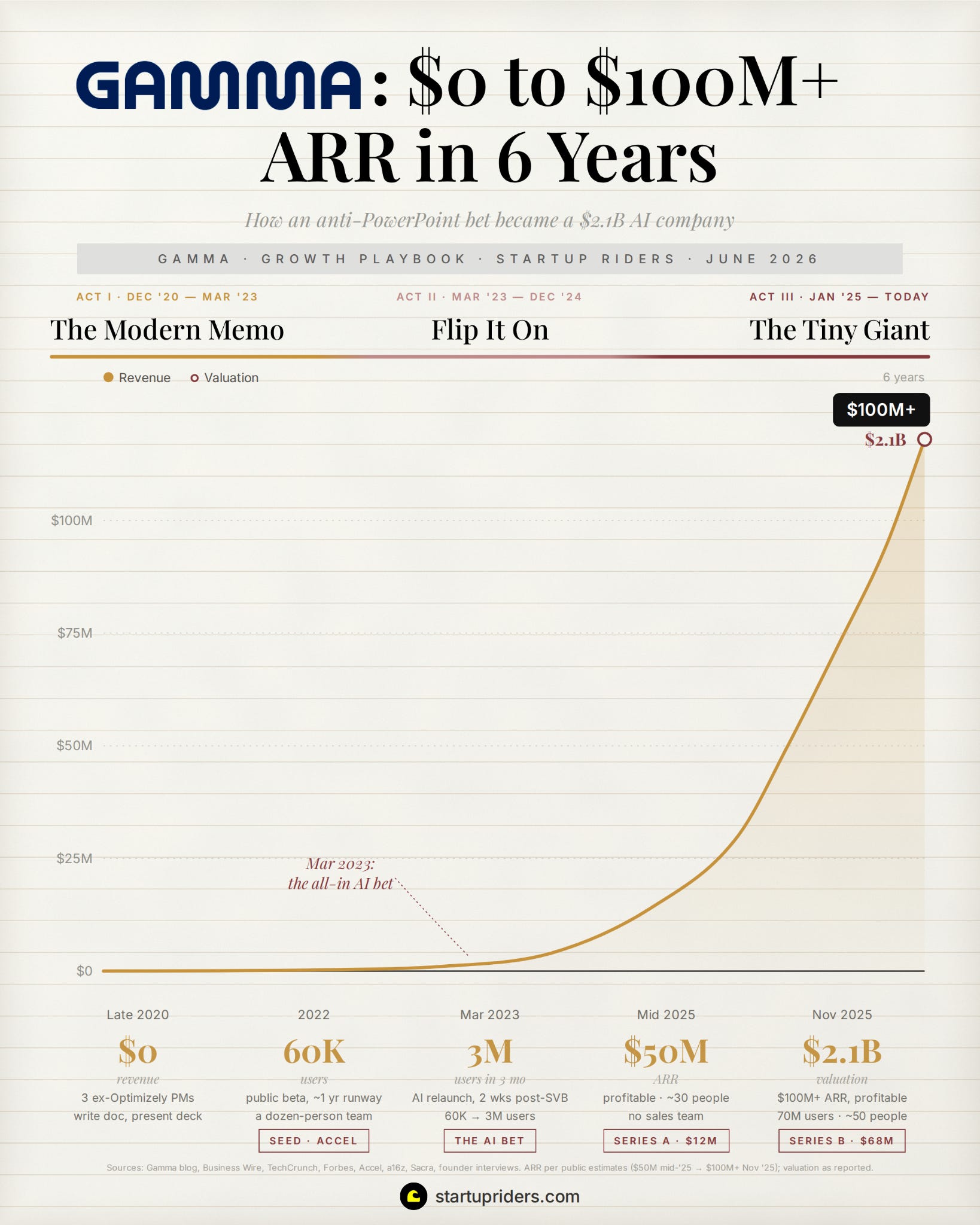
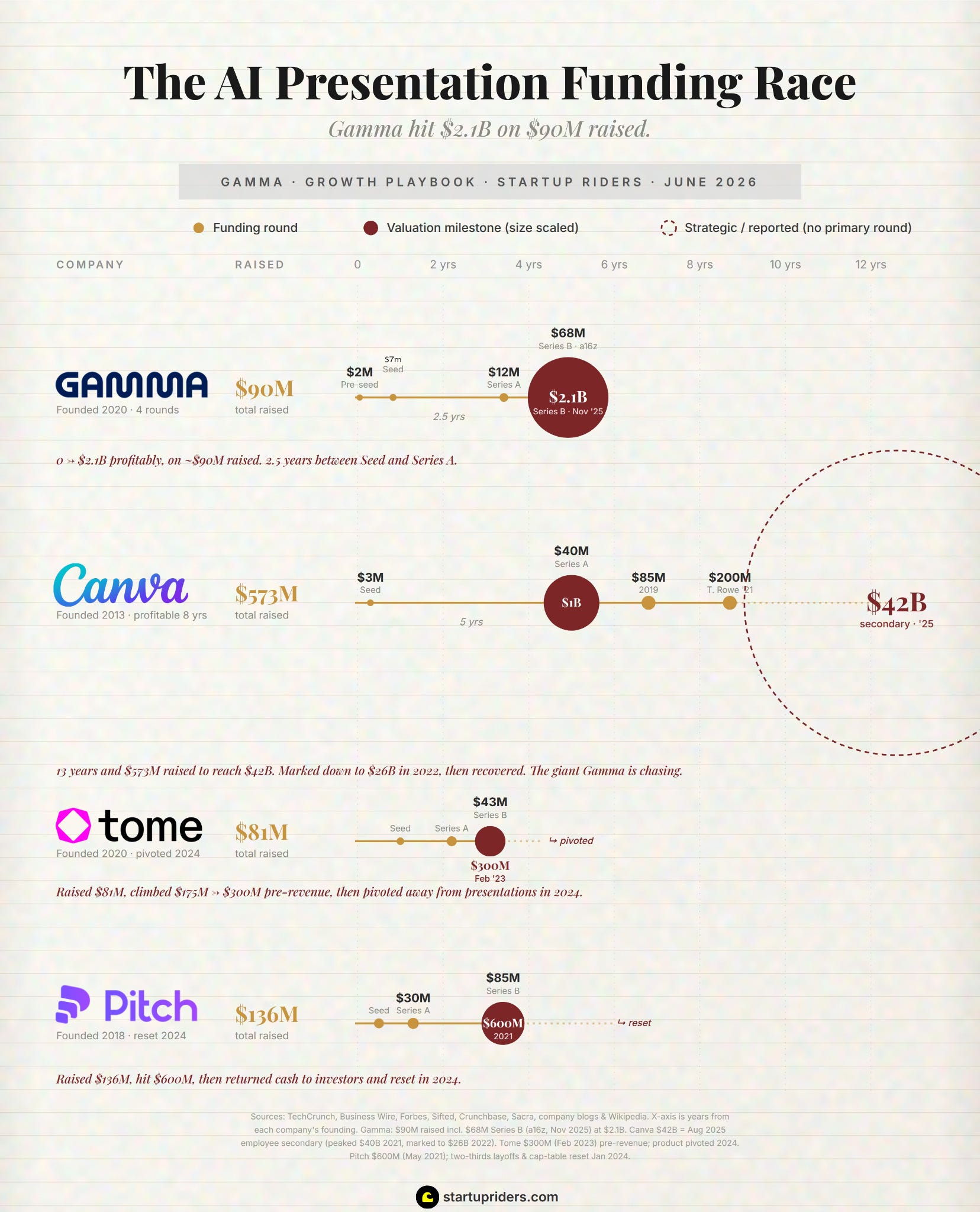
So I got interested in Gamma’s growth story. They recently crossed $100M in annualized revenue (2025), raised $68M from our friends at a16z at a $2.1B valuation, all with a team of around 50 people and profitable for over 2 years.
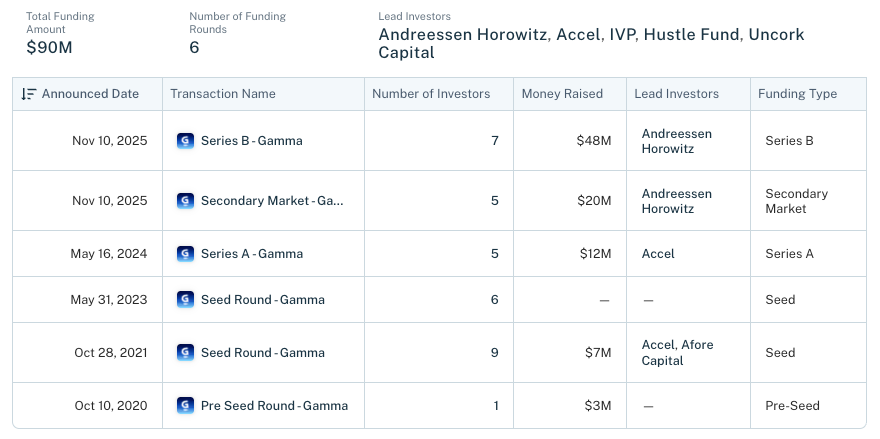
It’s an interesting example of a contrarian bet, considering it is a category most investors would call a “graveyard”. It was built by 3 first-time founders, one of whom heard “that is the worst idea I have ever heard” from a VC (always a good sign), who’ve managed to pull together a tier-1 cap-table:
So I spent the past week pulling apart a dozen founder interviews with the co-founders, every funding round, and all numbers they have let slip about how they actually did it.
What you'll learn (from the 8 growth levers inside):
Timing the AI wave: why Gamma’s real unlock was Stable Diffusion in mid-2022, months ahead of the ChatGPT boom.
Onboarding as the growth loop: how rebuilding the first 30 seconds of the product took them from a few hundred to 20K signups / day.
Charging the moment it clicks: the hand-typed Stripe link that proved people would pay and made Gamma profitable within 3 months of turning on pricing.
The micro-creator flywheel: why 1,000 small creators drove more than half of Gamma’s signups, and the 1-to-1.5 word-of-mouth math behind the compounding
Building a defensible moat: what a “thick wrapper” actually is and how a team that’s one-third designers with 0 ML engineers turned it into a real one.
Deferring enterprise to stay fast: why they turned down enterprise money for years to protect its speed and what changed in 2026.
Lets dive in.
📐 Quick note on editorial and methodology: this analysis focuses on the 80/20 mechanics that help explain their growth (not a comprehensive profile, and not an endorsement or investment advice). Sourced from founder interviews and talks with both co-founders (Lenny’s Podcast, a16z, Stanford eCorner, Kleiner Perkins, etc), plus reporting from TechCrunch and Business Wire, the Accel and a16z notes, and estimates from Sacra. Company-reported figures are marked as such. Treat directional estimates as directional.
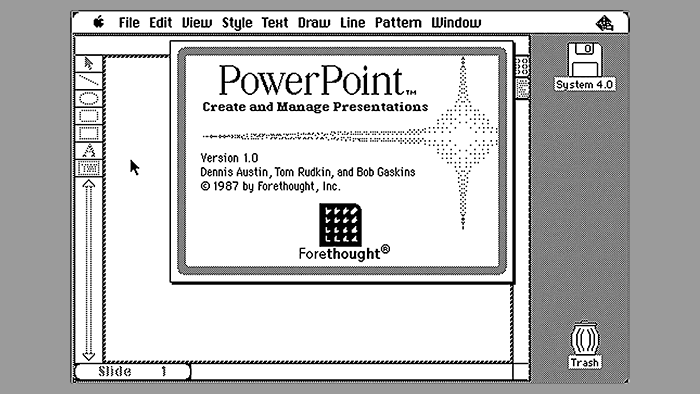
PowerPoint shipped in 1987 and for almost 40 years the category barely moved.
They added color in the early 90s, clip art came and went but the core stayed pretty much the same. As Jon Noronha puts it Google Slides is “PowerPoint on the internet” and Keynote is “PowerPoint for Mac.” Which are different platforms but really the same product.
Everything inherited the fixed 16:9 rectangle from physical film slides and a designer-canvas model where you resized boxes and aligned things by hand. But the problem is that most people are not designers so they spend their time decorating instead of thinking.
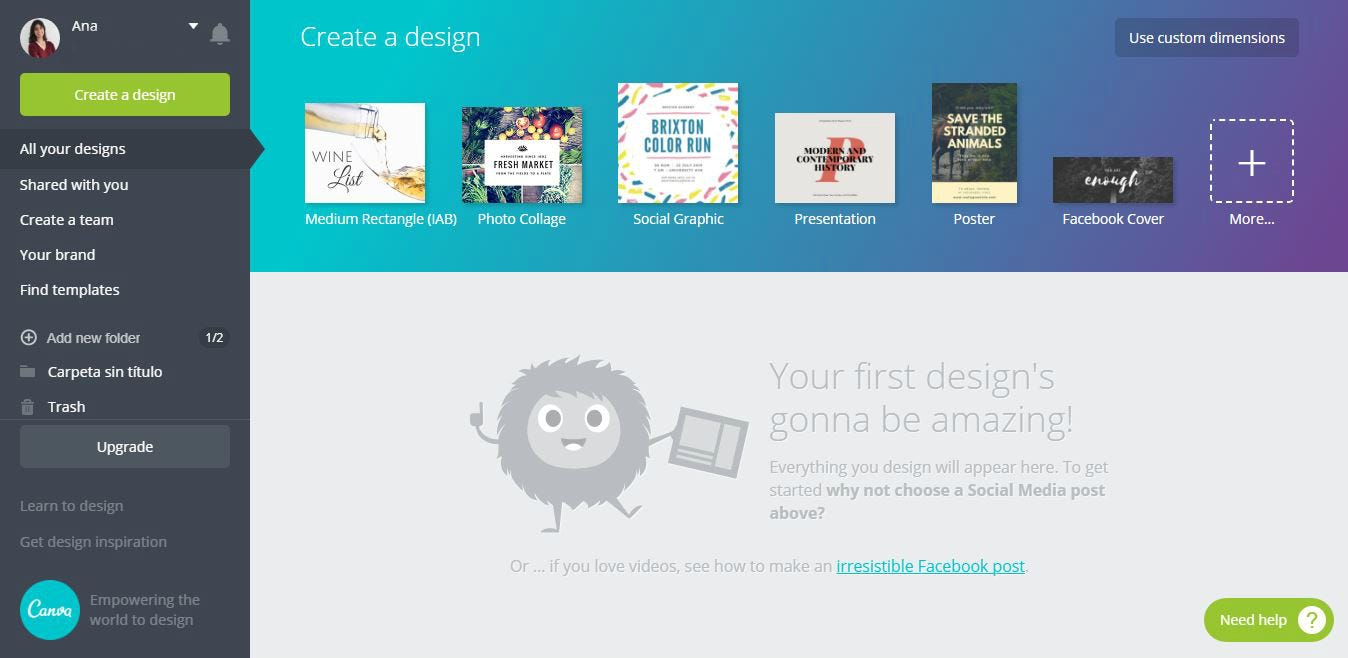
Then Canva (2013) started winning by handing non-designers templates and by winning the same person across many asset types (turning a monthly user into a weekly one).
But for startups presentations have mostly been… difficult:
The TAM was huge (PowerPoint and Google Slides each have hundreds of millions of users) but the use case was seen as episodic + not sticky.
And most importantly (bad for startups), it was bundled free inside Office and Workspace (so nobody paid for the slides product directly).
Where we are
2 things really cracked the category open between late 2022 and 2023.
Stable Diffusion (mid-2022) made instant image generation feel “magical” (despite weird hands and fingers and all sorts of hallucinations you’ve probably seen). Then ChatGPT (Nov 2022) created demand for “what can AI do for me.” and suddenly the most painful part of a deck (aka the formatting and the decorating) could be at least in theory automated.
The new shape of the product is “come for the AI, stay for the product”, where the AI generates the first draft and drives the virality but it is the underlying tool that drives the retention.
A whole cohort of AI-native tools went after this wedge which you’ve probably seen:
Gamma, Tome, Beautiful.ai, Canva’s Magic Studio and others all offering instant fancy decks, and here’s where Gamma is the one that grew fastest and stayed profitable (as we’ll see later 70M users and $100M+ ARR on a team of about 50).
The incumbents are now bolting AI on too (i.e. Microsoft Copilot inside PowerPoint, Google Gemini inside Slides etc) aka the bundling threat is real and it is coming.
Where the market is going
3 dynamics will likely shape the next 24 months.
The suites bundle harder: as discussed Microsoft and Google each have millions of users / dominate distribution and can give AI slide features away for free. Gamma’s bet is that big incumbents cannot change their core product quickly because their buyers are paying for it to stay the same. But, every time the technology shifts that opens a window for a nimble player, Jon (founder) says: “You either die an obscure startup or live long enough to fight the big suites”
Creation goes agentic + multi-format: they already hit decks, docs, websites, social, and are apparently eyeing video next. As you’ve probably seen across these products the interface keeps flip-flopping between a tool you click and an agent you talk to (i.e. Claude plugin on Powerpoint) and pricing may shift from per-seat to usage-based as the agent does more of the work, we’ll see.
The wrapper question gets answered: as models commoditize text generation to a large extent the durable “value” or moat tends to move to everything around it (experience, clarity, layout, editing, export, brand, human control etc). Thin wrappers die but as we’ve seen with a few players on startup riders, thick wrappers can compound, and it goes without saying, the prize is huge (i.e. PowerPoint alone has a billion-plus users and is, as Grant says, “the language of business”).
That’s the market in a nutshell, now lets dive into Gamma’s origin + growth levers:
Act 1: The Modern Memo
Late 2020 → Feb 2023 · $0 → pre-revenue, signs of PMF
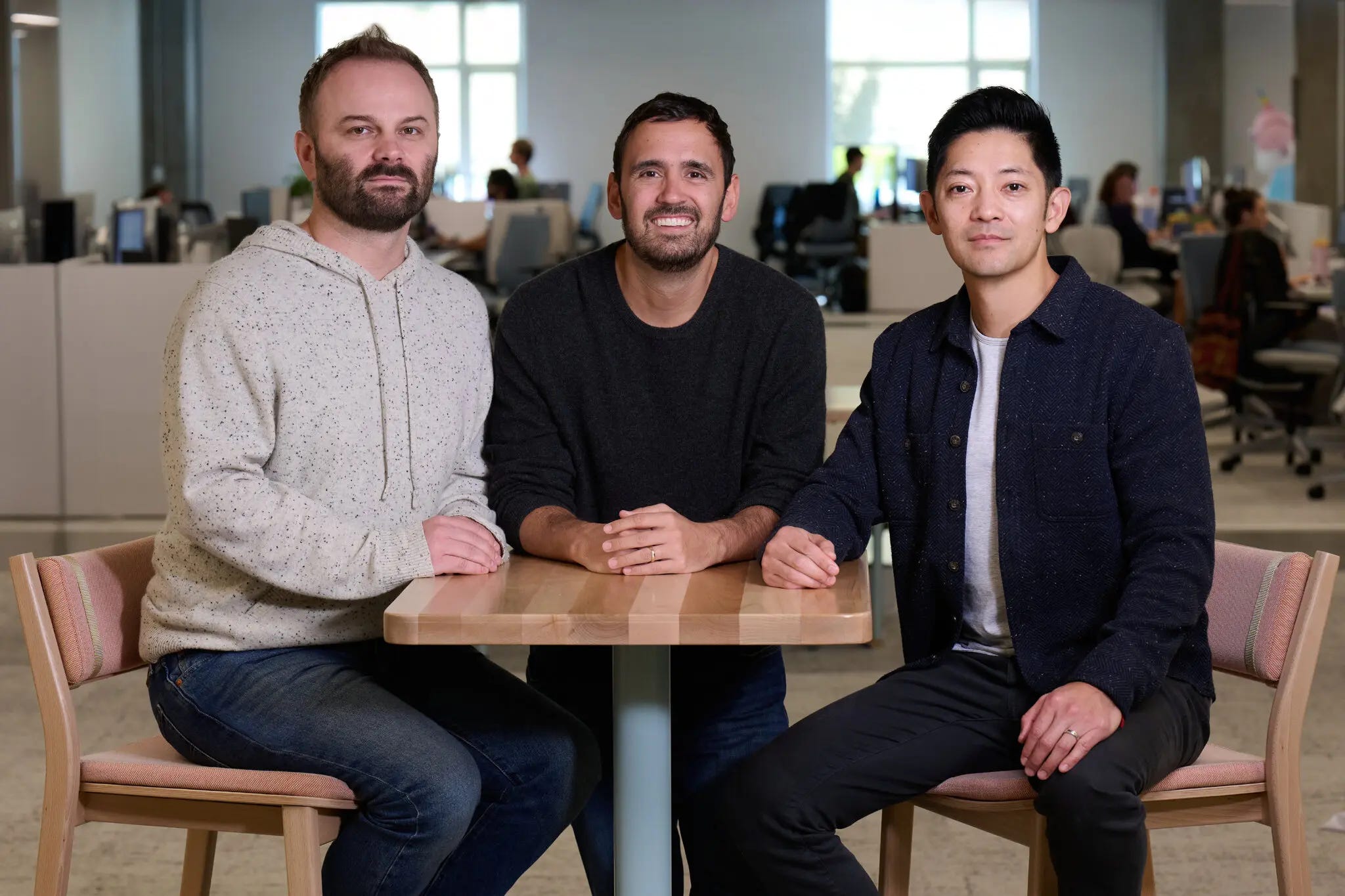
3 ex-Optimizely co-workers Grant Lee, Jon Noronha, and James Fox, start building at the end of 2020 (peak pandemic by the way). Grant is a first-time founder living in London pitching investors over Zoom (like half the world at the time) from the corner of a small flat between the kitchenette and the laundry room.
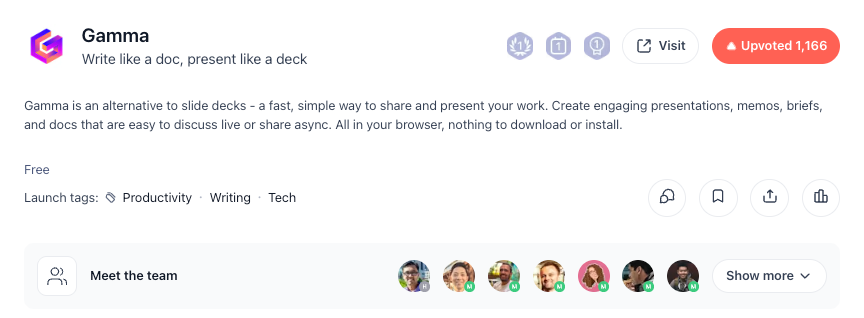
The product is a “modern memo”, basically a doc-and-deck hybrid built on a new primitive they call a card (any height), holds anything, instead of the fixed 16:9 rectangle, and the tagline is write like a doc, present like a deck.
By late 2022 they win Product Hunt’s product of the day, week, and month. Even though it feels like a win it’s not fully, active users are in the low thousands, “maybe the hundreds if we’re being really strict” according to Jon, with no word of mouth and about 1 year of runway.
Growth Lever 1: They tested every idea on 20 strangers in under 24 hours.
“We would have an idea in the morning... in the afternoon we’re already running a pretty full scale experiment... by the next day we can go through all of it.” — Grant
Considering the founders came from an A/B testing company, it makes sense that Gamma had a testing machine before it had users, but how did they build it?
They learned the hard way that friends make useless testers (everyone said the product looked great, family is even worse) then Grant checked usage and most had 1 session of about 5 minutes and never came back.
They rebuilt the loop around strangers with “nothing to gain”:
They recruited around 20 people per test who fit the user profile but had “0 skin in the game,” dropped them in with almost no context and had them narrate everything in their head out loud, and you feel exactly where they get lost.
The stack was Voice Panel and UserTesting to source testers on demand (Grant discloses he angel-invested in Voice Panel), plus a private Slack of power users they call Gammbassadors (love it), over 1,000 strong today, where every rough prototype landed first.
The cadence velocity was important,where an idea would drop in the morning, functional prototype by midday, live study in the afternoon, and a verdict the next day. This apparently happened with everything (landing pages, onboarding, exports, every feature basically).
2 things fell out of this loop before the AI launch:
And interestingly it showed them exactly where users died which was usually the first screen, blank page, unfamiliar tool, gone. Which explains why Product Hunt signups spiked and then flattened, new users were not bringing new users.
“We could have fooled ourselves into thinking we had product market fit” (Grant).
Growth Lever 2: They interviewed ~100 people and built for the one pain all of them shared.
“Everybody had made a presentation... and they actually all had the same gripes.” — Jon Noronha
Every investor told them to niche down (salespeople, consultants, founders, pick one) but before deciding they talkedtoabout 100 people across completely different jobs and asked each one to walk through the last presentation they made.
Turns out the doctor and the student wanted the same thing:
struggledto make it look good
feared being judged for it
lost the room.
So they organized the company around the shared pain rather than a persona. But going horizontal can often be a great way to kill a startup (so does lack of focus, interestingly Gamma also had 2 different products running in parallel when they started for 6 months!). But Grant has 2 answers for why it didn’t kill them:
The AI trigger came with Stable Diffusion in mid-2022 and watching people generate an image out of nothing made them ask what actually hurts in a deck, and the answer was the formatting and the decorating.
So in early 2023 a dozen people and with runway draining they gave themselves a 4-month sprint with a target to fix the first 30 seconds: